Gibson Desert
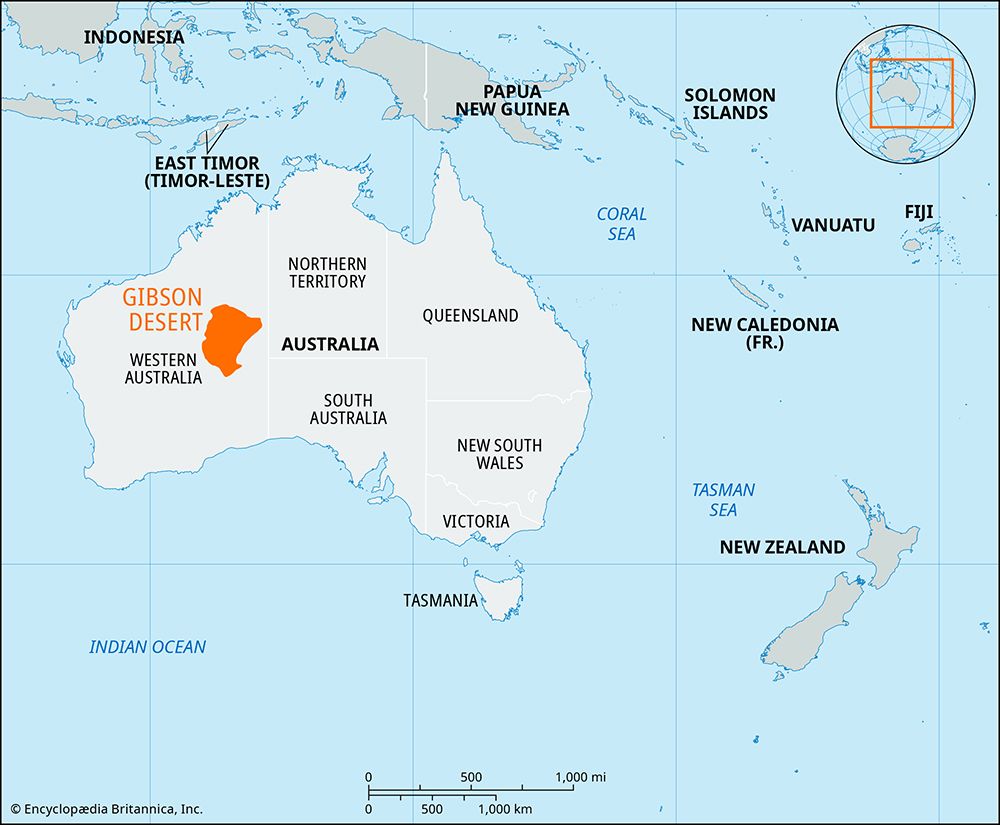
The Gibson Desert is an arid region located in the interior of Western Australia. Situated south of the Tropic of Capricorn, it is bounded by the Great Sandy…
What is Gibson Desert?
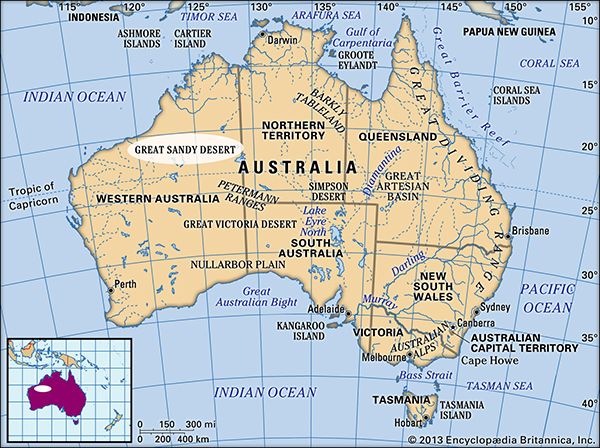
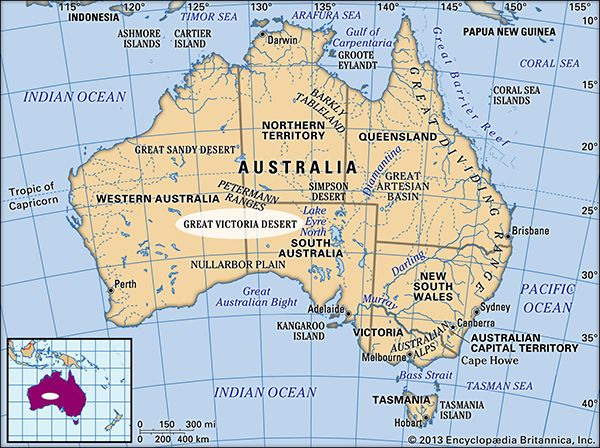
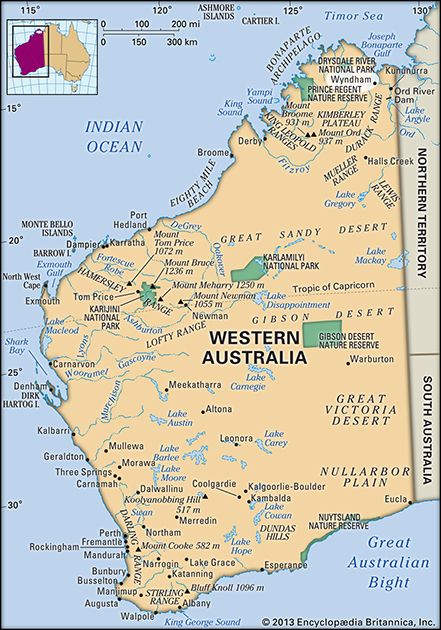
The Gibson Desert is an arid region located in the interior of Western Australia. Situated south of the Tropic of Capricorn, it is bounded by the Great Sandy Desert to the north, the Great Victoria Desert to the south, the Northern Territory border to the east, and Lake Disappointment to the west.1
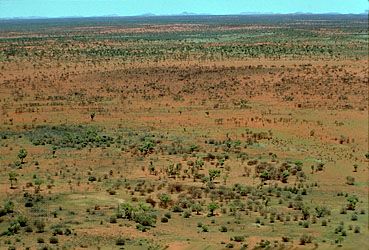
Characterized by a vast landscape of sandhills and Triodia desert grass, the area is now protected as the Gibson Desert Nature Reserve and serves as a habitat for numerous desert animals. The region was named after Alfred Gibson, a member of an expedition led by Ernest Giles, who disappeared while searching for water in 1874; Giles successfully crossed the desert in 1876.1
Who was the explorer Ernest Giles?
Ernest Giles was a prominent 19th-century explorer recognized for his significant contributions to the mapping of the Australian interior during the 1870s.1
His expeditions were instrumental in traversing and documenting vast, arid regions of the continent:
- Gibson Desert: Giles penetrated this region in 1874 and successfully crossed it in 1876. He named the desert after Alfred Gibson, a member of his expedition who perished while searching for water.2
- Great Victoria Desert: In 1875, Giles led an expedition that penetrated this area from east to west, bestowing upon it the name it bears today.3
Giles is remembered as one of the key figures in the history of Australian exploration, joining other notable explorers of the era in the nation’s “pantheon of explorer-heroes” for his efforts to traverse the challenging landscapes of Western Australia.1
What are some unique animals that live in Australian deserts?
Australian deserts are home to a highly distinct and diverse range of fauna, characterized by a notable abundance of reptiles and a unique reliance on marsupials rather than the rodents typically found in other desert regions.4
Native Marsupials and Mammals
- Marsupials: The landscape supports various species, including kangaroos, wallabies, bandicoots, and the specialized, burrowing marsupial mole.4
- Wombats: The hairy-nosed wombat maintains a presence in specific arid regions.5
- Echidnas: The echidna (spiny anteater), an unusual egg-laying mammal, is still regularly observed in Australian arid zones.5
Birds and Reptiles
- Parrots: Unlike other deserts that feature many finches, Australian deserts are notable for their high population of parrots, such as the budgerigar.4
- Reptiles: The region hosts a vast array of reptiles, including endemic species like the gibber dragon (Ctenophorus gibba) and the Woomera slider (Lerista elongata).5
Introduced Species
Human activity has significantly altered the desert ecosystem. The European rabbit is now a common sight, and camels have become well-established, with Australia being the only place where they exist in a totally undomesticated state.4
How do plants like Triodia grass survive in arid climates?
Triodia grass, commonly known as spinifex, is a genus of perennial grasses native to Australia that has evolved specific strategies to thrive in arid climates.89
As a xerophyte, Triodia employs several mechanisms to manage moisture shortages:
- Physiological Inactivity: Like many desert perennials, these grasses can become physiologically inactive during prolonged dry periods, allowing them to survive until moisture becomes available.9
- Structural Adaptations: The genus is characterized by long, narrow leaves, which help minimize water loss. Many desert plants also utilize features such as waxy coatings or reduced leaf size to further decrease transpiration.8109
- Resource Management: By remaining dormant or reducing metabolic activity during extreme drought, Triodia conserves energy and water, enabling it to resume growth rapidly when infrequent rains occur.9
While the provided search results confirm Triodia is a perennial grass adapted to arid environments, they do not detail every specific anatomical feature of this particular genus beyond its general classification as a xerophytic perennial.1089
Sources
- Gibson Desert — Encyclopædia Britannica
- Great Victoria Desert — Encyclopædia Britannica
- Australia - Culture — Encyclopædia Britannica
- Desert - Fauna — Encyclopædia Britannica
- South Australia - Plant and animal life — Encyclopædia Britannica
- Desert - Population and community development and structure — Encyclopædia Britannica
- Arabian Desert - Animal life — Encyclopædia Britannica
- Xerophyte — Encyclopædia Britannica
- triodia — Merriam-Webster
- Sahara: Top Questions — Encyclopædia Britannica
Published on · 3 min read