Greylag
The greylag (Anser anser) is the most common Eurasian representative of the gray goose and serves as the ancestor to all Occidental domestic geese. A member…
What is Greylag?
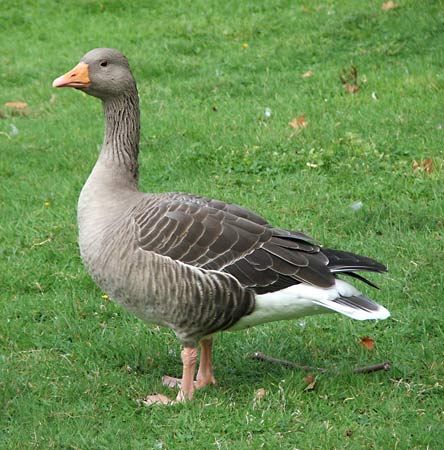
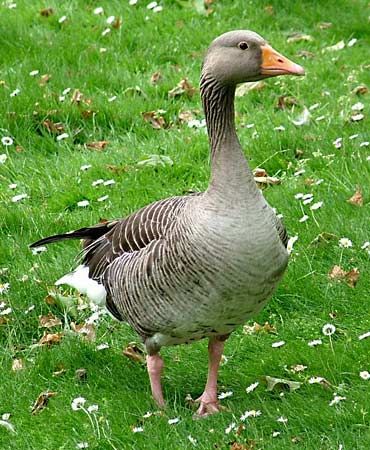
The greylag (Anser anser) is the most common Eurasian representative of the gray goose and serves as the ancestor to all Occidental domestic geese. A member of the family Anatidae, this bird is characterized by its pale gray plumage and pink legs. Its bill color varies by region, appearing pink in eastern populations and orange in western ones.1
The species nests in temperate regions and migrates to winter in areas ranging from Britain to North Africa, India, and China. While wild geese are typically monogamous, the domestication of the greylag—which began during the Neolithic Period—led to the development of polygamous domestic breeds valued for meat and down production.12
How did the domestication of the Greylag goose begin?
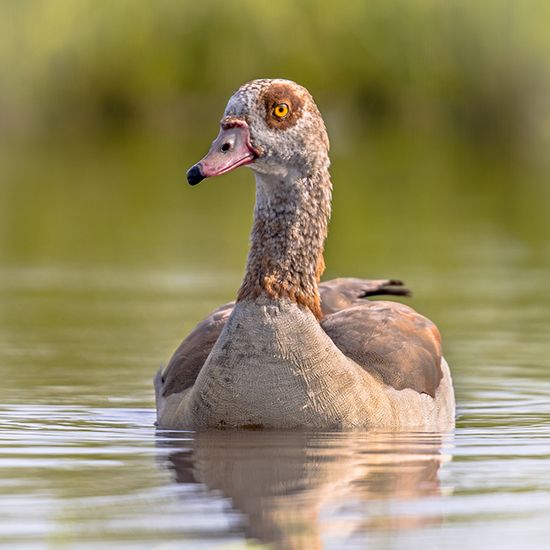
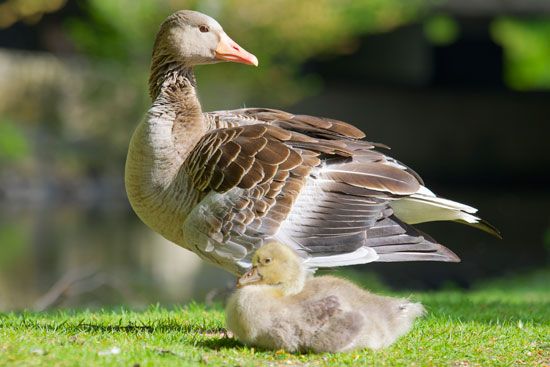
The domestication of the greylag goose (Anser anser) is estimated to have begun at least 3,000 to 4,000 years ago. Ancient Egyptians are credited with the earliest efforts, likely domesticating the birds from both the greylag and the native Egyptian goose.13
Evidence of this early domestication is visible in Egyptian frescoes dating back 4,000 years, which depict physical changes in the birds compared to their natural, wild forms. While the greylag was later well-known to the Romans—famously appearing in legends where a flock warned of an approaching attack by the Gauls—the process of intensive breeding has since resulted in the development of eight main varieties of domestic geese.31
What are the main differences between gray geese and black geese?
In the family Anatidae, geese are primarily categorized into two main groups based on their genus: the Anser genus, commonly referred to as “gray geese,” and the Branta genus, known as “black geese.”2
While both groups share the characteristic heavy-bodied, long-necked build of waterfowl, they are distinguished by specific biological and physical traits:
- Genus Anser (Gray Geese): These are considered the “typical” geese. They are generally characterized by having large, strongly serrated bills and relatively simple plumage patterns. This group includes species such as the greylag and white-fronted geese.52
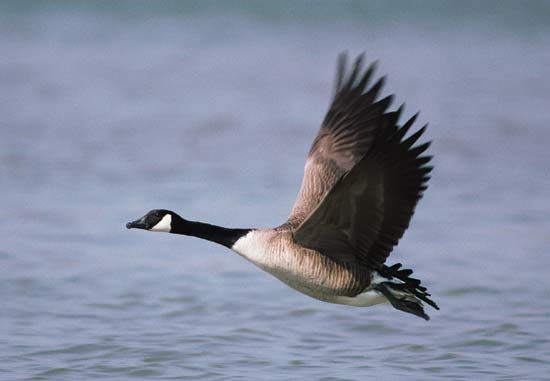
- Genus Branta (Black Geese): This group includes well-known species such as the Canada goose, the barnacle goose, the brant, and the nene.2
Both groups exhibit similar behaviors, such as pairing for life, migrating in V-formations to conserve energy, and nesting on the ground. They also share anatomical features common to the order, such as a lamellate bill adapted for grazing and legs positioned forward on the body to facilitate walking on land.26
Why do geese fly in V-formations during migration?
Geese travel in V-formations during migration primarily to conserve energy. By flying in this specific arrangement, the birds are able to take advantage of air currents, known as vortices, that are created by the wing tips of the birds flying in front of them.2
This formation is a highly efficient strategy for long-distance travel. Within the flock, members often take turns leading the formation, which is the most physically demanding position. After leading, a bird can drop back to fly in the wake of another, allowing it to save energy by utilizing the reduced air resistance created by the preceding birds. This cohesive behavior is a characteristic trait shared by other large waterfowl, including ducks, pelicans, and cranes.7
Sources
- Greylag — Encyclopædia Britannica
- Goose — Encyclopædia Britannica
- 7 More Domestic Animals and Their Wild Ancestors — Encyclopædia Britannica
- Anseriform - Importance to humans — Encyclopædia Britannica
- Anser — Merriam-Webster
- Anseriform - Anatomy — Encyclopædia Britannica
- Migration - Modes of migration — Encyclopædia Britannica
Published on · 2 min read