Gulf of Thailand
The Gulf of Thailand, formerly known as the Gulf of Siam, is an inlet of the South China Sea situated between the Indochina Peninsula and the Malay…
What is Gulf of Thailand?
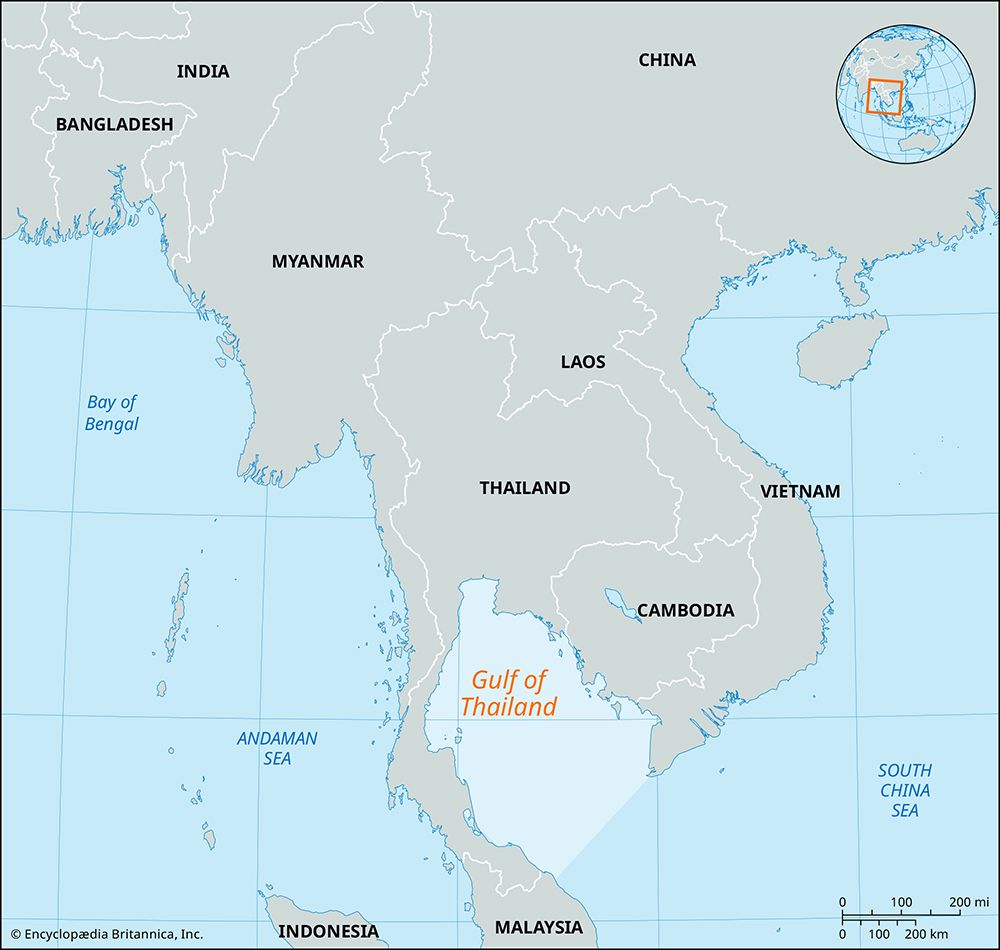
The Gulf of Thailand, formerly known as the Gulf of Siam, is an inlet of the South China Sea situated between the Indochina Peninsula and the Malay Peninsula. It is bordered by Thailand to the southwest and north, Cambodia to the northeast, and southern Vietnam.12
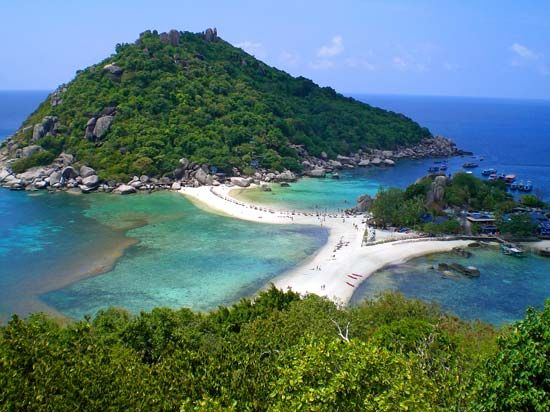
The gulf spans approximately 300 to 350 miles (500 to 560 km) in width and 450 miles (725 km) in length. Major rivers, including the Chao Phraya and Nakhon Chai Si, flow into the gulf near its head. The region is home to several significant ports, such as Bangkok, Pattani, and Songkhla in Thailand; Réam, Kâmpôt, and Kep in Cambodia; and Rach Gia in Vietnam.1
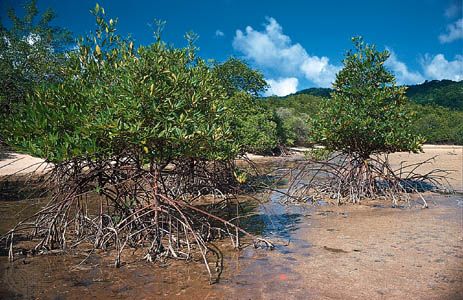
The shallow coastal waters are vital for fishing, though the industry has faced challenges regarding sustainability and environmental impact. Overfishing and the development of shrimp farms have led to disputes between commercial interests and local communities, as well as damage to coastal mangrove forests.13
What is the historical significance of the name Gulf of Siam?
The name “Gulf of Siam” is historically significant because it reflects the former name of the nation now known as Thailand. The country was officially referred to as Siam until 1939.4
The term “Siam” itself has long been used to describe the region, its people, and their language, with historical records of the term dating back to at least 1693. The transition from “Gulf of Siam” to “Gulf of Thailand” in geographical nomenclature corresponds to the nation’s shift in identity and official state naming conventions during the 20th century. While “Gulf of Siam” remains a recognized historical variation, the body of water is now formally designated as the Gulf of Thailand.3546
How do mangrove forests protect coastal ecosystems?
Mangrove forests serve as vital buffers between marine and terrestrial environments, providing essential protection for coastal ecosystems through several key mechanisms:
- Storm and Flood Defense: Mangroves act as a physical barrier that reduces the impact of damaging winds, waves, and storm surges. Research indicates that coastal communities with preserved mangrove forests experience significantly less flooding and storm damage compared to those where these trees have been removed.78
- Erosion Control: Their complex, tangled root systems trap sediments, which helps stabilize shorelines and reduces coastal erosion.78
- Water Quality Improvement: By trapping sediments and filtering pollutants, mangroves improve water quality, which is crucial for maintaining the health of nearby coral reefs and seagrass beds.78
- Biodiversity Support: These forests function as essential nursery habitats for various species of fish, crabs, and shrimp, supporting local fisheries and overall marine biodiversity.78
What are the primary environmental challenges facing the South China Sea?
The South China Sea faces significant environmental challenges driven by both human activity and geopolitical tensions. These issues threaten the health of the marine ecosystem and the sustainability of its resources:
- Habitat Destruction and Land Reclamation: Since the early 21st century, extensive land reclamation projects—often called “island building”—have been used to construct military infrastructure, including naval bases and airstrips. These activities physically alter the seabed and damage sensitive marine environments, such as coral reefs.10
- Pollution: The sea is subject to significant plastic pollution, which enters the water through rivers, urban runoff, and improper waste disposal. This debris, including microplastics, poses a lethal threat to marine life through ingestion and entanglement. Additionally, the sea receives nutrient-laden runoff from major rivers like the Mekong, which can contribute to nutrient enrichment and the potential formation of hypoxic “dead zones” where aquatic life cannot survive.111213
- Resource Exploitation: The region is heavily fished to support the protein needs of densely populated Southeast Asian nations. Intense commercial fishing and the use of massive fishing fleets as tools for territorial claims put immense pressure on fish stocks. Furthermore, the exploration and extraction of natural gas and crude oil reserves pose ongoing risks of spills and industrial contamination.131014
Sources
- Gulf of Thailand — Encyclopædia Britannica
- Thailand - Agriculture, forestry, and fishing — Encyclopædia Britannica
- Thailand, Gulf of — Merriam-Webster
- Siam, Gulf of — Merriam-Webster
- Siamese — Merriam-Webster
- history of Thailand — Encyclopædia Britannica
- mangrove: Top Questions — Encyclopædia Britannica
- Amazing Mangroves — Encyclopædia Britannica
- Mangroves Matter - Learn more — Encyclopædia Britannica
- territorial disputes in the South China Sea - Physiography and economic factors — Encyclopædia Britannica
- South China Sea — Encyclopædia Britannica
- territorial disputes in the South China Sea - Early 21st-century developments — Encyclopædia Britannica
- plastic pollution - Plastic pollution in oceans and on land — Encyclopædia Britannica
- water pollution - Effects of water pollution on groundwater and oceans — Encyclopædia Britannica
Published on · 3 min read