Harmful Algal Blooms
Harmful algal blooms (HABs) are dense populations of microscopic photosynthetic organisms, such as phytoplankton, cyanobacteria, diatoms, or dinoflagellates…
What is Harmful Algal Blooms?
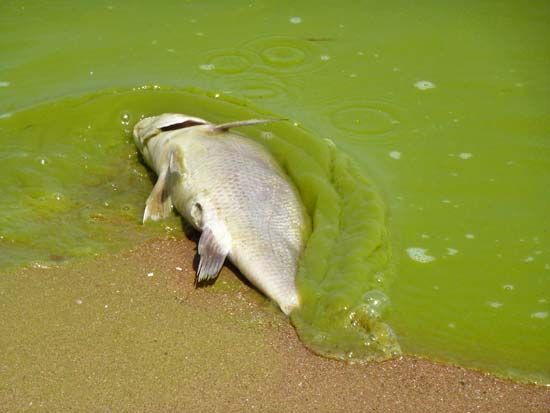
Harmful algal blooms (HABs) are dense populations of microscopic photosynthetic organisms, such as phytoplankton, cyanobacteria, diatoms, or dinoflagellates, that flourish in warm, shallow waters. While some blooms occur naturally and support the food chain, HABs are specifically damaging to aquatic life and human health.12
These blooms are often fueled by human activity, particularly the runoff of agricultural fertilizers and wastewater, which introduces excess nutrients like nitrates and phosphates into waterways. This process, known as cultural eutrophication, triggers rapid growth that can block sunlight, clog fish gills, and deplete oxygen levels, leading to “dead zones” and mass fish die-offs.324
Furthermore, some species produce potent toxins that accumulate in shellfish and finfish, rendering them unsafe for consumption and causing severe illnesses in humans. HABs also cause significant economic harm by disrupting commercial fisheries and forcing the closure of beaches and recreational areas.25
What is a marine dead zone?
A marine dead zone is an area of water, such as an ocean or lake, where dissolved oxygen levels are so severely depleted that most higher forms of aquatic life cannot survive. These hypoxic conditions are often the result of cultural eutrophication, a process driven by human activity7.78
The formation of a dead zone typically follows this sequence:
- Nutrient Enrichment: Runoff from agricultural fertilizers, wastewater, and other sources introduces excess nitrogen and phosphorus into coastal waters.398
- Algal Blooms: These nutrients fertilize phytoplankton, causing rapid, excessive population growth known as an algal bloom.98
- Decomposition: As these massive quantities of algae die and sink, they are consumed by bacteria. The decomposition process consumes vast amounts of oxygen.98
- Hypoxia: The resulting drop in oxygen levels forces mobile species, such as fish, to flee the area, while sedentary bottom dwellers—including shrimp, crabs, and starfish—suffocate and die.798
One of the most prominent examples is the dead zone in the Gulf of Mexico, which forms annually near the Mississippi River delta and can reach the size of New Jersey.98
How does agricultural runoff contribute to water pollution?
Agricultural runoff is a primary driver of water pollution, introducing a variety of contaminants into aquatic ecosystems through soil erosion and water transport. Its impact is primarily felt through the following mechanisms:11
- Nutrient Loading: Runoff carries excess nitrogen and phosphorus from fertilizers and animal waste into streams, lakes, and coastal waters. This triggers cultural eutrophication, causing massive algal blooms that deplete oxygen and create hypoxic “dead zones” where most aquatic life cannot survive.1179
- Pesticide Contamination: Pesticides applied to crops can move from target areas into the environment via runoff. These chemicals, particularly persistent ones like chlorinated hydrocarbons, can accumulate in the environment, posing risks to nontarget organisms and human health.12
- Sediment and Organic Waste: Soil erosion delivers sediment into waterways, which can carry attached chemicals and increase water turbidity. Additionally, runoff from agricultural enterprises, such as feedlots and processing facilities, may introduce organic wastes and infectious disease organisms into water supplies.11121314
- Groundwater Impact: Nutrients and chemicals can leach into groundwater, potentially contaminating drinking water sources with nitrates and nitrites.13
What is the difference between phytoplankton and zooplankton?
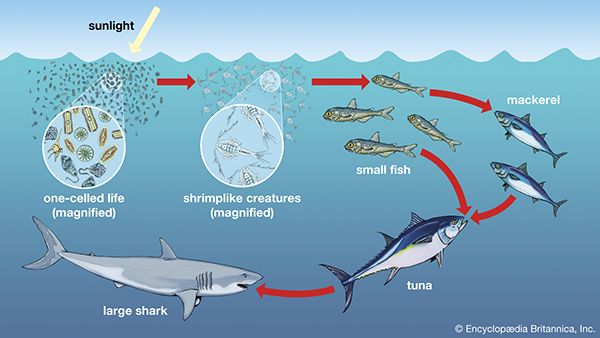
The primary distinction between phytoplankton and zooplankton lies in their biological roles and methods of obtaining energy within the marine ecosystem.16
- Phytoplankton: These are plantlike organisms or photosynthetic protists that serve as the primary producers of the marine community. By carrying out photosynthesis, they convert minerals and carbon dioxide into organic matter, releasing oxygen in the process18. Common examples include diatoms, dinoflagellates, and various types of algae.161718
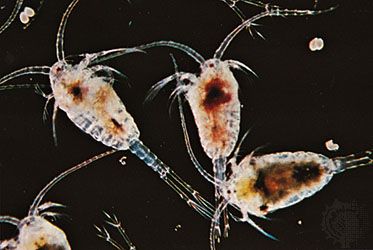
- Zooplankton: These are heterotrophic consumers, consisting of animals or animal-like protists that feed on phytoplankton or other zooplankton. They are further categorized by their life cycle: holoplankton spend their entire lives as plankton (such as copepods and krill), while meroplankton spend only a portion of their life cycle—typically the larval stage—as plankton before maturing into bottom-dwelling or swimming adults.1619
While this classification is a convenient way to organize these drifting organisms, many planktonic species are complex protists that do not fit strictly into the categories of plant or animal.1816
Sources
- Water bloom — Encyclopædia Britannica
- Sargassum — Encyclopædia Britannica
- conservation - Pollution — Encyclopædia Britannica
- water pollution - Domestic sewage — Encyclopædia Britannica
- Harmful Algal Blooms — Encyclopædia Britannica
- Algae - Toxicity — Encyclopædia Britannica
- eutrophication Has Greek Roots — Merriam-Webster
- dead zone — Merriam-Webster
- water pollution - Effects of water pollution on groundwater and oceans — Encyclopædia Britannica
- Marine ecosystem - Geography, oceanography, and topography — Encyclopædia Britannica
- eutrophication — Encyclopædia Britannica
- Agricultural technology - Monitoring pesticides — Encyclopædia Britannica
- Agricultural technology - Plant nutrients — Encyclopædia Britannica
- Agricultural technology - Agricultural processing wastes — Encyclopædia Britannica
- Agricultural technology - Pollutants damaging to agriculture — Encyclopædia Britannica
- zooplankton — Encyclopædia Britannica
- plankton - Phytoplankton — Encyclopædia Britannica
- Marine ecosystem - Plankton — Encyclopædia Britannica
- phytoplankton — Encyclopædia Britannica
Published on · 3 min read