Sirenian
Sirenians, which include manatees and dugongs, face significant threats primarily driven by human activity. Because these animals have low reproductive…
What are the main threats to sirenian populations in the wild?
Sirenians, which include manatees and dugongs, face significant threats primarily driven by human activity. Because these animals have low reproductive rates, they struggle to recover from population losses caused by the following factors:1234
- Habitat Degradation: The loss of seagrass beds and the disruption of warm-water springs—essential for survival during cold weather—severely impact populations.134
- Collisions: In many regions, particularly Florida, accidental collisions with motorboats and watercraft are a leading cause of mortality.124
- Entanglement: Sirenians are frequently killed by accidental drowning after becoming entangled in fishing nets.234
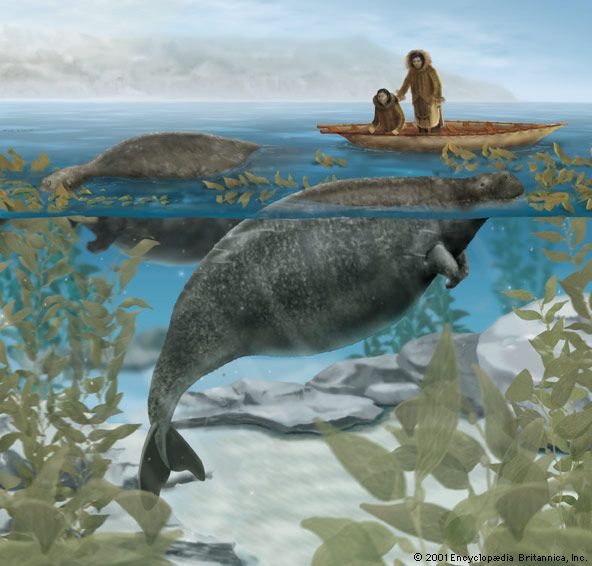
- Hunting: While now protected by law in most areas, historical and ongoing illegal hunting for meat, hides, and oil has historically decimated populations, including the extinction of Steller’s sea cow.34
- Pollution and Algal Blooms: Agricultural runoff can fuel harmful algal blooms, which may produce toxins that sicken or kill marine mammals.5
It is a fundamental ethical imperative to protect these vulnerable species from human-induced harm and ensure the preservation of their natural habitats.
What are the main characteristics that define sirenians as mammals?
Sirenians, which include manatees and dugongs, are classified as mammals because they possess the defining biological traits of the class Mammalia. Despite their fully aquatic lifestyle, they exhibit the following key characteristics:
- Mammary Glands: Like all mammals, female sirenians nourish their young with milk produced by mammary glands. In sirenians, these are located near the base of each flipper.7
- Viviparity: They are viviparous, meaning they bear live young rather than laying eggs.8
- Hair: While nearly hairless as adults, they possess sensory hairs called vibrissae on their muzzles, a trait consistent with the mammalian presence of hair trait consistent with the mammalian presence of hair.6
- Endothermy: As mammals, they possess the ability to regulate their internal body temperature, allowing them to thrive in various environments.8
- Anatomical Features: They share the fundamental mammalian skeletal structure, including a lower jaw hinged directly to the skull and a middle ear containing three tiny bones for sound transmission.8
What are the different species of sirenians and where are they found?
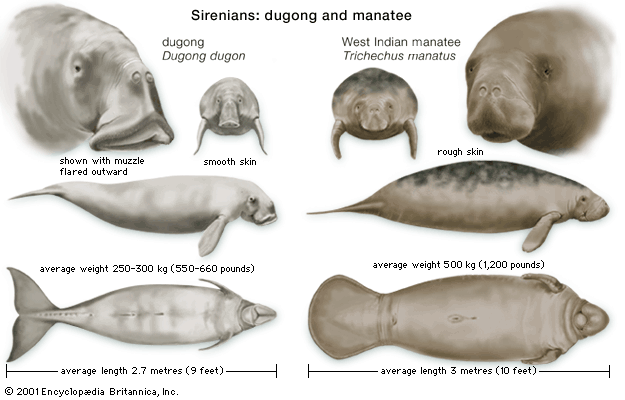
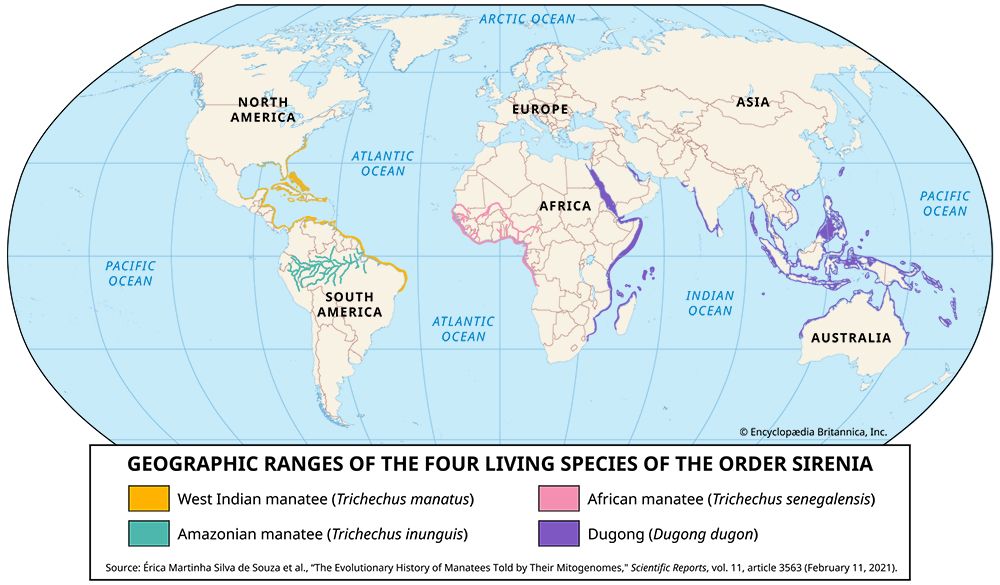
There are four living species of sirenians, which are divided into two families: the Trichechidae (manatees) and the Dugongidae (dugongs).6
Family Trichechidae (Manatees)
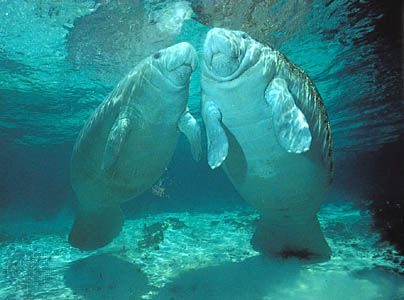
There are three species of manatees, all belonging to the genus Trichechus. They are found in tropical and subtropical Atlantic coastal waters and associated inland river systems:69
- West Indian manatee (Trichechus manatus): This species includes the Florida manatee and the Antillean manatee. They inhabit coastal waters, lagoons, estuaries, and rivers from the southeastern United States, through the Caribbean and Central America, to northern South America.9
- Amazonian manatee (Trichechus inunguis): This is a strictly freshwater species found throughout the Amazon River basin in Brazil, Ecuador, Peru, and Colombia.9
- West African manatee (Trichechus senegalensis): Found in coastal areas and slow-moving rivers along the western coast of Africa, ranging from Senegal to Angola.9
Family Dugongidae (Dugongs)
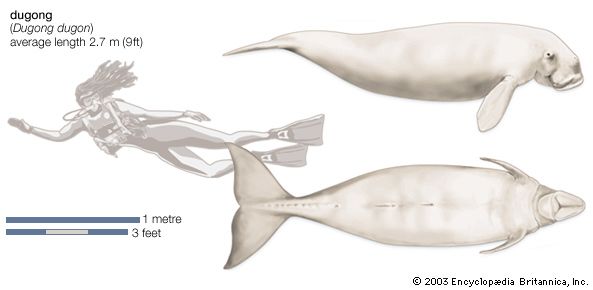
- Dugong (Dugong dugon): The only living member of this family, the dugong is exclusively marine. It inhabits warm coastal waters across the Indian and Pacific oceans, including the coasts of East Africa, the Red Sea, the Persian Gulf, the Indian subcontinent, and throughout the western Pacific from Japan to Australia.63
Additionally, the extinct Steller’s sea cow (Hydrodamalis gigas) was a member of the Dugongidae family that once inhabited the cold waters of the Bering Sea before being hunted to extinction in the 18th century.610
What is the evolutionary history of sirenians and how are they related to other mammals?
The evolutionary history of sirenians (order Sirenia) traces back to the Paleocene Epoch, approximately 65 to 54.8 million years ago. They originated in the Old World from terrestrial, hoofed mammals known as tethytheres, which inhabited the region surrounding the ancient Tethys Sea.613
Evolutionary Relationships
Sirenians are closely related to other mammals within the group known as Uranotheria. Their evolutionary lineage is defined by the following connections:
- Tethytherians: Sirenians and proboscideans (the order including elephants) are classified together as tethytherians, sharing a common ancestry from the same group of ancient hoofed mammals.13
- Hyracoids: The hyrax (order Hyracoidea) is considered the closest terrestrial relative to both sirenians and proboscideans. Together, these three orders form the clade Uranotheria.1314
Diversification
Following their transition to an aquatic lifestyle, early sirenians spread throughout tropical shallow waters. The family Dugongidae emerged as an early offshoot, eventually giving rise to the family Trichechidae (manatees) approximately 40 million years ago.6
Sources
- Manatee Awareness Month — Encyclopædia Britannica
- manatee - Conservation status — Encyclopædia Britannica
- dugong — Encyclopædia Britannica
- Harmful Algal Blooms — Encyclopædia Britannica
- water pollution: Top Questions — Encyclopædia Britannica
- sirenian — Encyclopædia Britannica
- mammal — Encyclopædia Britannica
- Did you know? — Merriam-Webster
- sea cow — Encyclopædia Britannica
- manatee - Natural history — Encyclopædia Britannica
- manatee — Encyclopædia Britannica
- manatee - Evolution and paleontology — Encyclopædia Britannica
- siren — Encyclopædia Britannica
- Triassic Period - Fishes and marine reptiles — Encyclopædia Britannica
- proboscidean — Encyclopædia Britannica
- hyrax — Encyclopædia Britannica
Published on · 4 min read