History of Arabia
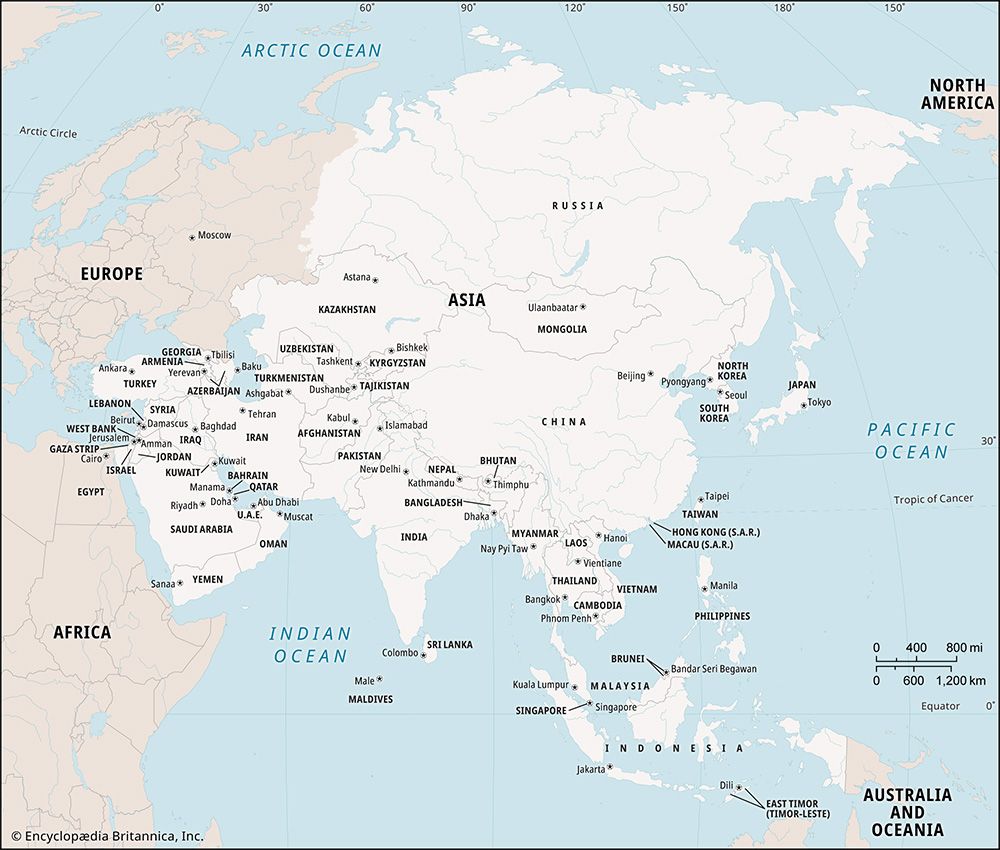
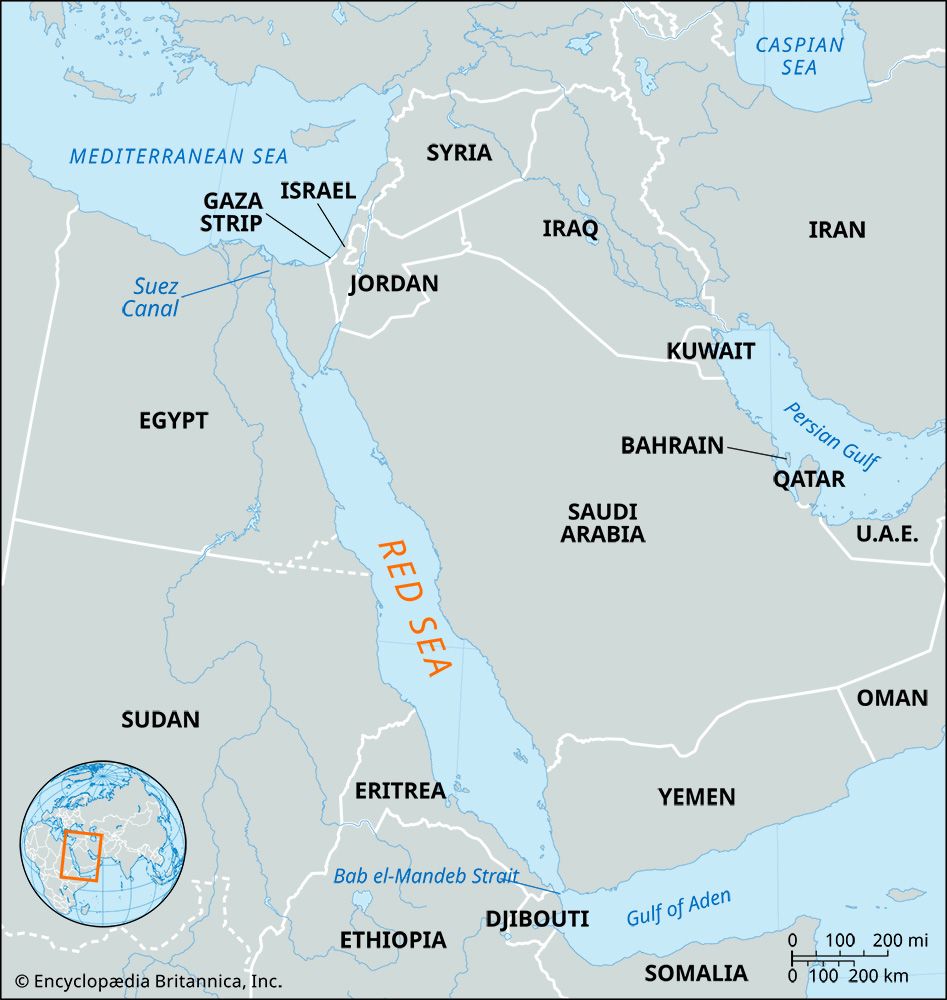
Arabia, or the Arabian Peninsula, is a region located in the extreme southwestern corner of Asia.
Where is Arabia located?
Arabia, or the Arabian Peninsula, is a region located in the extreme southwestern corner of Asia.1
The peninsula is defined by the following bodies of water:
- West and Southwest: Red Sea1
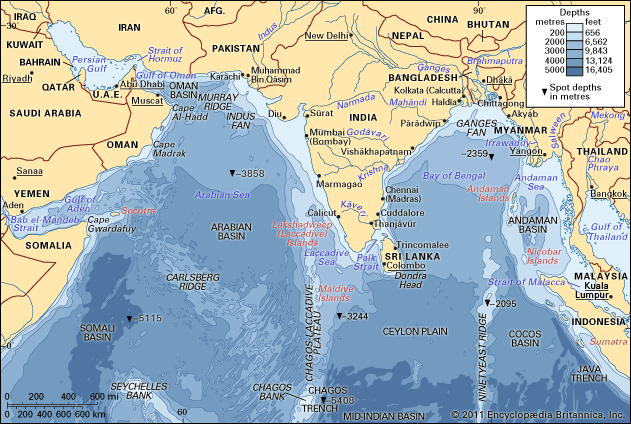
- South: Gulf of Aden and the Arabian Sea1
- East: Gulf of Oman and the Persian Gulf1
To the north, the peninsula merges with the Syrian Desert, with the northern boundaries of Saudi Arabia and Kuwait generally marking the limit of the region. While the term “Arabia” is commonly used to refer to the entire peninsula, historical and geographical definitions have varied; in some ancient sources, the term was applied more broadly to include parts of the Syrian, Jordanian, and Iraqi deserts.12
What ancient civilizations or peoples lived in Arabia?
Ancient Arabia was home to a variety of civilizations and peoples, ranging from early maritime trading centers to powerful kingdoms in the south and nomadic tribes in the arid interior.
Early Maritime and Trading Centers
- Dilmun: Centered on Bahrain Island, this ancient kingdom flourished as early as the 3rd millennium BCE. It served as a vital commercial hub, facilitating trade between Sumer, the Indus Valley, and the Arabian Peninsula.56
Kingdoms of Southern Arabia
The southwestern region, often referred to as Arabia Felix, was home to several sophisticated, settled kingdoms that controlled lucrative trade routes for frankincense and spices.78
- Sabaeans: Perhaps the most prominent, the Sabaeans (biblical Sheba) established a kingdom centered at Ma’rib. They were renowned for their advanced irrigation, including the great Ma’rib Dam, and their influence spanned from the 1st millennium BCE until the 6th century CE.910
- Other Peoples: Ancient sources and linguistic data identify other major groups, including the Minaeans, Qatabanians, and Hadramites, who maintained independent kingdoms and city-states in the region.710
Northern and Central Peoples
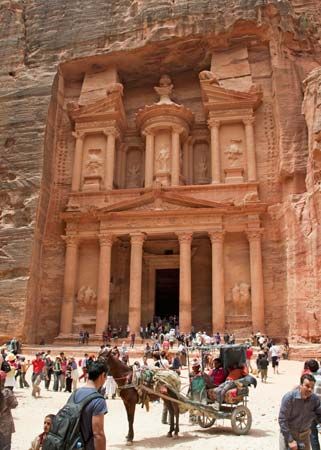
- Nabataeans: Based in their mountain fortress of Petra, the Nabataeans dominated the caravan trade between the Arabian interior and the Mediterranean coast until their kingdom was annexed by Rome in 106 CE.11
- Bedouin: These nomadic pastoralists adapted to the harsh desert environment by breeding camels, horses, and sheep. They played a crucial role in the region’s economy and culture, interacting with settled populations through trade, pilgrimage, and the exchange of poetry.128
How did trade influence Arabia in ancient times?
In ancient times, trade was a primary driver of economic and cultural development in Arabia, connecting the peninsula to major civilizations like Mesopotamia, Egypt, and India.1214
Key Drivers of Trade
- Strategic Location: Arabia served as a vital bridge between the Mediterranean world and the East. By the 3rd millennium BCE, the region was integrated into the broader orbit of western Asian civilizations.12
- Technological Advancements: The domestication of the camel around the 12th century BCE revolutionized desert travel, enabling the growth of flourishing caravan routes that transported goods across arid landscapes.12
- Maritime Innovation: The discovery of monsoon winds in the Indian Ocean allowed for efficient seaborne trade between Red Sea ports and India, facilitating the exchange of luxury items, spices, and textiles.1214
Economic Impact
- Wealth and Urbanization: Southern Arabian states, such as Saba and Hadhramaut, grew wealthy by controlling the trade of frankincense and myrrh, which were highly valued in religious rituals across the ancient world.121516
- Entrepôts: Centers like Dilmun (modern Bahrain) became thriving hubs where merchants from diverse regions exchanged goods, fostering a cosmopolitan environment.12
What major religions began or spread in Arabia?
Before the rise of Islam in the 7th century CE, Arabia was home to a diverse religious landscape characterized by both indigenous polytheistic traditions and the presence of major monotheistic faiths.
Pre-Islamic Religious Traditions
- Polytheism: Before the 7th century, the dominant religious practice across the peninsula was polytheism. This involved the worship of various deities, often associated with astral bodies or local tribal patrons. In South Arabia, the pantheon included gods such as Athtar (associated with Venus), the sun goddess Shams, and various national deities like Almaqah in Saba.2019
Spread of Monotheistic Religions
By the beginning of the Common Era, Arabia was increasingly influenced by international political and religious shifts:
- Judaism: Jewish communities had been settling in Arabia since the 1st century CE. By the 4th century, some Arab tribes had converted to Judaism, and it became a significant religious force, notably in the Yemen.20
- Christianity: Christianity spread into the region through missionizing efforts encouraged by the Byzantine Empire and through the influence of Abyssinia and Egypt. Major centers, such as Najran, became focal points for Christian communities.20
The Rise of Islam
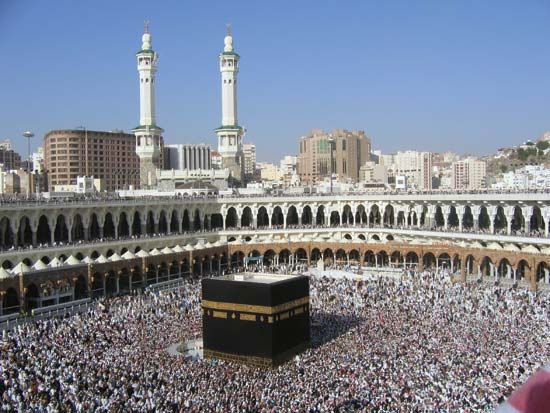
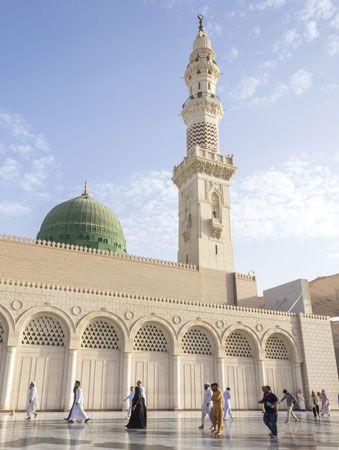
In the 7th century, Islam emerged in Mecca and Medina. It unified the tribes under the worship of Allah alone, replacing local polytheistic deities. Following the death of the Prophet Muhammad, the faith expanded rapidly beyond the peninsula, driven by both religious mandate and the geopolitical weakness of neighboring empires like Byzantium and Sasanian Persia.2120
Sources
- Arabia — Encyclopædia Britannica
- history of Arabia — Encyclopædia Britannica
- Arabian Desert - Physical features — Encyclopædia Britannica
- Arabian Sea - Physical features — Encyclopædia Britannica
- Dilmun — Encyclopædia Britannica
- history of Arabia - Sabaean and Minaean kingdoms — Encyclopædia Britannica
- Nabataean — Encyclopædia Britannica
- Arabian Desert - People of the Arabian Desert — Encyclopædia Britannica
- history of Arabia - Sabaeans — Encyclopædia Britannica
- Sabaʾ — Encyclopædia Britannica
- history of Arabia - Prehistory and archaeology — Encyclopædia Britannica
- ancient Middle East - Pre-Islamic Arabia. — Encyclopædia Britannica
- Islamic world - The Arabian Peninsula — Encyclopædia Britannica
- India - Contacts with the West — Encyclopædia Britannica
- history of Arabia - Hadramite s — Encyclopædia Britannica
- history of Sri Lanka - Foreign trade — Encyclopædia Britannica
- history of Arabia - The Ottoman s — Encyclopædia Britannica
- incense — Encyclopædia Britannica
- history of Arabia - The rise of Islam — Encyclopædia Britannica
- Arabian religion — Encyclopædia Britannica
- Arabian religion - South Arabia — Encyclopædia Britannica
Published on · 4 min read