How Do Birds Know When to Fly South?
Migratory birds know when to fly south due to a complex interplay between internal physiological rhythms and external environmental cues.

How do birds know when to fly south?
Migratory birds know when to fly south due to a complex interplay between internal physiological rhythms and external environmental cues.1
Physiological Preparation
The process is largely governed by the endocrine system, specifically the pituitary gland, which acts as a command center. As day length decreases in autumn, the pituitary gland secretes hormones that trigger metabolic changes, such as the accumulation of fat in body tissues to provide energy for the long journey. These internal cycles prepare the bird for migration, but they do not act alone.12
Environmental Triggers
While the internal clock readies the bird, specific ecological conditions are often required to initiate the flight. These include:2
- Day length: Changes in photoperiodism serve as a primary signal.13
- Weather: Sudden drops in temperature or shifts in barometric pressure can trigger immediate departure in many species.12
- Food availability: Dwindling resources as winter approaches act as a strong incentive to migrate.12
How do birds use the Earth’s magnetic field to navigate?
Birds possess a demonstrated “compass sense” that allows them to maintain a constant direction during flight, a capability widely attributed to their sensitivity to both the intensity and the direction of the Earth’s magnetic field. This ability, known as magnetoreception, is a key component of their navigational toolkit, enabling them to orient themselves even when other environmental cues are unavailable.36
While the exact physiological mechanisms remain a subject of ongoing scientific study, it is understood that this magnetic sensitivity works in tandem with other navigational methods, such as celestial navigation using the Sun and stars. Together, these systems provide birds with a sophisticated “grid” that facilitates both simple compass orientation and complex goal-oriented navigation.37
What are some of the longest migration journeys taken by birds?
Several bird species undertake extraordinary long-distance migrations, navigating vast stretches of ocean and land to reach their seasonal destinations.
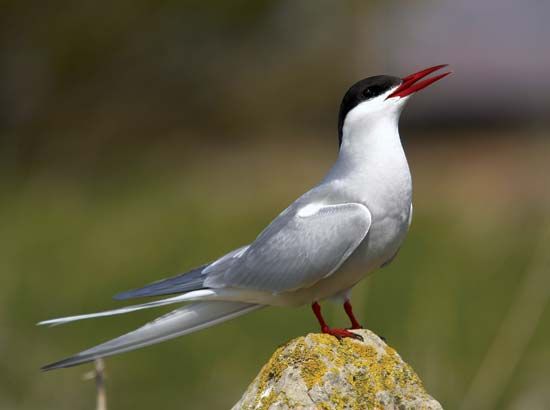
- Arctic Tern: This species holds the record for the longest annual migration of any bird. Breeding in the Arctic and wintering in the Antarctic, these birds complete a round-trip journey of approximately 60,000 to 82,000 km (37,000 to 51,000 miles).8
- Wandering Albatross: These pelagic birds are known to circle the globe during their migrations. One individual was recorded traveling at least 13,000 km (8,100 miles)—and potentially up to 18,000 km (11,200 miles)—in less than 10 months by drifting with prevailing winds.9
- Short-tailed Shearwater: Nesting in Australia and Tasmania, these birds migrate across the Pacific to Japan and the Arctic, later returning via the Pacific coast of North America in a massive circular route.9
- Wilson’s Petrel: These birds perform a great loop through the Atlantic Ocean, traveling from Antarctic breeding grounds to the North Atlantic and back, following prevailing wind patterns.9
- American Golden Plover: Known for impressive non-stop flights, these birds travel 3,300 km (2,050 miles) directly from the Aleutian Islands to Hawaii, a journey requiring roughly 35 hours of continuous flight.5
How do nocturnal migratory birds use the stars to find their way?
Nocturnal migratory birds navigate by using the stars to determine their bearings during flight. Research has demonstrated that these birds are capable of orienting themselves correctly based on the arrangement of the night sky, a process that involves true celestial navigation to determine their latitude and longitude.3
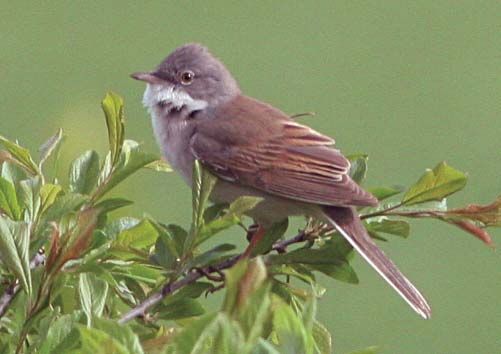
In controlled experiments, such as those conducted in planetariums, captive migrants have been shown to head in their species-specific migratory directions when exposed to an artificial night sky. For instance, birds like blackcaps and garden warblers have been observed orienting themselves toward the southwest, while lesser whitethroats oriented toward the southeast, matching their natural migratory paths. This ability allows nocturnal migrants to maintain a constant direction even when other environmental cues are unavailable, serving as a vital component of their navigational “grid”.311
Sources
- How do birds know when to fly south? — Encyclopædia Britannica
- Migration - Navigation and orientation — Encyclopædia Britannica
- Migration - Birds — Encyclopædia Britannica
- Migration - Physiological stimulus of migration — Encyclopædia Britannica
- Migration - Modes of migration — Encyclopædia Britannica
- Homing — Encyclopædia Britannica
- cetacean - Magnetic sensitivity — Encyclopædia Britannica
- Migration - In coastal and pelagic regions — Encyclopædia Britannica
- Arctic tern — Encyclopædia Britannica
- Bird - Flight — Encyclopædia Britannica
- Animal learning - Navigation — Encyclopædia Britannica
Published on · 3 min read