How Do Fish Breathe?
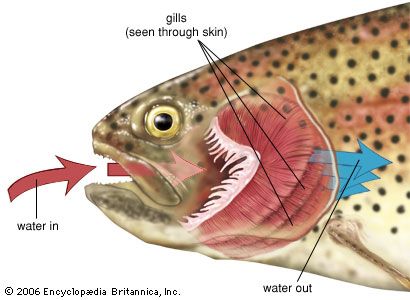
Fish primarily breathe using gills, specialized organs located behind the mouth cavity that extract dissolved oxygen from water. As a fish takes water into…
How do fish breathe?
Fish primarily breathe using gills, specialized organs located behind the mouth cavity that extract dissolved oxygen from water. As a fish takes water into its mouth and forces it over feathery gill filaments, oxygen diffuses into the blood while carbon dioxide is released. This process is highly efficient due to countercurrent exchange, where blood in the capillaries flows in the opposite direction of the water, ensuring a constant concentration gradient for oxygen absorption.123
While most fish rely on gills, some have evolved unique adaptations to survive in oxygen-poor environments:
- Lungfishes: Use primitive lungs derived from the swim bladder to gulp air.2
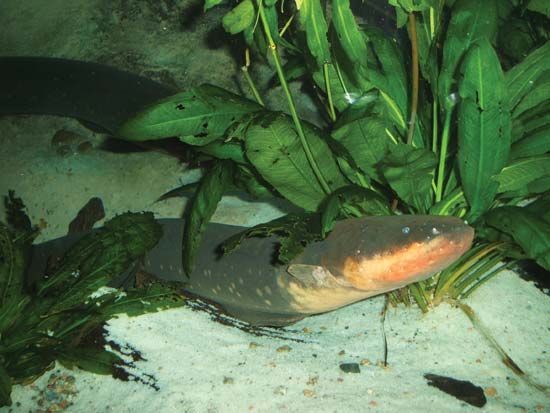
- Electric eels: Utilize their highly vascularized mouths to absorb oxygen from the air.2
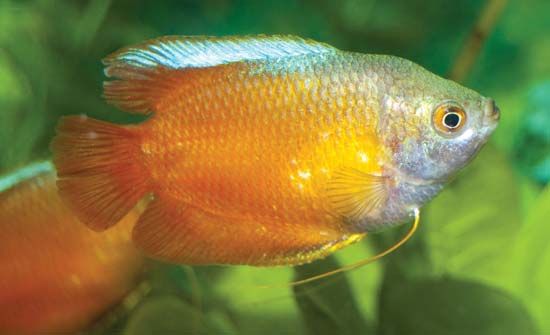
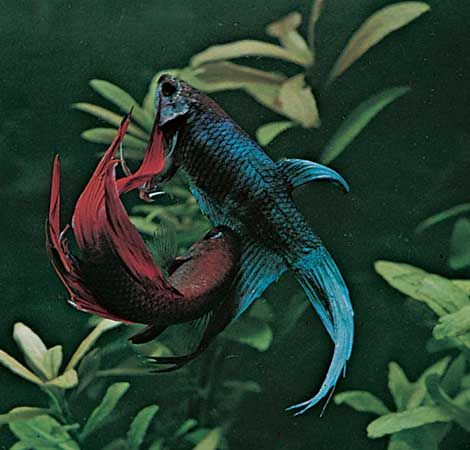
- Labyrinth fish: Possess a specialized labyrinth organ that functions like a rudimentary lung.2
What is countercurrent exchange in fish gills?
Countercurrent exchange is a highly efficient physiological mechanism in fish that maximizes oxygen absorption from water. In this process, the blood within the gill capillaries flows in the opposite direction to the water passing over the gill filaments.2
Because the fluids move in opposite directions, the blood is constantly exposed to water that has a slightly higher oxygen concentration than the blood itself. This maintains a favorable concentration gradient along the entire length of the gill filament, allowing oxygen to continue diffusing into the bloodstream rather than reaching an equilibrium where diffusion would stop. This mechanism ensures that fish can extract oxygen from their environment with remarkable efficiency.2
How do lungfish breathe air?
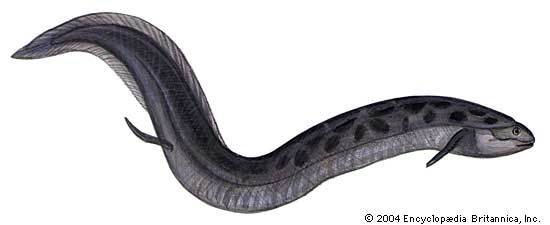
Lungfish breathe air using primitive lungs that are structurally and functionally similar to those of amphibians. These organs are derived from the swim bladder, an organ typically used for buoyancy in other bony fishes, and are connected to the alimentary tract.43
To breathe, the fish swims to the surface and positions its snout to gulp air. Inside the lungs, the inner surfaces feature honeycomb-like cavities lined with fine blood vessels, where gas exchange occurs in tiny air vesicles. Lungfish have also evolved a specialized pulmonary circulation system, with a partially divided heart that keeps oxygenated blood from the lungs separate from deoxygenated blood returning from the body.45
This adaptation allows lungfish to survive in oxygen-poor, stagnant freshwater where other fish might perish. While some species, such as the Australian lungfish, continue to use their gills when water is well-oxygenated, they rely increasingly on atmospheric air as water levels drop and oxygen content decreases.45
What is the function of a swim bladder?
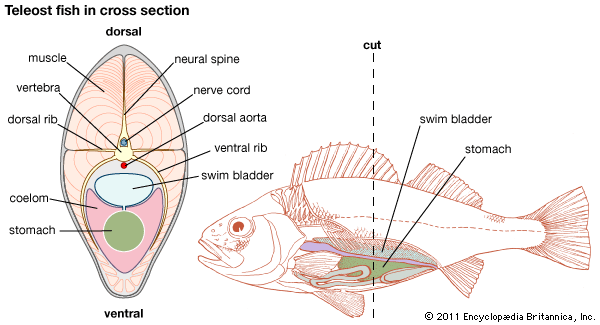
The swim bladder is a versatile organ found in most bony fish that serves several critical functions:
- Hydrostatic Control: It acts as a ballast organ, allowing fish to maintain their depth in the water column without sinking or floating upward. By regulating the amount of gas (usually oxygen) or oil within the bladder, fish can adjust their buoyancy to ascend or descend.67
- Respiration: In certain primitive species, the swim bladder functions as a lung or an accessory breathing organ. These fish can extract oxygen from the air, which is essential for survival in oxygen-poor or stagnant water environments.67
- Sound Production and Reception: The organ can serve as a resonating chamber, enabling fish to produce or detect sounds.6
The swim bladder is derived from an outpocketing of the digestive tract. While it is a key feature for many species, it is absent in all cartilaginous fish and has been lost or reduced in many bottom-dwelling and deep-sea species.67
Sources
- 14 Questions About Aquatic Animals Answered - How do fish breathe underwater? — Encyclopædia Britannica
- How do gills work? — Encyclopædia Britannica
- How do fish breathe? — Encyclopædia Britannica
- lungfish - Adaptations for breathing — Encyclopædia Britannica
- Circulatory system - Fishes — Encyclopædia Britannica
- swim bladder — Encyclopædia Britannica
- fish - The respiratory system — Encyclopædia Britannica
Published on · 3 min read