How Do Glowworms Glow?
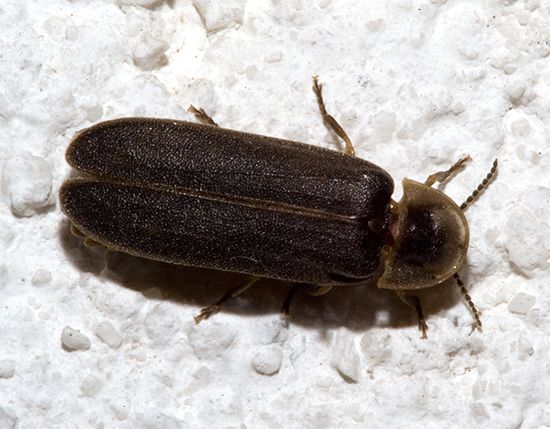
"Glowworm" is a general term for various luminous insects that emit light continuously or in prolonged glows. While these insects use diverse structures to…
How Do Glowworms Glow?
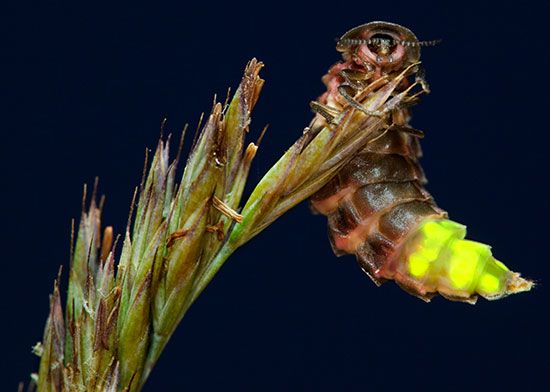
“Glowworm” is a general term for various luminous insects that emit light continuously or in prolonged glows. While these insects use diverse structures to produce light—such as modified salivary glands in Platyura, modified excretory organs in Arachnocampa, or specialized cells in beetles like Phengodes—they all rely on a shared chemical process.12
This bioluminescence occurs through a reaction involving:
- Luciferins: The light-emitting substrate.2
- Luciferase: An enzyme that catalyzes the reaction.2
- ATP: The energy molecule.2
- Oxygen.2
This reaction is highly efficient, converting chemical energy into radiant energy with almost no heat, which is why it is often called “cold light”. The resulting glow typically appears blue, green, or blue-green. These light-producing abilities likely evolved independently across different species to serve purposes such as attracting mates or luring prey.321
Why is bioluminescence called cold light?
Bioluminescence is referred to as “cold light” because the chemical reaction that produces it is remarkably efficient, converting chemical energy into radiant energy with almost no thermal energy loss.34
In this process, a light-emitting molecule called luciferin reacts with oxygen in the presence of an enzyme known as luciferase. Because nearly 100 percent of the energy is released as light rather than heat, the emission remains cool to the touch. This stands in contrast to incandescence, where materials must be heated to high temperatures to emit visible light, causing significant atomic agitation and heat radiation.5436
How do fireflies use light differently than glowworms?
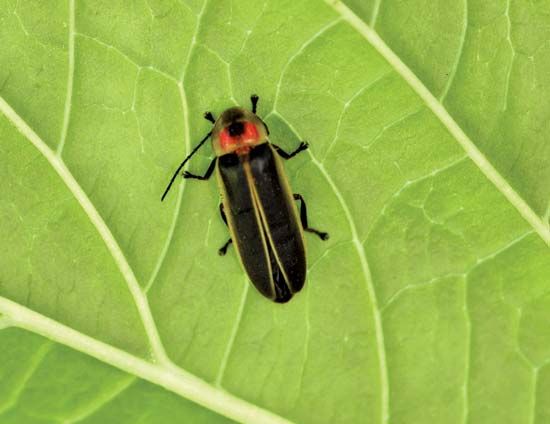
While fireflies and glowworms both utilize bioluminescence through a chemical reaction involving luciferin, luciferase, ATP, and oxygen, they differ significantly in how they use their light.748
Differences in Light Usage
- Pattern and Duration: Most fireflies are characterized by brief, rhythmic flashes of light, which serve as species-specific signals for communication and mating. In contrast, glowworms typically emit light continuously or in prolonged, steady glows.2741
- Purpose: For fireflies, the primary function of their flashing is to bring the sexes together for mating; some also use it as a defensive mechanism to warn predators of their bitter taste. Glowworms use their light for diverse purposes: in many species, the steady glow attracts mates, but in others, such as the gnat larvae Arachnocampa and Platyura, the light is used to lure prey into sticky webs.741
- Anatomy: Fireflies possess specialized “lanterns” on their abdomens controlled by the nervous system. Glowworms exhibit a wider variety of light-producing structures, including modified salivary glands, excretory organs, or solitary giant cells, reflecting independent evolutionary origins.418
What other animals besides insects use bioluminescence?
Bioluminescence is not exclusive to insects; it is found across a wide variety of organisms, including bacteria, fungi, and numerous marine life forms. While no plants are known to produce light, many other groups exhibit this trait:91011
- Marine Invertebrates: Many jellyfish use bioluminescence as a deterrent to predators, sometimes secreting glowing mucus to confuse them. Various squid species also use light for defense, such as emitting glowing clouds, or for camouflage, as seen in the bobtail squid. Additionally, small crustaceans like Vargula hilgendorfi glow when disturbed.911
- Fish: Fish are the only bioluminescent vertebrates. Species such as the anglerfish use glowing lures to attract prey, while lanternfish use unique patterns of light-generating photophores for signaling and mating.1193
- Microorganisms: Many protozoans, such as the dinoflagellate Noctiluca scintillans, are responsible for the glowing wakes often seen in the ocean.910
- Fungi: Over 70 species of fungi produce light, often referred to as “foxfire,” which may help them repel predators or attract insects for spore dispersal.11
Sources
- How Do Glowworms Glow? — Encyclopædia Britannica
- glowworm — Encyclopædia Britannica
- Bioluminescence — Encyclopædia Britannica
- How do fireflies light up? — Encyclopædia Britannica
- Bioluminescence: Top Questions — Encyclopædia Britannica
- luminescence - Luminescence and incandescence — Encyclopædia Britannica
- Did you know? — Merriam-Webster
- firefly — Encyclopædia Britannica
- Marine bioluminescence — Encyclopædia Britannica
- luciferase — Encyclopædia Britannica
- Everything’s Illuminated: 6 Bioluminescent Organisms — Encyclopædia Britannica
Published on · 3 min read