How Long Do Elephants Live?
Elephants generally have a lifespan of up to 60 to 70 years when living in the wild. Their longevity in natural habitats is influenced by factors such as the…
How long do elephants live?
Elephants generally have a lifespan of up to 60 to 70 years when living in the wild. Their longevity in natural habitats is influenced by factors such as the availability of food and water, the presence of predators, and human-related threats like poaching and habitat destruction.123
In contrast, elephants in captivity often experience significantly shorter lifespans. Research indicates that captivity can induce stress, and captive environments may not provide sufficient space for normal routines, contributing to health issues such as obesity and early death. For example, studies have shown that the average lifespan for captive elephants is notably lower than that of their wild counterparts, with some data suggesting captive individuals may live only about half as long as those in the wild or those used as working animals.14
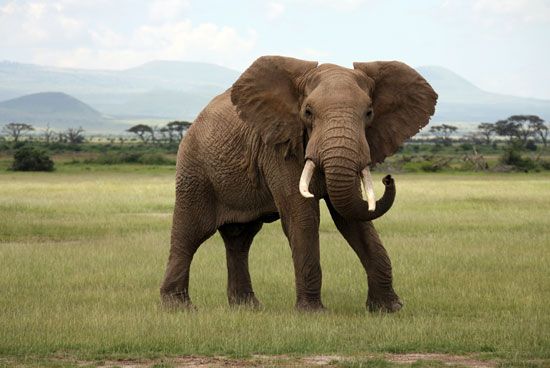
What are the main differences between African and Asian elephants?
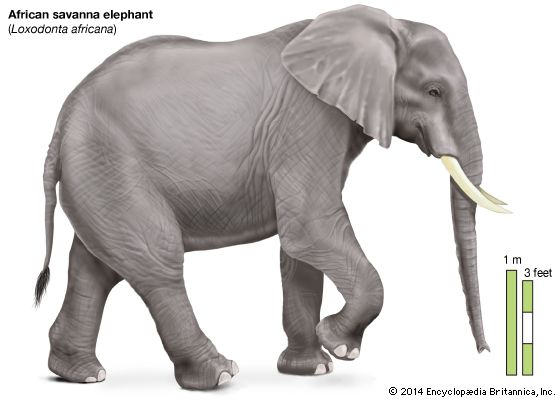
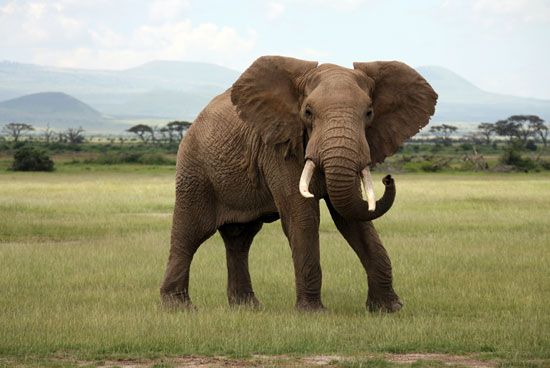
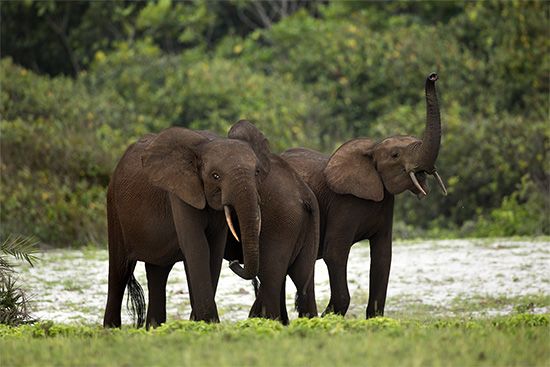
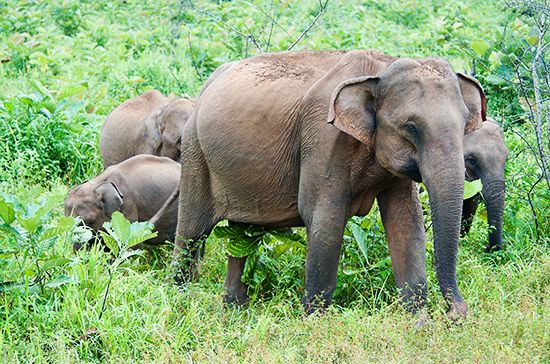
While African and Asian elephants share many similarities, they can be distinguished by several key physical and social characteristics. Since 2000, scientists have recognized two distinct African species—the African bush elephant and the African forest elephant—which differ from the Asian elephant in the following ways:
Physical Differences
- Ears: African elephants have much larger, continent-shaped ears used to dissipate heat, whereas Asian elephants have smaller, rounded ears.56
- Head Shape: African elephants possess a rounded head, while Asian elephants have a distinctive twin-domed head with a central divot.52
- Trunk: Asian elephants have a single flaplike projection at the end of their trunk, compared to two in African elephants.26
- Tusks: Both male and female African elephants can grow tusks, but in Asian elephants, only males typically develop them.56
- Size: African bush elephants are the largest, reaching up to 9 tons, while Asian elephants generally weigh up to 6 tons.5
Social and Behavioral Differences
African elephants typically travel in larger, more rigid social groups compared to Asian elephants. Both species exist in matriarchal societies where the oldest female leads the herd, while adult males are often solitary.65
Why do elephants have such long gestation periods?
Elephants have the longest gestation period of any mammal, lasting between 18 and 22 months. While the provided information confirms this duration, it does not explicitly detail the biological or evolutionary reasons for such an extended pregnancy.78
However, it is known that this lengthy period results in the birth of a highly developed calf, which stands about one meter (3.3 feet) tall and weighs approximately 100 kg (220 pounds) at birth. This advanced state of development at birth is a common trait among large mammals, allowing the offspring to better survive and integrate into the complex social structures of their family groups shortly after birth.7
How does poaching impact elephant population numbers?
Poaching represents a severe existential threat to elephant populations, primarily driven by the commercial demand for ivory found in their tusks. This illegal activity has historically caused catastrophic declines in elephant numbers; for instance, the African elephant population was reduced by more than half between 1979 and 1989, dropping from 1.3 million to 600,000 individuals.6910
The impact of poaching is profound and multifaceted:
- Population Depletion: Poaching is a primary factor in why all three elephant species are currently listed as endangered or critically endangered by the IUCN.910
- Targeted Loss: In Asian elephant populations, poaching specifically targets males for their tusks, which disrupts social structures and breeding dynamics.6
- Biodiversity Impact: As a major contributor to biodiversity loss, poaching undermines the stability of ecosystems where elephants serve as keystone species.10
Efforts to combat this crisis include international agreements like CITES and increased enforcement by game wardens to protect these animals from illegal slaughter.10
Sources
- How long do elephants live? — Encyclopædia Britannica
- Asian elephant — Encyclopædia Britannica
- African forest elephant — Encyclopædia Britannica
- Zoos - Con 2: Zoos are detrimental to the animals’ physical health. — Encyclopædia Britannica
- What’s the Difference Between Asian and African Elephants? — Encyclopædia Britannica
- Asian elephant: Top Questions — Encyclopædia Britannica
- elephant - Reproduction and life cycle — Encyclopædia Britannica
- elephant: Top Questions — Encyclopædia Britannica
- elephant - Conservation — Encyclopædia Britannica
- poaching — Encyclopædia Britannica
Published on · 3 min read