How Mike the Chicken Survived Without a Head
Mike the Headless Chicken survived his decapitation on September 10, 1945, because the axe failed to sever the entire brain. While most of a chicken's brain…
What is How Mike the Chicken Survived Without a Head?
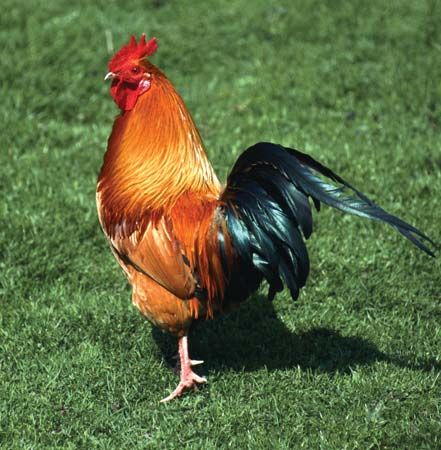
Mike the Headless Chicken survived his decapitation on September 10, 1945, because the axe failed to sever the entire brain. While most of a chicken’s brain is located in the back of the head, the cut left behind the portion responsible for essential bodily functions, such as breathing and digestion.
Following the incident, his owner, Lloyd Olsen, kept the bird alive for 18 months by manually feeding him liquid food and water directly into his esophagus using a dropper. Mike became a national sensation, touring the country as a sideshow attraction until his death in 1947, which occurred after he choked on mucus when his caretakers were unable to clear his throat. Today, the town of Fruita, Colorado, continues to commemorate his unusual survival with an annual festival.
How does a chicken’s brain structure differ from a human’s?
The primary structural difference between the avian and human brain lies in the organization of their higher-order processing centers. In the human brain, the cerebrum is dominated by the neopallium, which forms the bulk of the cerebral hemispheres and serves as the primary center for “intelligent” responses, learning, and complex behavior.2
In contrast, the highest center of the avian brain is the corpus striatum, an evolutionary product of the basal nuclei. Because of this structural distinction, the majority of complex behavior in birds is instinctive rather than driven by the type of cortical association found in mammals.2
Additionally, while both brains share the same fundamental divisions—the hindbrain, midbrain, and forebrain—their relative development differs significantly. For example, the mammalian midbrain is greatly reduced, serving primarily as a connection between the hindbrain and forebrain, whereas it remains a more significant center for sensory integration in birds.3
What other animal survival stories are considered scientific anomalies?
While Mike the Headless Chicken is a famous example of an animal surviving a severe injury, other creatures exhibit remarkable survival mechanisms that are considered scientific anomalies or biological marvels:
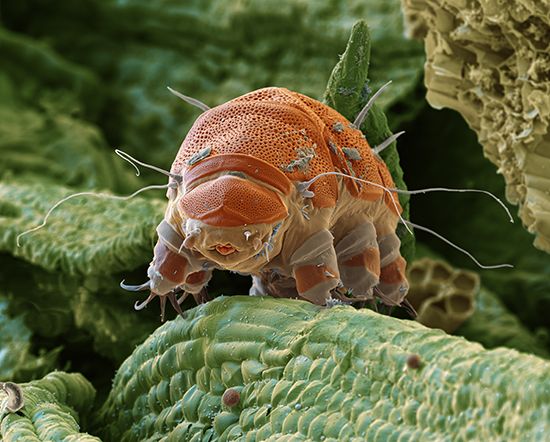
- Tardigrades: Often called “water bears,” these microscopic organisms are perhaps the ultimate survivors. They can enter a state of cryptobiosis—a desiccated, deathlike state—to endure extreme radiation, vacuum, and temperatures. They can remain in this state for decades before returning to active life upon exposure to water.7
- Wood Frogs: These amphibians survive freezing temperatures by entering a state of suspended animation. They accumulate glucose in their tissues, which acts as a cryoprotectant, preventing their cells from being destroyed by ice crystals during the winter.7
- Flat Bark Beetles: Similar to the wood frog, these beetles produce specialized proteins and reduce their body water content to survive freezing conditions that would be lethal to most other insects.7
- Pompeii Worms: Found near deep-sea hydrothermal vents, these worms are among the most heat-tolerant animals on Earth, capable of surviving temperatures as high as 175 °F (79 °C).7
How do reflexes function in birds after decapitation?
The premise that decapitation-induced movement in birds is driven solely by reflexes is incomplete. While reflexes play a role, such movements are often the result of endogenous, rhythmic patterns generated by the nervous system.
Research by physiologist Erich von Holst demonstrated that many rhythmic movements—such as locomotion, breathing, and feeding—are organized by local networks of neurons within the gray matter rather than by external sensory input. In many vertebrates, command neurons located in the lower medulla oblongata can activate these rhythmic patterns even when the higher brain centers are disconnected. These central pacemakers or oscillators allow motor impulses to continue independently of the brain, meaning that movements observed after decapitation are often the result of these pre-programmed, intrinsic neural circuits continuing to fire.
In contrast to humans, where the cerebral hemispheres have taken over the organization of complex movements, lower vertebrates retain the ability to execute these rhythmic functions through the spinal cord and brainstem.
Sources
- How Mike the Chicken Survived Without a Head — Encyclopædia Britannica
- mammal - Nervous and endocrine systems — Encyclopædia Britannica
- brainstem: Top Questions — Encyclopædia Britannica
- brainstem — Encyclopædia Britannica
- Brain — Encyclopædia Britannica
- Respiratory system - Birds — Encyclopædia Britannica
- 8 Animals That Live in Extreme Environments — Encyclopædia Britannica
- 8 Famous Animals — Encyclopædia Britannica
- human nervous system - Lower-level mechanisms of movement — Encyclopædia Britannica
Published on · 3 min read