Ice Shelf
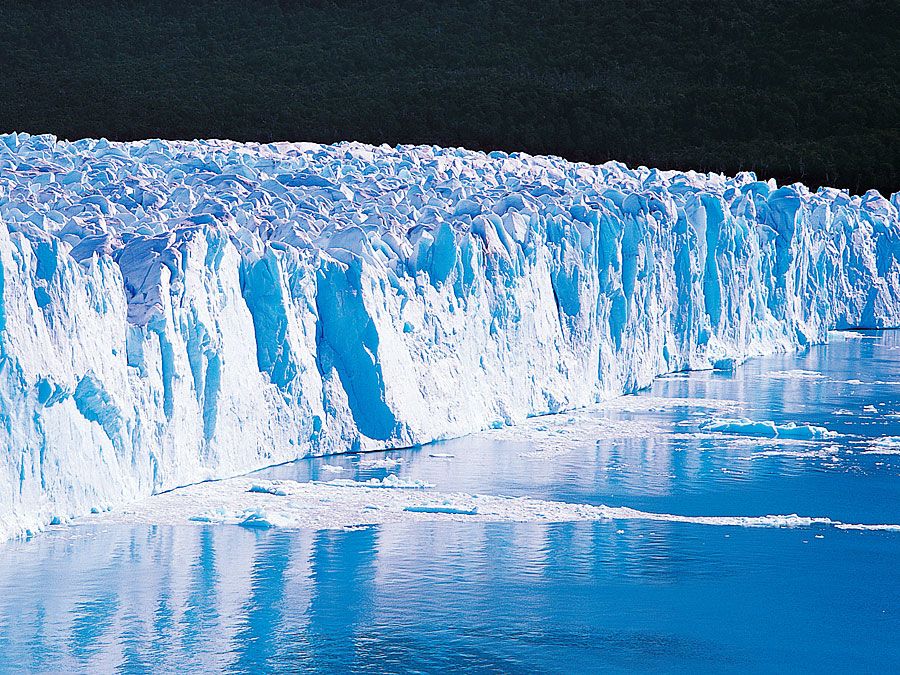
Calving is the natural process by which large chunks of ice break away from the edge of a glacier or ice shelf, resulting in the formation of icebergs. This…
What is the process of calving, and how does it affect ice shelves?
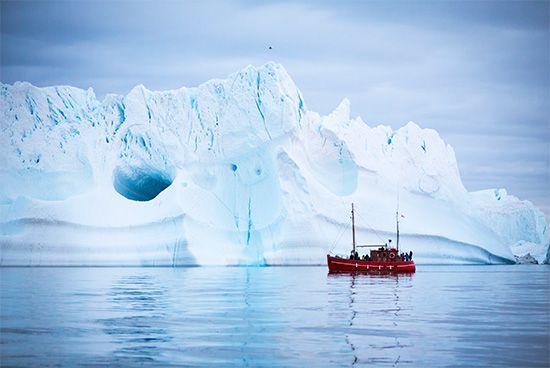
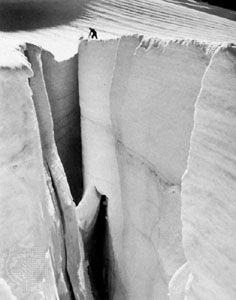
Calving is the natural process by which large chunks of ice break away from the edge of a glacier or ice shelf, resulting in the formation of icebergs. This process is driven by various factors, including ocean wave action, collisions with other icebergs, and the accumulation of meltwater on the ice surface, which can refreeze and expand within crevasses, causing the ice to fracture.123
Calving significantly impacts ice shelves by reducing their overall mass and stability. Because ice shelves act as natural dams that slow the flow of continental ice into the ocean, large-scale calving events can destabilize the remaining structure. When the rate of ice loss through calving and melting exceeds the gain from snowfall, it contributes to a negative mass balance, which can lead to rising global sea levels. While calving is a natural phenomenon, increased frequency in such events is often studied as a potential symptom of global warming and broader climate change.3451
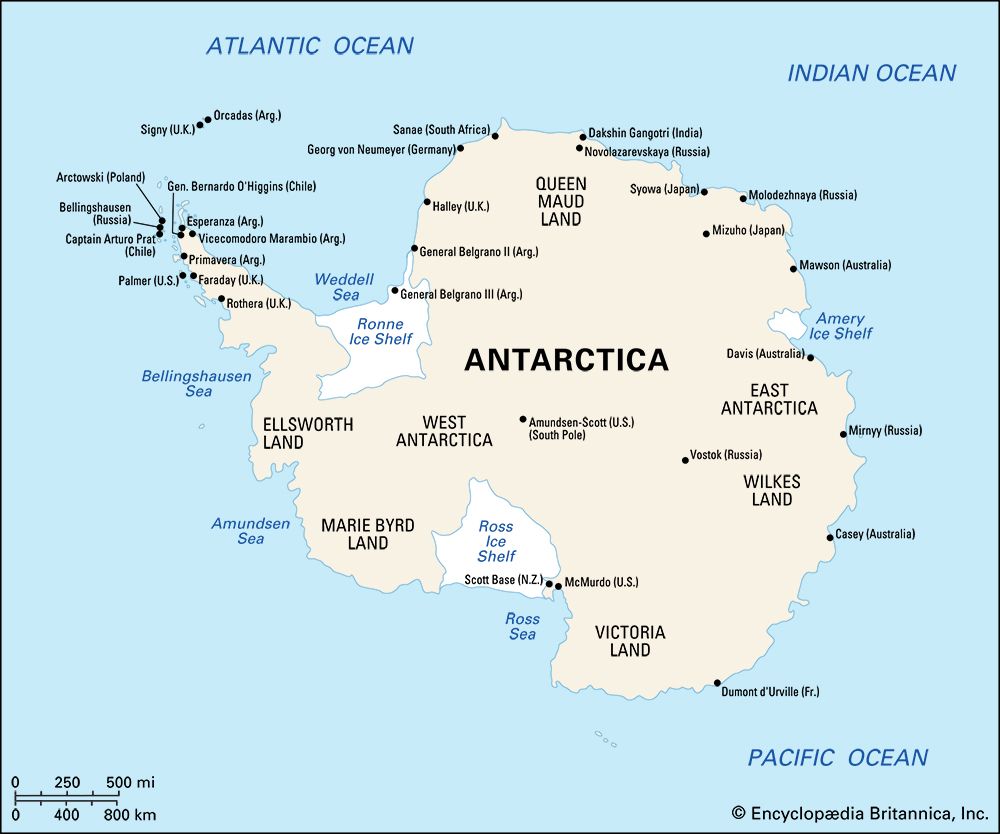
What are some of the largest ice shelves in the world and where are they located?
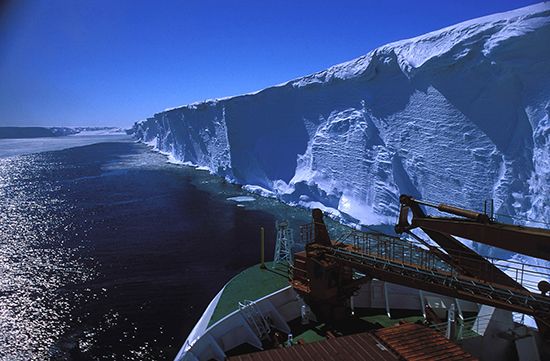
Ice shelves are massive, floating bodies of ice attached to land, primarily found in Antarctica. They are formed by glaciers extending from the continent into sheltered waters, where they remain relatively stable over long periods.9
Some of the largest ice shelves in the world include:
- Ross Ice Shelf: Located at the head of the Ross Sea, this is the world’s largest body of floating ice. It covers approximately 182,000 square miles (472,000 square km) and serves as a primary gateway to the Antarctic interior.1011
- Filchner-Ronne Ice Shelf: Situated at the head of the Weddell Sea, this massive ice mass is often categorized as two separate shelves—the Filchner and the Ronne—separated by Berkner Island. Together, they cover an area exceeding 500,000 square km.1211
- Amery Ice Shelf: Located along the Indian Ocean coastline of Antarctica, this shelf extends inland more than 200 miles (320 km) and covers approximately 23,200 square miles (60,000 square km).3
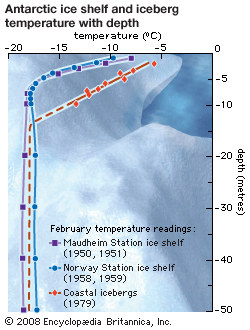
How do ice shelves form and what conditions are necessary for their creation?
Ice shelves are thick, floating masses of ice that form when glaciers extend from the land into sheltered coastal waters. They are essentially a continuation of the continental ice sheet, pushed seaward by the immense pressure of ice flowing from the interior of the continent.31
Several conditions are necessary for their creation and maintenance:
- Sheltered Waters: Ice shelves require relatively calm environments where they are protected from strong ocean currents that would otherwise break them apart.3
- Glacial Feed: They must be continuously fed by tongues of glaciers extending outward from the land.3
- Stability: In areas without strong currents, the ice may become partially grounded on the sea floor, attaching itself to rocks or islands, which helps anchor the structure.3
- Accretion: The shelf is built up over time through the accumulation of snowfall, allowing it to remain stable for long periods.3
The transition zone where the floating ice meets the ice resting on bedrock is known as the grounding line. While these shelves are naturally stable, they are subject to constant stress from tides, currents, and ocean swells, which eventually lead to the formation of crevasses and the eventual calving of icebergs.1
What is an ice shelf and how does it differ from other ice formations?
An ice shelf is a thick, massive body of floating ice that is attached to land. It forms when glaciers—which originate on land from the accumulation and compression of snow—extend outward from the continent into sheltered coastal waters. These shelves are essentially a seaward extension of a continental ice sheet and are pushed forward by the pressure of ice flowing from the interior.31816
Ice shelves differ significantly from other common ice formations:
- Vs. Glaciers: While glaciers originate on land and are composed of freshwater ice from snow, ice shelves are the specific portion of a glacier that has moved off the land and onto the ocean surface.1816
- Vs. Sea Ice: Sea ice, such as ice floes, is formed by the freezing of seawater itself. In contrast, ice shelves are formed from glacial ice, though they may accumulate “marine ice” at their base through the freezing of seawater beneath them.181
- Vs. Icebergs: Icebergs are the result of the fracturing or “calving” of ice shelves or glaciers. While an ice shelf is a stable, attached structure, an iceberg is a detached, floating mass.163
Sources
- iceberg - Antarctic icebergs — Encyclopædia Britannica
- glacier - Tidewater glaciers — Encyclopædia Britannica
- ice shelf — Encyclopædia Britannica
- A Trillion Tonnes of Antarctica Fell into the Sea — Encyclopædia Britannica
- iceberg - Impacts on ice sheets and sea level — Encyclopædia Britannica
- iceberg - Impact on ocean structure — Encyclopædia Britannica
- sea level rise: Top Questions — Encyclopædia Britannica
- sea level — Encyclopædia Britannica
- Ross Ice Shelf — Encyclopædia Britannica
- Filchner Ice Shelf — Encyclopædia Britannica
- iceberg - Iceberg size and shape — Encyclopædia Britannica
- glacier - West Antarctica — Encyclopædia Britannica
- Amery Ice Shelf — Encyclopædia Britannica
- sea ice - Interactions with the oceans , atmosphere , and climate — Encyclopædia Britannica
- ice shelf — Merriam-Webster
- iceberg - Arctic icebergs — Encyclopædia Britannica
- glacier - Climatic conditions — Encyclopædia Britannica
- What’s the Difference Between a Glacier and an Ice Floe? — Encyclopædia Britannica
- sea ice — Encyclopædia Britannica
Published on · 4 min read