Iceberg
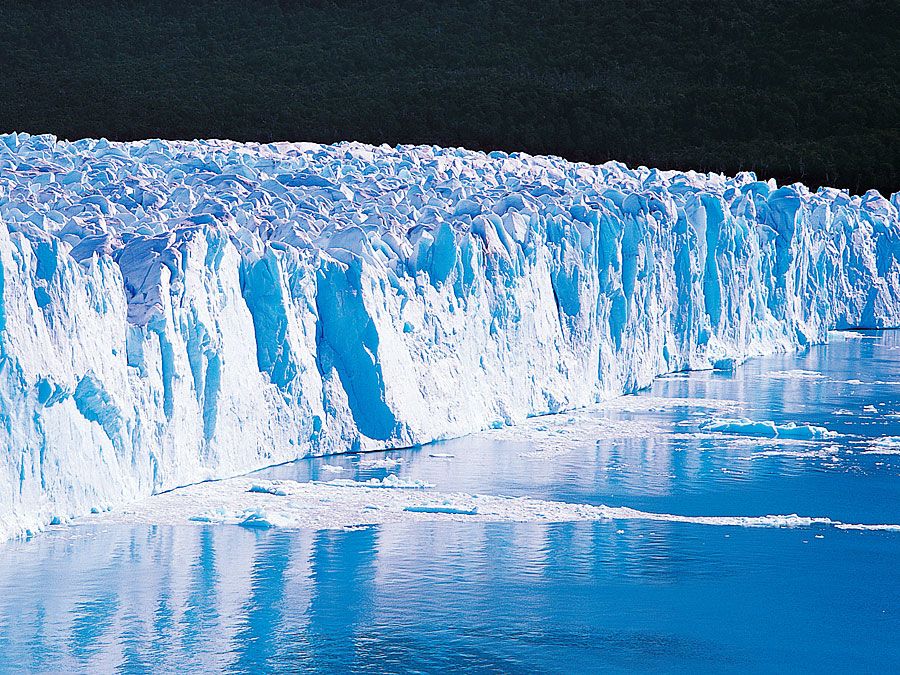
An iceberg is a floating mass of freshwater ice that has broken away, or "calved," from the seaward end of a glacier or an ice shelf.
What exactly is an iceberg and how does it form?
An iceberg is a floating mass of freshwater ice that has broken away, or “calved,” from the seaward end of a glacier or an ice shelf.1
How Icebergs Form
Icebergs form through a process called calving, where chunks of ice break off from the main body of a glacier or ice shelf. This occurs due to several factors:12
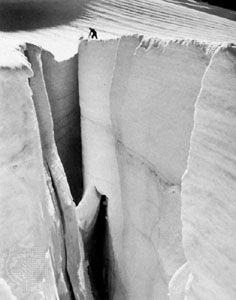
- Structural Stress: Glaciers and ice shelves often contain cracks and crevasses. When these structures are subjected to stresses from ocean swells, tides, or currents, they eventually fracture.3
- Environmental Factors: Calving can be triggered by collisions with other icebergs or the expansion of meltwater that refreezes inside crevasses, a process known as frost wedging.3
- Glacial Movement: As glaciers flow toward the sea, the ice at the terminus becomes unstable, especially in deeper water where calving rates increase, leading to the separation of icebergs.2
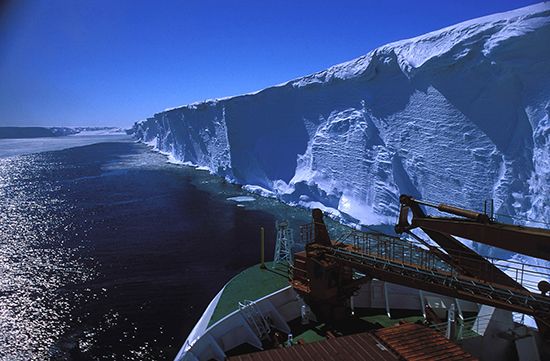
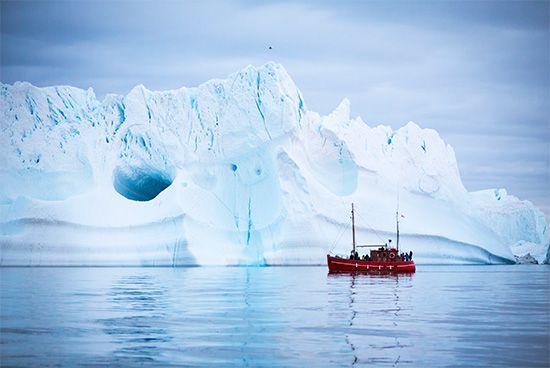
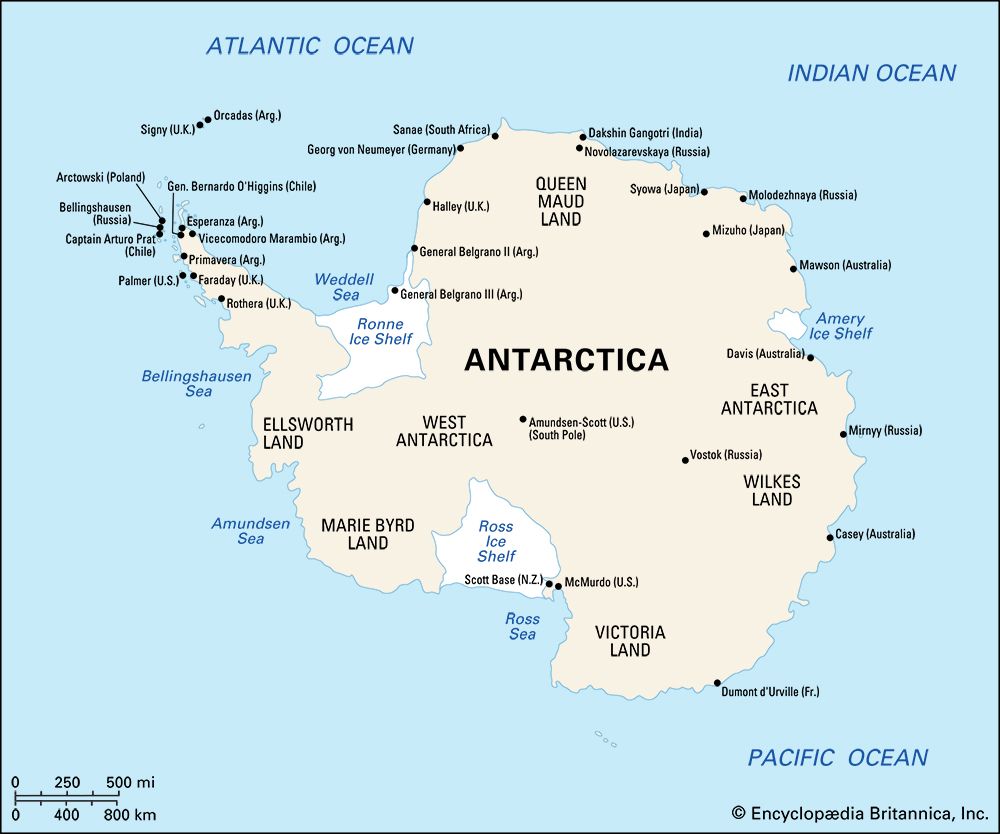
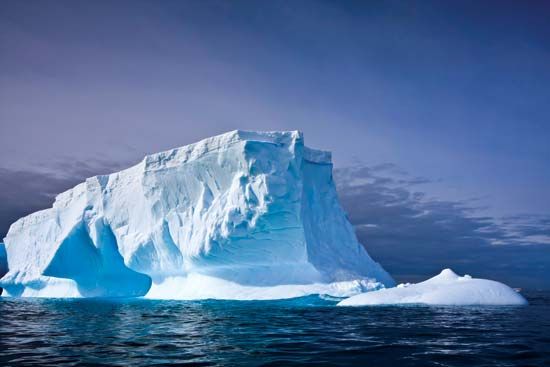
Arctic and Antarctic icebergs differ in appearance; Antarctic bergs are often massive, flat “tabular” structures, while Arctic bergs tend to be smaller and more randomly shaped due to their origin in narrow, fast-flowing glaciers.345
What role do icebergs play in the Earth’s climate system?
Icebergs play a significant role in the Earth’s climate system by influencing ocean structure, global sea levels, and the mass balance of polar ice sheets. Their impacts are primarily observed through the following mechanisms:
Impact on Ocean Structure and Salinity
As icebergs melt, they release freshwater into the ocean, which acts as a stabilizing influence on the salinity of the water column. In the Southern Ocean, this melt contributes to maintaining the pycnocline—the density boundary between low-salinity surface water and higher-salinity deep water—and helps keep surface salinity at observed low levels.5
Historically, massive releases of icebergs have caused dramatic climate shifts. For example, during the Younger Dryas event, a sudden influx of freshwater from a broken ice dam in North America disrupted winter convection processes in the North Atlantic, weakening the Gulf Stream and returning northern Europe to ice-age conditions.5
Influence on Sea Level and Ice Sheets
Icebergs are a primary mechanism for mass loss from ice sheets. While the Antarctic Ice Sheet acts as a massive reservoir, its stability depends on the balance between snowfall and ice loss through calving. If the rate of iceberg calving and melting exceeds the rate of snow accumulation, it contributes to global sea-level rise. Currently, the retreat of the Greenland Ice Sheet is contributing to rising sea levels, with a portion of this loss occurring through iceberg flux.7
What are the main sources of icebergs in the world?
Icebergs originate primarily from the calving of glaciers and ice shelves in polar regions. The main sources are categorized by their geographic location:
Arctic Sources
- Greenland: The Greenland Ice Sheet is a major producer of icebergs. Fast-flowing glaciers, particularly those in western Greenland, contribute significantly to the iceberg flux in Baffin Bay. Northeastern Greenland also produces tabular ice islands from glaciers like the Nioghalvfjerdsfjorden and Zachariae Isstrøm.37
- Canadian Arctic: The Ward Hunt Ice Shelf on Ellesmere Island was historically a primary source of ice islands, though it has largely disintegrated.3
- Eurasian Arctic: Significant iceberg production occurs in the Svalbard archipelago, Franz Josef Land, Novaya Zemlya, and Severnaya Zemlya.7
Antarctic Sources
- Ice Shelves: The vast majority of Antarctic icebergs originate from the calving of massive ice shelves, such as the Ross Ice Shelf and the Larsen Ice Shelf. These events can release giant tabular icebergs.48
- Coastal Regions: Icebergs are released along the Antarctic coastline, often entering the Antarctic Coastal Current before moving into the Antarctic Circumpolar Current.7
How might climate change impact iceberg formation and distribution in the future?
Climate change is significantly altering the dynamics of iceberg formation and distribution, primarily through the warming of polar regions and the subsequent destabilization of ice sheets and shelves.
Impacts on Formation
- Accelerated Calving: Rising air and ocean temperatures are driving an increase in the movement rate of glaciers, which directly leads to higher frequencies of iceberg calving. In the Arctic, the retreat of the Greenland Ice Sheet has been marked by sharp losses due to this process.52
- Structural Destabilization: Warming leads to increased surface meltwater. In regions like the Larsen Ice Shelf, this meltwater can infiltrate and refreeze within crevasses, causing the ice to fracture and splinter—a process known as frost wedging that can lead to the total disintegration of ice shelves.7
- Fjord Widening: As glaciers melt, the widening of fjords allows warmer air and water to reach glacier bases, further accelerating ice movement and the release of icebergs.5
Impacts on Distribution
- Altered Drift Patterns: While iceberg drift is governed by complex interactions between wind, ocean currents, and the Coriolis force, changes in ocean temperature and circulation patterns influence how long icebergs survive as they move toward lower latitudes.108
- Increased Freshwater Flux: The increased melting of icebergs at lower latitudes contributes to the freshening of the ocean surface. Historically, massive, sudden releases of icebergs—such as those during the Younger Dryas—have been shown to disrupt ocean convection and weaken major currents like the Gulf Stream, suggesting that future large-scale iceberg flux could have profound implications for global climate stability.11
Sources
- iceberg — Encyclopædia Britannica
- iceberg - Antarctic icebergs — Encyclopædia Britannica
- iceberg - Arctic icebergs — Encyclopædia Britannica
- iceberg - Iceberg size and shape — Encyclopædia Britannica
- iceberg - Impact on ocean structure — Encyclopædia Britannica
- glacier - Tidewater glaciers — Encyclopædia Britannica
- iceberg - Impacts on ice sheets and sea level — Encyclopædia Britannica
- iceberg - Iceberg distribution and drift trajectories — Encyclopædia Britannica
- iceberg - Iceberg scour and sediment transport — Encyclopædia Britannica
- Greenland Ice Sheet — Encyclopædia Britannica
- iceberg - Erosion and melting — Encyclopædia Britannica
Published on · 4 min read