Indian Hemp
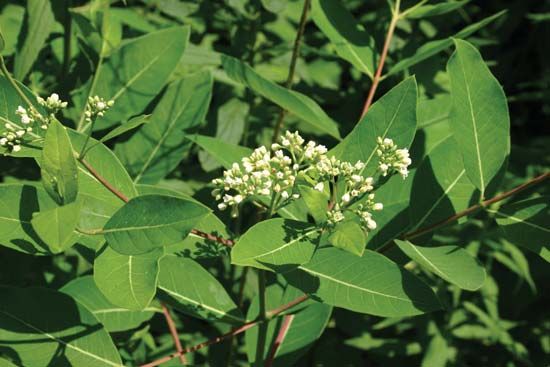
Indian hemp (Apocynum cannabinum) is a North American plant belonging to the dogbane family. It is a branched perennial that can reach 1.5 meters in height…
What is Indian hemp?
Indian hemp (Apocynum cannabinum) is a North American plant belonging to the dogbane family. It is a branched perennial that can reach 1.5 meters in height, characterized by smooth, opposite leaves and small, greenish-white flowers.1
Historically, Indigenous peoples utilized the fibers from the plant’s stem to create cordage, nets, mats, and bags. The plant’s latex is a source of rubber, and its dried roots—along with those of the related A. androsoemifolium—have been used to produce a heart stimulant*—have been used to produce a heart stimulant.1
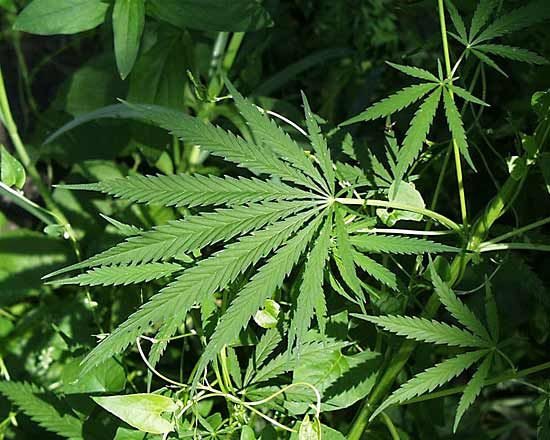
It is important to note that the term “Indian hemp” is sometimes used to refer to true hemp (Cannabis sativa), which is a distinct species.1
How does Apocynum cannabinum differ from Cannabis sativa?
Apocynum cannabinum and Cannabis sativa are distinct species often confused due to the common name “Indian hemp” being applied to both. They differ significantly in their biological classification, physical characteristics, and primary uses.
Biological and Physical Differences
- Classification: Apocynum cannabinum is a member of the dogbane family, while Cannabis sativa is a distinct cannabis species.12
- Growth Habit: A. cannabinum is a branched perennial that grows up to 1.5 meters tall with smooth, opposite leaves. In contrast, C. sativa is a stout, aromatic annual that can reach up to 5 meters in height, featuring palmate leaves.12
- Chemical Properties: A. cannabinum produces a milky latex that yields rubber and contains compounds used as heart stimulants. C. sativa contains tetrahydrocannabinol (THC), though varieties cultivated for industrial hemp contain only small amounts compared to those grown for drug production.12
Primary Uses
- Indian Hemp: Historically used by Indigenous peoples for fibers to create cordage, nets, and bags, and medicinally as a heart stimulant.1
- True Hemp: Widely cultivated for bast fiber used in textiles, rope, and bioplastics, as well as for edible seeds and oil.2
What are the characteristics of the dogbane plant family?
The Apocynaceae, commonly known as the dogbane family, is a diverse group within the order Gentianales that includes approximately 400 genera and 4,555 species of trees, shrubs, woody vines, and herbs.3
Key Characteristics
- Physical Traits: Members are primarily identified by their milky, often poisonous, juice and smooth-margined leaves.34
- Flowers and Fruit: They typically feature clusters of showy flowers. The fruit is usually a dry pod (follicle) that splits at maturity to release tufted or winged seeds, though some species produce fleshy or berry-like fruit.34
- Chemical Composition: Nearly all members are poisonous due to the presence of alkaloids and cardiac glycosides. While these compounds are toxic, they are also the source of various medicinal applications.3
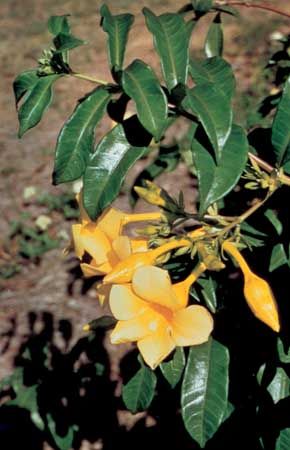
The family is distributed globally, predominantly in tropical and subtropical regions, though some, like the genus dogbane (Apocynum), are found in temperate zones. Many species are cultivated as ornamentals, including oleander, periwinkle, and frangipani.35
How did Indigenous peoples process plant fibers for cordage?
Indigenous peoples historically processed plant fibers, such as those from Indian hemp (Apocynum cannabinum), to create essential items like cordage, nets, mats, and bags. The production of these materials relied on the extraction and manipulation of bast fibers, which are found between the plant’s outer bark and its inner woody core.61
Processing and Manufacturing
- Extraction: To free the fibers from the plant stalks, Indigenous practitioners often utilized retting, a process of soaking the stalks to loosen the fibers, or decortication, which involves manually peeling the bark to release the fiber bundles.1
- Spinning: Once extracted, the fibers were prepared for use by being spun into yarn or thread. This was traditionally accomplished using a spindle and whorl, an early device that allowed the user to draw out and twist the fibers into a continuous, strong line.7
- Construction: The resulting yarns were then compacted by twisting or braiding to form rope or cordage. By twisting multiple yarns into strands and then laying those strands together, they achieved the necessary tensile strength and structural stability for practical use.8
Sources
- Indian hemp — Encyclopædia Britannica
- hemp — Encyclopædia Britannica
- Apocynaceae — Encyclopædia Britannica
- Apocynaceae — Merriam-Webster
- dogbane — Merriam-Webster
- bast fiber — Encyclopædia Britannica
- rope — Encyclopædia Britannica
- spindle and whorl — Encyclopædia Britannica
- cordage tree — Merriam-Webster
Published on · 3 min read