Krait
Kraits (genus Bungarus) are highly venomous, nocturnal elapid snakes found in Asian forests and farmland. They are generally not aggressive toward humans and…
How do kraits behave, and what are their hunting and feeding habits?
Kraits (genus Bungarus) are highly venomous, nocturnal elapid snakes found in Asian forests and farmland. They are generally not aggressive toward humans and typically only pose a danger if they are stepped on or strongly provoked.12
Hunting and Feeding Habits
Kraits are primarily nocturnal hunters. Their diet consists mainly of other snakes, though they also consume frogs, lizards, and small mammals. As members of the cobra family, they possess potent venom used to subdue their prey.13
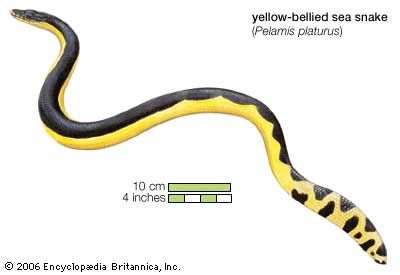
It is important to distinguish between terrestrial kraits and sea kraits (subfamily Laticaudinae). While terrestrial kraits are ground-dwelling, sea kraits are semi-aquatic. Sea kraits also hunt at night, feeding primarily on eels at depths of less than 15 metres. Unlike true sea snakes, which are fully adapted to marine life, sea kraits retain the ability to crawl and climb on land, where they deposit their eggs in rock crevices and caves.14
What are the common species of krait snakes, and how do they differ?
There are 12 recognized species of kraits (genus Bungarus), which are highly venomous members of the Elapidae family found throughout Asia. While they share common traits—such as a triangular body cross-section, nocturnal habits, and a diet consisting primarily of other snakes—they differ significantly in their coloration and physical markings.1
Notable Species
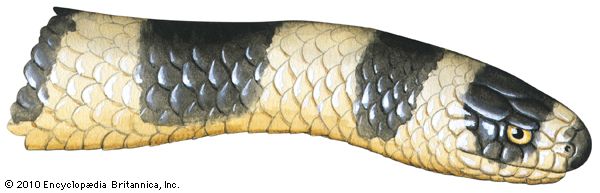
- Banded Krait (Bungarus fasciatus): Native to Southeast Asia, this species is known for its distinct black and yellow or buff bands. It is a larger species that can grow up to 2 metres (6.6 feet) in length and is often described as sluggish.15
- Blue Krait (Bungarus caeruleus): Also known as the Indian krait, this species is typically black or blue-black in color and features white banding.4
Beyond these, other species exhibit varied appearances; some are boldly colored with black and white bands, while others possess dark bodies accented by brightly colored heads and tails, often in shades of red. Regardless of the species, all kraits are egg-laying reptiles, typically producing clutches of 2 to 14 eggs.1
How do kraits reproduce, and what is unique about their mating behavior?
Kraits (genus Bungarus) are oviparous, meaning they reproduce by laying eggs. Females typically deposit clutches ranging from 2 to 14 eggs in protected, damp, and warm environments, such as rock crevices or underground burrows.13
Mating and Reproductive Behavior
While specific, species-exclusive mating rituals for kraits are not extensively documented in isolation, their reproductive behavior follows the general patterns observed in many snakes:
- Courtship and Stimulation: Male snakes often use tactile stimulation to encourage female receptivity. This can involve the male crawling over the female and tapping his chin on her back, a behavior that facilitates the exchange of pheromones to ensure species recognition and stimulate the reproductive process.7
- Internal Fertilization: Like other squamates, male kraits possess hemipenes—paired, mirror-image intromittent organs located at the base of the tail. During copulation, one hemipenis is everted and inserted into the female’s cloaca to deposit sperm.87
- Sperm Storage: A notable feature of snake reproduction is the female’s ability to store sperm within her oviducts. This allows fertilization to occur at a later time, potentially long after the initial copulation has taken place.87
- Combat: During the breeding season, males may engage in “combat dances.” These are competitive power struggles where two males entwine their bodies and attempt to force one another to the ground to secure access to a female.87
Where are krait snakes typically found, and what habitats do they prefer?
Krait snakes (genus Bungarus) are found throughout a broad geographic range in Asia, spanning from Pakistan and India eastward to southern China and southward into Indonesia and other adjacent islands in Southeast Asia.14
Regarding their preferred environments, these snakes are primarily terrestrial and are commonly found in the following habitats:
- Forests: They inhabit various forested regions within their range.1
- Farmland: Kraits are frequently encountered in agricultural areas, where they may come into contact with humans.1
As nocturnal hunters, they spend their days in sheltered locations and emerge at night to feed on other snakes, lizards, frogs, and small mammals. Because they are terrestrial, they are most dangerous to humans when they are accidentally stepped on or strongly provoked in these environments.1
Sources
- krait — Encyclopædia Britannica
- Venom — Encyclopædia Britannica
- sea snake — Encyclopædia Britannica
- krait — Merriam-Webster
- banded krait — Merriam-Webster
- blue krait — Merriam-Webster
- snake - Mating — Encyclopædia Britannica
- snake - Egg formation and laying — Encyclopædia Britannica
- reptile - Courtship and fertilization — Encyclopædia Britannica
- Animal social behavior - Social interactions involving sex — Encyclopædia Britannica
- Reproductive behaviour - Courtship — Encyclopædia Britannica
Published on · 3 min read