Chicken Turtle
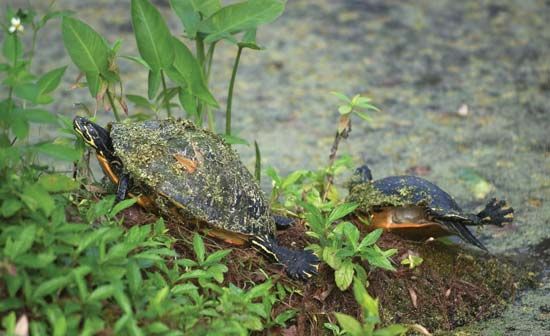
The chicken turtle (Deirochelys reticularia) is an edible freshwater turtle belonging to the family Emydidae, native to the southeastern United States.
What is chicken turtle?
The chicken turtle (Deirochelys reticularia) is an edible freshwater turtle belonging to the family Emydidae, native to the southeastern United States.1
This species is characterized by an exceptionally long neck and a finely grooved upper shell, which typically measures between 10 and 15 cm (4 to 6 inches) in length. The shell features a distinctive pattern consisting of an open network of yellowish lines set against a brownish background.1
Chicken turtles primarily inhabit quiet bodies of water, though they frequently leave their aquatic environments to travel on land. They are considered omnivorous, as they likely feed on both animal and vegetable material.1
Why is this species named the chicken turtle?
The species is named the chicken turtle because it is considered an edible turtle. Historically, its meat was valued for its flavor, which was often compared to that of chicken, leading to its common name.13
What are the primary differences between aquatic and terrestrial turtles?
The primary differences between aquatic and terrestrial turtles (often referred to as tortoises) are rooted in their physical adaptations to their respective environments.
Shell Morphology
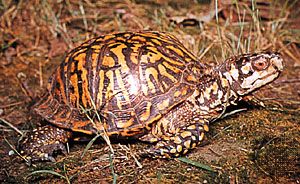
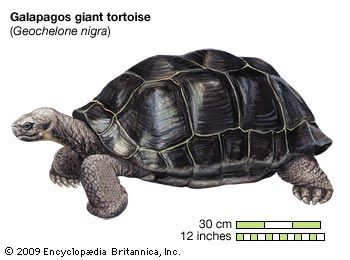
- Terrestrial Turtles: Most tortoises possess high, domed shells, which serve as an adaptation to make them difficult for predators to hold in their mouths or crush.4
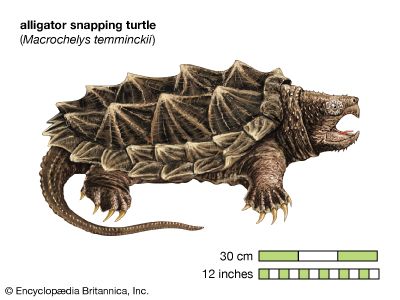
- Aquatic Turtles: These species typically have more streamlined shells to facilitate swimming. In groups like sea turtles, this streamlining is highly developed. Conversely, bottom-walking aquatic turtles, such as snapping turtles, often have less streamlined, ridged carapaces that assist in camouflage.4
Respiratory Adaptations
- Lung Inflation: Because of their rigid shells, all turtles require specialized skeletal muscles to inflate their lungs. In tortoises, both inspiration and expiration are active, energy-consuming events involving the movement of the shoulder girdle. In aquatic turtles, however, the pressure of the surrounding water on the limbs assists in the process of expiration.5
- Gas Exchange: While most reptiles depend on lungs, aquatic turtles have eyes that adjust for both aerial and aquatic vision, and some species can hold their breath for an hour or more while diving.45
Sensory and Feeding Differences
- Vision: Aquatic turtles possess eyes capable of adjusting quickly for both aerial and aquatic vision. While tortoises appear to have color vision, this remains largely untested for most other turtle species.4
- Feeding: Terrestrial tortoises are predominantly herbivorous, feeding on a variety of plants. Aquatic turtles exhibit a wider range of diets; while some are herbivorous, many are carnivorous or omnivorous, utilizing specialized jaw architectures—such as the gape-and-suck mechanism seen in some side-necked turtles—to capture prey in water.467
How do turtles use their shells for protection?
The turtle shell serves as a vital adaptation that compensates for the animal’s slow movement by providing a rigid, protective skeletal box for its internal organs.104
The shell consists of two primary parts: the top carapace and the underside plastron. These are formed from a combination of dermal bones and endochondral bones derived from the skeleton, including the vertebrae and ribs. Protection strategies vary by species:104
- Physical Defense: Many land-dwelling species, such as box turtles and tortoises, possess high, domed shells that are difficult for predators to hold in their mouths or crush.4
- Behavioral Integration: Certain turtles, specifically those in the suborder Cryptodira, can withdraw their heads into the shell for safety. Others, like the pancake tortoise, use their flat shells to crawl into rocky crevices, where they inflate their lungs to wedge themselves securely in place.4
- Camouflage: Aquatic species, such as snapping turtles, often feature ridged carapaces that assist in concealing coloration, helping them blend into their environment.4
Sources
- chicken turtle — Encyclopædia Britannica
- list of turtles — Encyclopædia Britannica
- chicken terrapin — Merriam-Webster
- turtle - Form and function — Encyclopædia Britannica
- turtle - Habitats — Encyclopædia Britannica
- What do turtles eat? — Encyclopædia Britannica
- Respiratory system - Reptiles — Encyclopædia Britannica
- turtle - Feeding behaviour — Encyclopædia Britannica
- Respiratory system - Amphibians — Encyclopædia Britannica
- What are turtle shells made of? — Encyclopædia Britannica
Published on · 3 min read