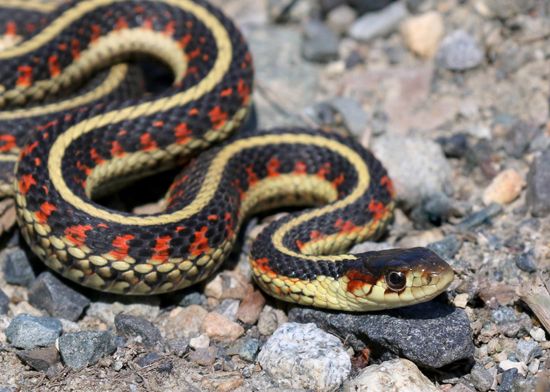
Water Snake
It is a common misconception that all snakes found in or near water are venomous. In reality, the term "water snake" refers to a large group of nonvenomous…
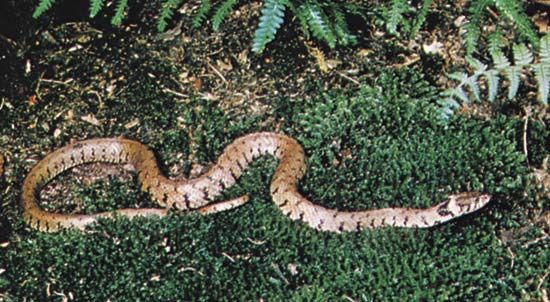
Are water snakes venomous, and if so, how dangerous are they to humans?
It is a common misconception that all snakes found in or near water are venomous. In reality, the term “water snake” refers to a large group of nonvenomous, semiaquatic snakes in the subfamily Natricinae, such as the common northern water snake. While these snakes are nonvenomous, they are often ill-tempered and may bite if handled or provoked.1
In contrast, the water moccasin—also known as the cottonmouth—is a distinct, venomous species of pit viper. Water moccasins are dangerous and capable of delivering a fatal bite, as their venom is a hemotoxin that inhibits blood clotting and destroys tissue. Because water snakes and water moccasins share similar habitats and physical appearances, they are frequently confused with one another.21
If you encounter a snake in the wild, it is best to maintain a safe distance and avoid handling it, as even nonvenomous bites can cause puncture wounds that require medical attention.3
What are the key characteristics that distinguish water snakes from other snake species?
Water snakes (subfamily Natricinae) are a diverse group of approximately 200 semiaquatic snake species. While they are often confused with the venomous water moccasin, they possess distinct biological and behavioral characteristics.
Physical and Behavioral Characteristics
- Body Structure: Water snakes are generally characterized by stout bodies, strongly keeled scales, and triangular heads.1
- Swimming Behavior: When swimming, a water snake typically keeps only its head above the water’s surface, whereas a water moccasin often floats with the anterior half of its body visible.1
- Defensive Mechanisms: When threatened, water snakes may inflate their bodies, spread their jaws to appear more triangular, hiss, and strike. They also habitually defecate or release a foul-smelling substance from their anal scent glands when handled.1
- Diet and Reproduction: Their diet consists primarily of fish and amphibians. Reproductive strategies vary: New World species are viviparous (giving birth to live young), while most Old World species are oviparous (laying eggs).1
How do water snakes differ from sea snakes in terms of habitat and adaptations?
Water snakes and sea snakes are distinct groups that have evolved different adaptations to thrive in their respective environments.
Habitat and Lifestyle
- Water Snakes: These are semiaquatic snakes belonging to the family Colubridae. They primarily inhabit freshwater environments, such as streams, lakes, and marshes, though some species occupy brackish water. They are frequently found on land, where they bask in the sun or breed.5
- Sea Snakes: These are highly specialized marine snakes of the family Elapidae. Most species are restricted to coastal waters, coral reefs, and mangroves, where they dive to the seafloor to hunt. The yellow-bellied sea snake is a notable exception, as it lives in the open ocean. While true sea snakes are almost entirely aquatic and helpless on land, sea kraits are more terrestrial and return to land to lay their eggs.6
Key Adaptations
- Body Shape: Water snakes typically have stout, cylindrical bodies. In contrast, true sea snakes have evolved flattened, oar-like tails and laterally compressed bodies to aid in swimming.615
- Respiration: Sea snakes possess elongated lungs that extend the length of their bodies, allowing them to remain submerged for several hours. They can also perform cutaneous respiration, absorbing oxygen directly through their skin.6
- Locomotion: While water snakes move effectively on land and in water, advanced sea snakes have lost the ability to crawl due to reduced or absent belly scales, making them dependent on the water for support and movement.61
What are some common species of water snakes, and where are they typically found?
Water snakes are a diverse group of semiaquatic snakes found primarily in the Northern Hemisphere. Below are some common species and their typical habitats:
North American Species (Nerodia)
- Northern Water Snake (N. sipedon): The most common species, found throughout the eastern United States, southern Ontario, and southern Quebec. It frequents various aquatic environments and is active during the day or night depending on the season.1
- Salt Marsh Snake (N. clarkii): Inhabits brackish water environments across the southeastern United States. These snakes hide among marsh grasses to ambush prey.1
Eurasian and Asian Species
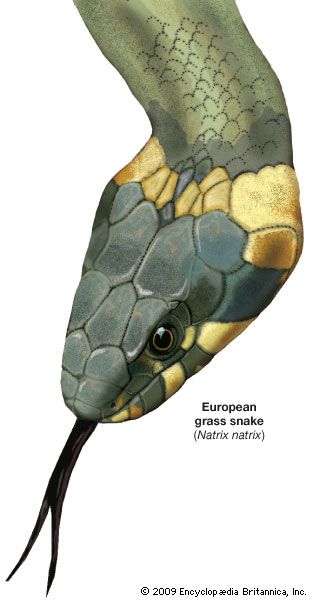
- Common Grass Snake (N. natrix): The most terrestrial of the water snakes, this species is found across Europe and western Asia, typically frequenting damp areas near water.1
- Asiatic Water Snakes (Sinonatrix): Highly aquatic species found throughout Southeast Asia, southern China, and parts of Indonesia.1
- Checkered Keelback (X. piscator): A common species in southern Asia that thrives in various aquatic habitats.1
- Mountain Stream Snakes (Opisthotropis): These unique snakes are found in China and Southeast Asia, where they live beneath stones in mountain streams.1
Sources
- water snake — Encyclopædia Britannica
- water moccasin — Encyclopædia Britannica
- snakebite — Encyclopædia Britannica
- moccasin — Encyclopædia Britannica
- sea snake — Encyclopædia Britannica
- snake - Form and function — Encyclopædia Britannica
Published on · 4 min read