Labrador Current
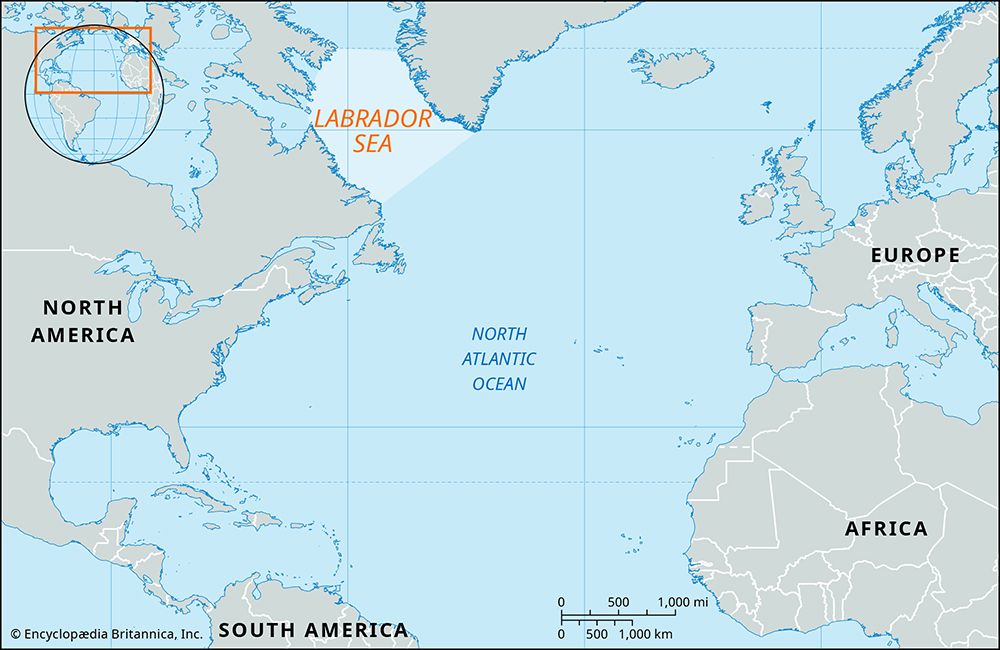
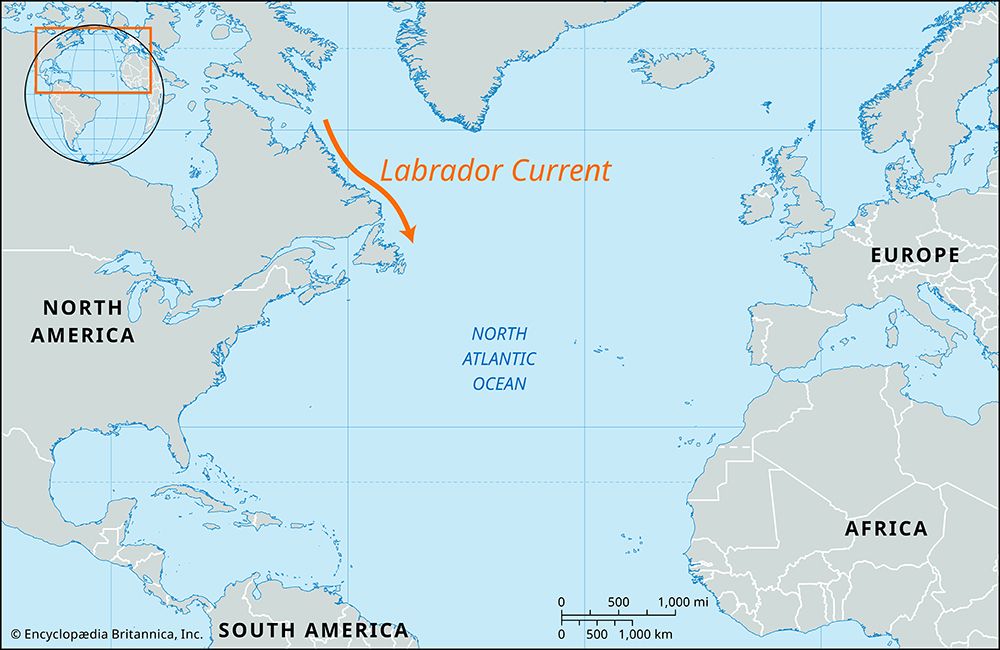
The Labrador Current is a cold, low-salinity surface oceanic current that flows southward along the western side of the Labrador Sea.
What is Labrador Current?
The Labrador Current is a cold, low-salinity surface oceanic current that flows southward along the western side of the Labrador Sea.1
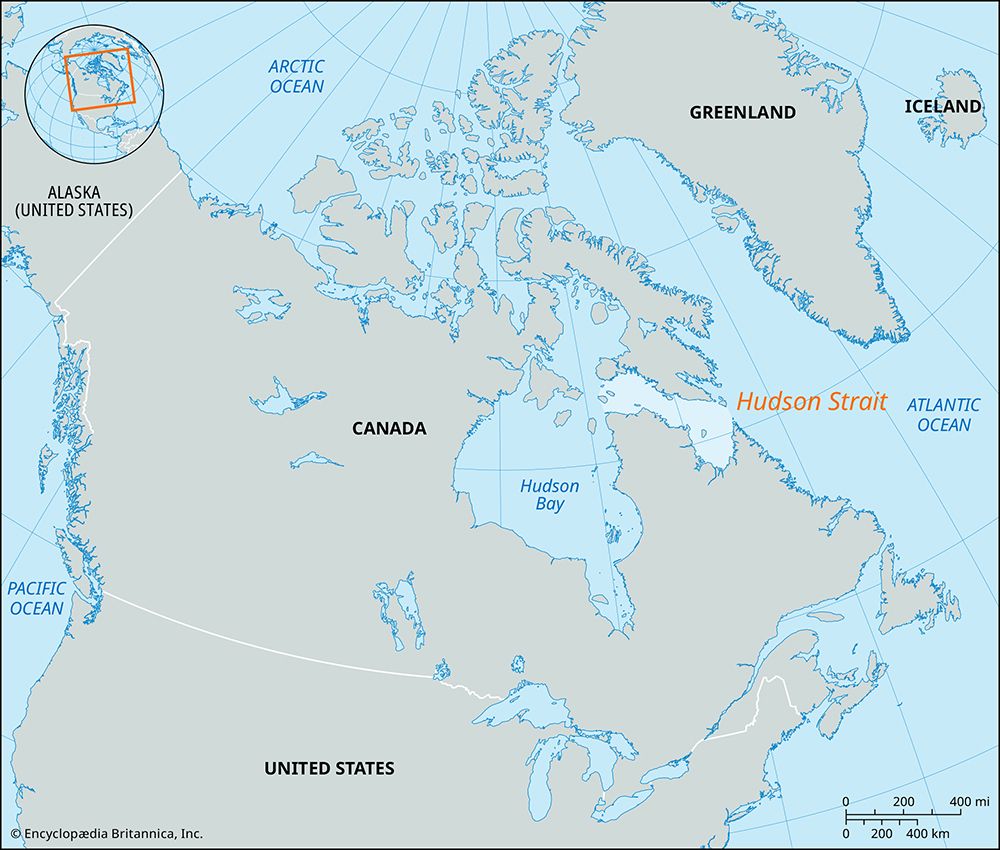
It is formed by the convergence of the West Greenland Current, the Baffin Island Current, and inflow from the Hudson Strait. Key characteristics include:1
- Temperature and Salinity: It maintains temperatures below 32° F (0° C) and salinity levels between 30 and 34 parts per 1,000.1
- Physical Scope: The current is confined to the continental shelf and reaches depths of approximately 2,000 feet (600 meters).1
- Environmental Impact: It annually transports several thousand icebergs southward. When its cold, humid air meets the warmer waters of the Gulf Stream, it creates frequent, dense fogs, particularly over the Grand Banks of Newfoundland. Additionally, it influences regional climates by keeping coastal summers cool and delaying the arrival of spring.123
How do ocean currents like the Labrador Current influence global weather patterns?
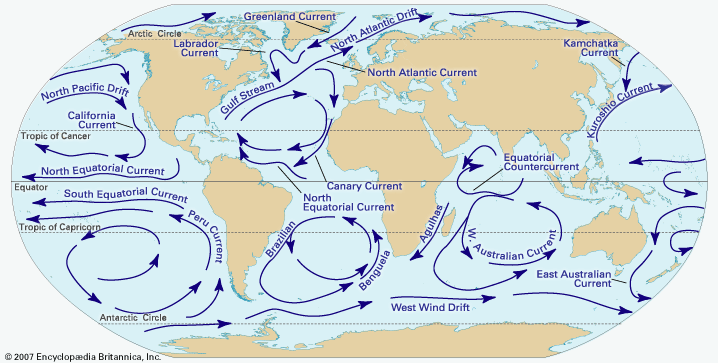
Ocean currents play a critical role in regulating global weather and climate by transporting heat from the tropics toward the poles and influencing atmospheric circulation.45
Heat Transport and Climate Moderation
Currents like the Gulf Stream act as massive heat conveyors. By moving warm water into higher latitudes, they significantly moderate the climates of adjacent landmasses. For instance, the combination of warm currents and prevailing westerly winds keeps northwestern Europe much warmer and more temperate than other regions at similar latitudes.456
Atmospheric Interaction and Weather Systems
Ocean currents influence the atmosphere through several mechanisms:
- Thermal Gradients: Where warm and cold currents meet—such as the boundary between the Gulf Stream and the Labrador Current near the Grand Banks—strong temperature differences create sharp thermal gradients. These gradients help position the jet stream, which in turn steers weather systems across the hemisphere.5
- Fog Formation: The interaction between warm, moist air and cold water surfaces often leads to advection fog, a common occurrence in regions where the Labrador Current flows.3
- Long-range Forecasting: Because ocean circulation is slower than atmospheric movement, anomalies in current positions (such as shifts in the Gulf Stream–Labrador Current boundary) can create persistent weather patterns, providing valuable data for long-range climate forecasting.5
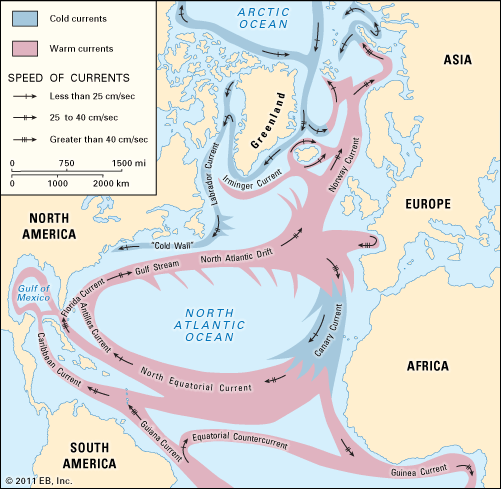
Why does the meeting of the Labrador Current and the Gulf Stream create such dense fog?
The dense fog that frequently occurs off the Grand Banks of Newfoundland is a classic example of advection fog. This phenomenon is driven by the interaction between two distinct water masses: the warm, moist air associated with the Gulf Stream and the cold surface waters of the Labrador Current.88
When relatively warm, moist air from the Gulf Stream moves slowly over the significantly colder surface of the Labrador Current, the air is cooled from below. As this air cools, its capacity to hold water vapor decreases, causing the air to reach saturation. Once the relative humidity exceeds saturation, the water vapor condenses onto condensation nuclei—tiny particles always present in the atmosphere—forming the dense water droplets that constitute fog.38
This process is most effective when wind speeds are moderate, typically around 5 meters per second (10 miles per hour). These speeds are sufficient to move the air mass over the cold surface but light enough to prevent turbulent mixing from dispersing the moisture through a deeper layer of the atmosphere.8
What role do ocean currents play in the migration patterns of marine life?
Ocean currents are fundamental to the distribution and migration of marine life, acting as both a transport mechanism and a determinant of species range.10
Larval Transport and Species Distribution
Many marine organisms rely on currents for dispersal. Mainstream currents, such as the Gulf Stream and the East Australian Current, transport larvae over vast distances, allowing species to colonize new areas. For example, the successful recruitment of European eels depends on the Gulf Stream to carry them from their spawning grounds in the Caribbean to Europe. Similarly, tropical fish and invertebrate larvae are often relocated to high latitudes by these currents, providing a tropical infusion to cold temperate coral reefs.1011
Vertical Migration and Current Utilization
Marine organisms can actively influence their horizontal transport by utilizing vertical migration. Because ocean currents often flow in different directions at varying depths—particularly around haloclines and thermoclines—larval forms and other organisms can move vertically to select the current that best facilitates their desired horizontal movement.11
Habitat and Feeding
Currents also influence where marine life congregates. Areas affected by nearshore features or vertical salinity gradients often exhibit intense biological activity, concentrating small organisms and providing a rich food supply for larger animals. Furthermore, some species are restricted to specific current systems, such as krill, which are largely confined to the Antarctic Circumpolar Current.10
Sources
- Labrador Current — Encyclopædia Britannica
- Newfoundland and Labrador - Climate of Newfoundland and Labrador — Encyclopædia Britannica
- Gulf Stream — Encyclopædia Britannica
- Atlantic Meridional Overturning Circulation: Top Questions — Encyclopædia Britannica
- How Do Ocean Currents Affect the Biosphere? — Encyclopædia Britannica
- Climate - Circulation, currents, and ocean-atmosphere interaction — Encyclopædia Britannica
- Climate - Cloud formation — Encyclopædia Britannica
- How does fog form? — Encyclopædia Britannica
- Fog — Encyclopædia Britannica
- Marine ecosystem - Ocean currents — Encyclopædia Britannica
- Mechanoreception - Mechanoreceptor function — Encyclopædia Britannica
- Marine ecosystem - Seasonal cycles of production — Encyclopædia Britannica
- ocean current - Distribution of ocean currents — Encyclopædia Britannica
- Marine ecosystem - Migrations of marine organisms — Encyclopædia Britannica
Published on · 4 min read