Lake Balkhash
Lake Balkhash holds significant economic importance for Kazakhstan, primarily through its roles in industry and commerce.
What is the cultural and economic significance of Lake Balkhash for Kazakhstan?
Lake Balkhash holds significant economic importance for Kazakhstan, primarily through its roles in industry and commerce.
Economic Significance
- Industrial Development: The construction of a copper-refining plant on the northern shore spurred the growth of the city of Balkhash, making copper mining and processing a cornerstone of the regional economy.1
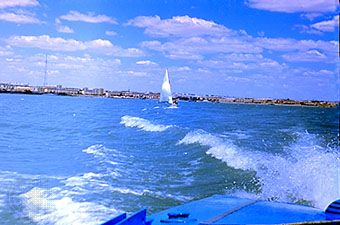
- Fishing and Shipping: Since the 1930s, the lake has supported fishing and fish-breeding industries, alongside regular shipping services that facilitate freight transport.12
Environmental Challenges
The lake’s economic and ecological health has faced severe challenges since the late 20th century. The operation of the Qapшағай (Kapchagay) hydroelectric station on the Ili River significantly reduced water inflow, leading to a drop in water levels and increased salinity. Furthermore, water pollution from fuel storage and mining activities has degraded the habitat, resulting in a decline in fish populations and the quarantine of much of the commercial catch.1
While the provided sources detail these industrial and environmental impacts, they do not explicitly document specific cultural traditions or symbolic significance associated with the lake.
Are there any interesting myths or legends associated with Lake Balkhash in Kazakh culture?
Sorry, the Britannica knowledge base does not contain this information.
What kind of flora and fauna can be found in and around Lake Balkhash?
The flora and fauna surrounding Lake Balkhash have been significantly impacted by environmental degradation, particularly since the late 20th century.
Flora
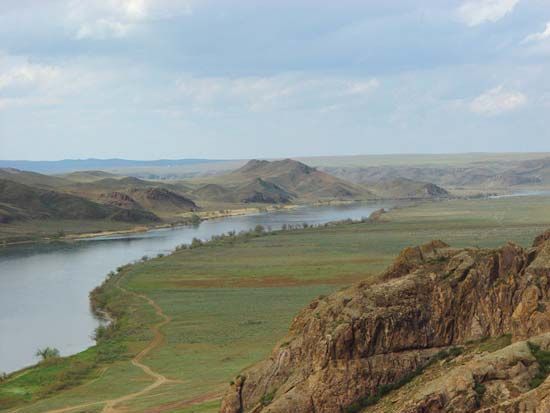
The southern banks of the lake are characterized by low, sandy terrain featuring extensive belts of reeds. These areas, along with the surrounding wetland habitats, have shrunk due to declining water levels and increased salinity, reducing the available vegetation cover in the region.1
Fauna
Historically, the lake supported a diverse population of fish, with 20 species recorded before the 1970s. Six of these species were endemic to the lake, while others were introduced, including:
The primary commercial species were the sazan, pike, and Balkhash perch. However, due to water pollution and habitat loss, fish populations have declined, and much of the current catch is subject to quarantine.1
How does Lake Balkhash compare to other large lakes in Central Asia?
Lake Balkhash is a unique inland body of water in Central Asia, distinct from other major regional lakes in several key ways:
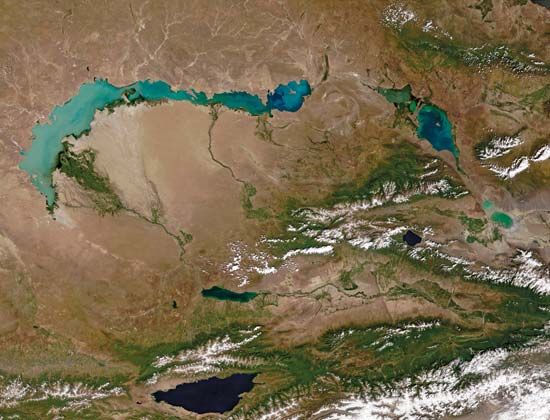
- Hydrological Composition: Unlike many lakes in internal drainage basins that are uniformly saline, Lake Balkhash features a unique dual-nature composition. Its western section is fed by the Ili River and remains nearly fresh, while the eastern section is brackish.14
- Origin and Formation: While lakes such as Lake Baikal and Lake Ysyk-Köl occupy tectonic depressions, Lake Balkhash lies within the vast Balkhash-Alaköl basin. It differs from the Caspian Sea and the Aral Sea, which are remnants of ancient, larger seas.14
- Environmental Challenges: Like the Aral Sea, Lake Balkhash has faced significant ecological decline due to human intervention. The construction of the Qapşağay (Kapchagay) hydroelectric-power station in 1970 drastically reduced the Ili River’s inflow, leading to a drop in water levels and increased salinity. However, while the Aral Sea has suffered a near-total collapse, Lake Balkhash remains a vital, albeit stressed, water resource in eastern Kazakhstan.156
Sources
- Lake Balkhash — Encyclopædia Britannica
- Lake Balkhash: Top Questions — Encyclopædia Britannica
- Balkhash, Lake — Merriam-Webster
- Asia - Lakes of Asia — Encyclopædia Britannica
- list of lakes - Asia — Encyclopædia Britannica
- Kazakhstan - Drainage — Encyclopædia Britannica
Published on · 3 min read