Lophophyllum
Lophophyllum is an extinct genus of solitary marine corals, commonly referred to as horn corals due to their distinct, hornlike shape. These fossils are…
What is Lophophyllum?
Lophophyllum is an extinct genus of solitary marine corals, commonly referred to as horn corals due to their distinct, hornlike shape. These fossils are particularly characteristic of the Late Carboniferous Epoch, dating between 318 million and 299 million years ago, and are primarily found in North America.1
It is important to note that while Lophophyllum is a recognized genus, it is often discussed alongside Lophophyllidium, a related genus of tetracorals also found in Upper Carboniferous formations. These organisms likely thrived in warm, clear, and shallow marine environments. As members of the order Rugosa, these corals are significant to paleontologists as index fossils, which help scientists correlate rock units and study geologic time.213
What are rugose corals?
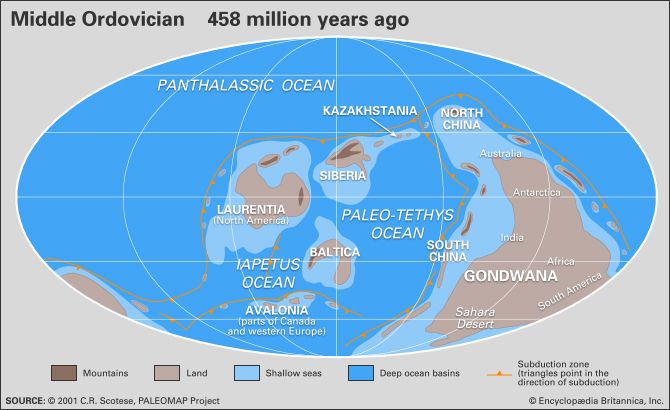
Rugose corals, commonly known as horn corals, are an extinct order of corals that existed from the Ordovician Period through the Permian Period. They are named for the characteristic hornlike shape of their individual skeletal structures.3
These organisms could exist as either solitary or colonial forms. Because of their widespread distribution and specific evolutionary spans, many rugose corals are highly valued by paleontologists as index fossils, which allow scientists to correlate rock layers across different geographic regions.3
Additionally, the growth patterns preserved in their skeletons have provided researchers with a unique method to study geologic time. By analyzing these growth increments, scientists have used them as biological clocks to estimate the length of days and years during the distant past.3
How do scientists use fossils as biological clocks?
Scientists use certain fossil corals as absolute geochronometers by analyzing their growth patterns to determine the length of a year in the distant past. This method relies on the observation that horn corals possess fine external ridges of calcium carbonate, with each ridge believed to represent a single day’s growth. By counting these ridges, researchers can estimate the number of days that occurred within a year during the time the coral was alive.4
This technique is significant because the Earth’s rotation has gradually slowed over millions of years, causing days to lengthen. For example, geophysical evidence suggests that approximately 600 million years ago, a year consisted of about 423 days. While the preservation of these ridges is not consistent across all specimens, well-preserved fossils—such as those from the Middle Devonian—have provided data showing between 385 and 410 daily growth increments per year, supporting the theory of a changing rotational rate.4
We could dive deeper into how other types of fossils are used to interpret ancient climates or reconstruct evolutionary history.
What characterizes the Carboniferous Period?
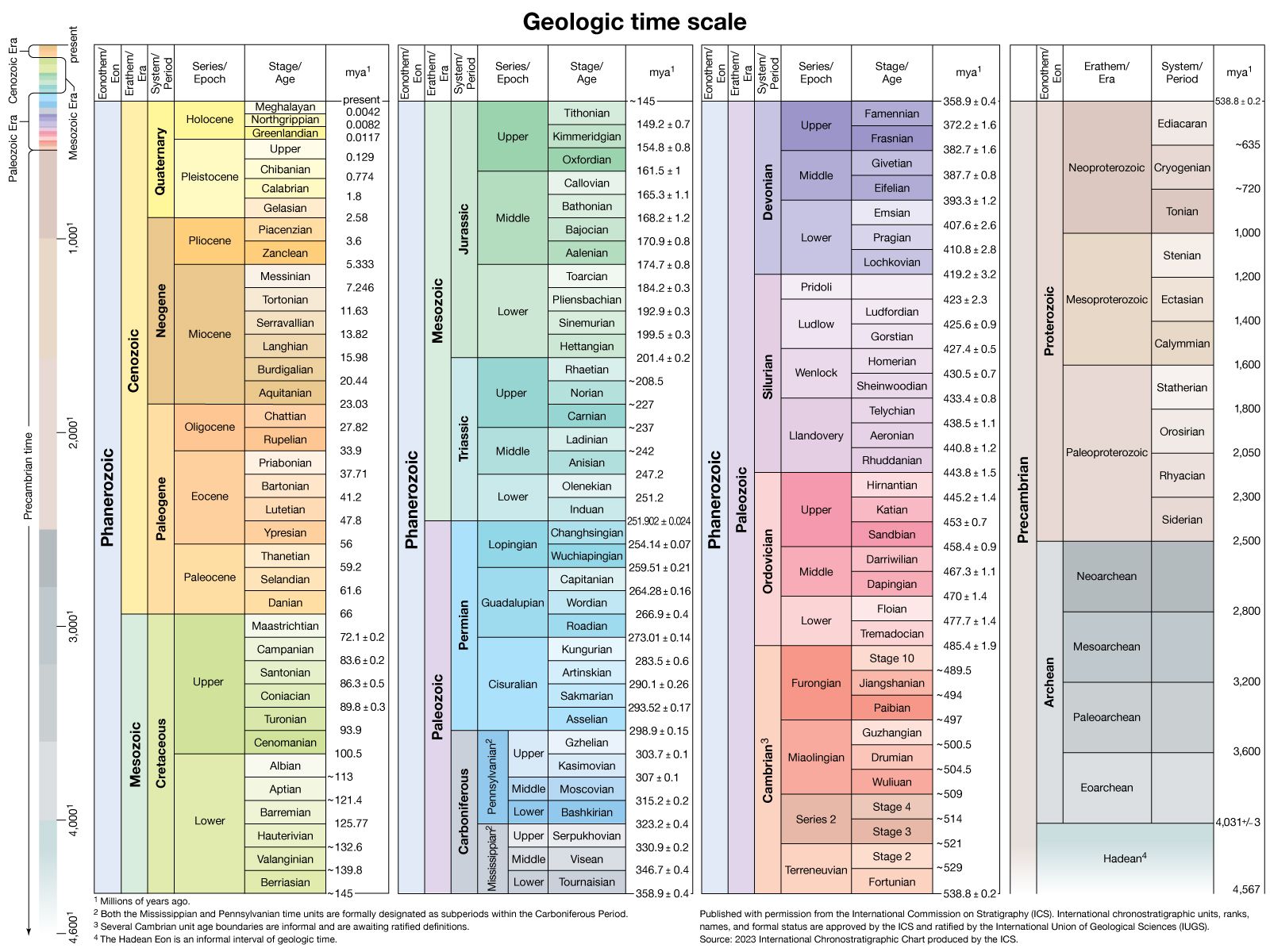
The Carboniferous Period, spanning approximately 358.9 to 298.9 million years ago, is divided into the Mississippian and Pennsylvanian subperiods. It was a time of significant geological and biological transformation, characterized by the following features:67
Geological and Climatic Conditions
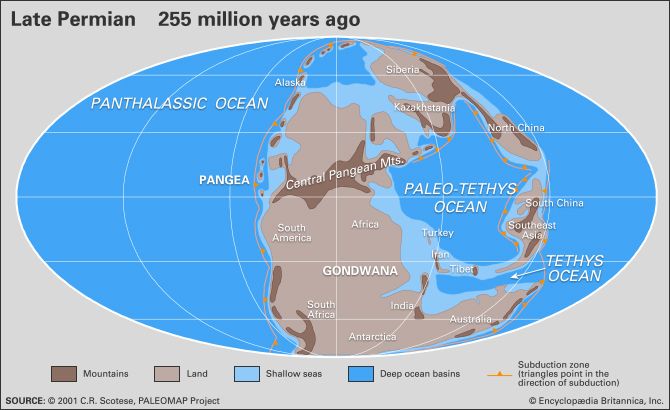
- Tectonic Activity: The period saw the gradual assembly of the supercontinent Pangea through the collision of Laurussia and Gondwana, resulting in major orogenic events that formed mountain ranges like the Appalachians and the Urals.68
- Climate: Equatorial regions were tropical, while the Southern Hemisphere experienced widespread continental glaciations. These glacial cycles drove sea-level fluctuations, creating the extensive coal cyclothems characteristic of the Pennsylvanian.98
Biological Diversity
- Marine Life: Shallow seas were dominated by crinoids and [blastoids], whose remains formed vast limestone deposits.610
- Terrestrial Life: The period featured peak amphibian development and the emergence of reptiles. High atmospheric oxygen levels may have enabled insects, such as giant dragonflies, to reach impressive sizes.610
- Flora: Vast vascular plant forests, including lycopods and sphenopsids, thrived in swampy environments, leading to the formation of more coal than at any other time in the geologic record.107
Sources
- Lophophyllum — Encyclopædia Britannica
- Lophophyllidium — Merriam-Webster
- horn coral — Encyclopædia Britannica
- geochronology - Coral growth — Encyclopædia Britannica
- fossil record — Encyclopædia Britannica
- A Journey Through Time Since the Precambrian - Carboniferous Period: 358.9 million to about 298.9 million years ago — Encyclopædia Britannica
- Carboniferous Period - Distinctive features — Encyclopædia Britannica
- Carboniferous Period - Paleoclimate — Encyclopædia Britannica
- coal - The fossil record — Encyclopædia Britannica
- Carboniferous Period - Significant geologic events — Encyclopædia Britannica
Published on · 3 min read