Kafue River
The Kafue River is a major river in Zambia that flows for approximately 990 miles (1,600 km). Rising near the border with the Democratic Republic of the…
What is Kafue River?
The Kafue River is a major river in Zambia that flows for approximately 990 miles (1,600 km). Rising near the border with the Democratic Republic of the Congo, it follows a winding course southward and eastward before joining the Zambezi River near Chirundu, Zimbabwe.12
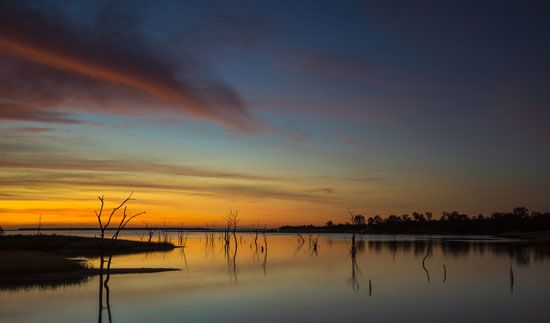
The river system is vital to the region’s ecology and economy. It drains the Lukanga Swamp and the Kafue Flats—wetlands of significant international importance—and its basin encompasses the expansive Kafue National Park, which is home to diverse wildlife. The river’s path through the central Zambian plateau includes the Kafue Gorge, the site of a major hydroelectric power project. While its waters are essential for irrigation, the presence of rapids and waterfalls limits navigation to light craft.132
What makes the Kafue Flats an area of international ecological importance?
The Kafue Flats are recognized for their significant ecological value, primarily due to their unique role as a seasonal floodplain and their status as a critical habitat for diverse wildlife.4
Key factors contributing to their importance include:
- Unique Biodiversity: The flats are the exclusive habitat of the Kafue lechwe, an antelope species unique to this region.4
- Avian Diversity: The area, particularly within the Lochinvar region, is a major destination for bird-watchers, with more than 400 species of birds recorded.4
- Seasonal Wetland Ecosystem: As a major floodplain, the area supports a distinct open grassland ecosystem that is essential for the region’s broader environmental health.4
- Wildlife Concentrations: The flats support large concentrations of mammals, serving as a vital component of Zambia’s protected natural heritage.4
The preservation of such wetlands is a moral imperative, as they provide essential services to the environment and sustain unique species that exist nowhere else on Earth.
How does the Zambezi River compare to the Kafue River in size and significance?
The Zambezi River and the Kafue River differ significantly in scale and regional role, with the Kafue serving as a major tributary to the larger Zambezi system.56
Size and Scope
- Zambezi River: As the fourth-largest river basin in Africa, the Zambezi spans approximately 2,200 miles (3,540 km) and drains an area exceeding 463,000 to 500,000 square miles. It is an international waterway that crosses or borders six countries, ultimately emptying into the Indian Ocean.75
- Kafue River: Measuring about 990 miles (1,600 km) in length, the Kafue is one of Zambia’s primary rivers. It is contained entirely within Zambia, flowing through the central plateau before joining the Zambezi on its left bank.658
Significance
- Hydropower: Both rivers are critical to regional energy. The Zambezi hosts massive projects like the Kariba and Cahora Bassa dams. The Kafue is equally vital, featuring a major hydroelectric project at the Kafue Gorge.716
- Ecology: The Zambezi is famous for Victoria Falls and its vast floodplains. The Kafue is renowned for the Kafue National Park and the Kafue Flats, which are recognized as wetlands of international ecological importance.7368
What are some of the unique wildlife species found in Kafue National Park?
Kafue National Park, located in south-central Zambia, is noted for the wide variety of antelope species it hosts, as well as a diverse range of other mammals and birds.24
Mammals
The park supports a significant array of wildlife, including:
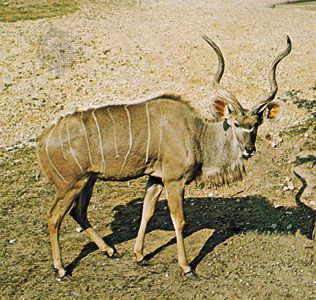
- Antelope species: Sable, oribi, kudu, impala, roan antelope, eland, lechwe, gnu, and sitatunga.2
- Large mammals: Hippopotamus, buffalo, zebra, elephant, black rhinoceros, and lion.2
- Other: Crocodile.2
Birdlife
The park is home to numerous bird species, such as:
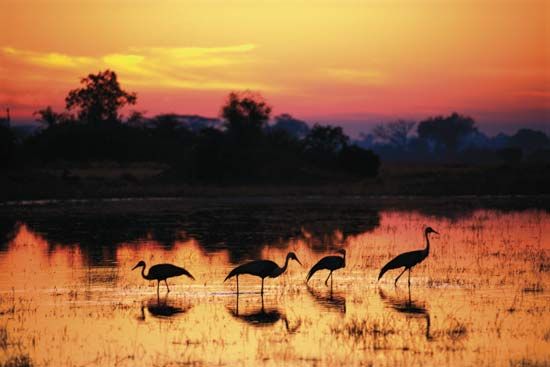
- Openbill, saddlebill, wattled crane, and crested crane.2
- Jucana, cormorant, Ross’s lourie, and Boehm’s bee eater.2
- Black barbed barbet, fish eagle, marabou stork, and vulture.2
While the park is the largest in Zambia, it is important to note that wildlife populations have faced challenges due to human activity and poaching, which have historically impacted species like the rhinoceros and elephant.4
Sources
- Kafue River — Encyclopædia Britannica
- Kafue National Park — Encyclopædia Britannica
- Zambia - Drainage — Encyclopædia Britannica
- Zambia - Plant and animal life — Encyclopædia Britannica
- Zambezi River — Encyclopædia Britannica
- Africa - Zambezi basin — Encyclopædia Britannica
- Zambezi River - Physiography — Encyclopædia Britannica
- Zambia - Resources and power — Encyclopædia Britannica
- lechwe — Encyclopædia Britannica
Published on · 3 min read