Mamo
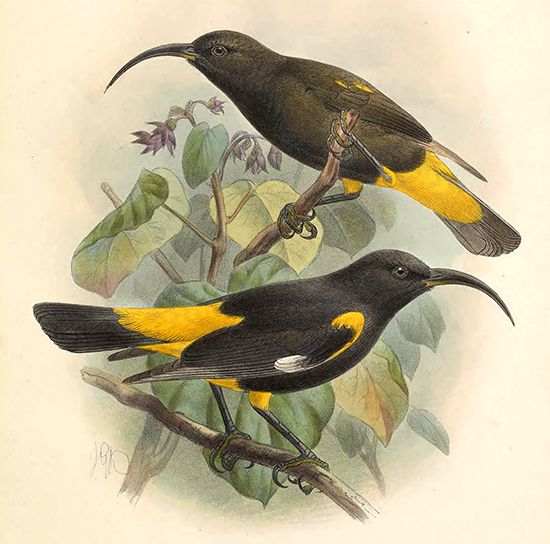
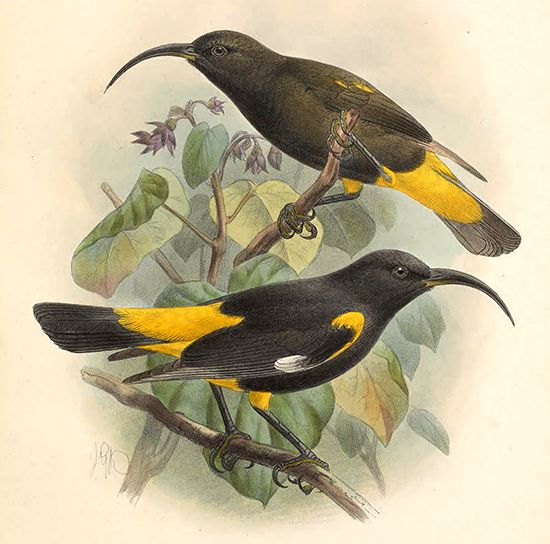
The mamo (Drepanis pacifica) was a Hawaiian honeycreeper, a type of songbird known for its black plumage with yellow accents and a long, curved bill adapted…
What is Mamo?
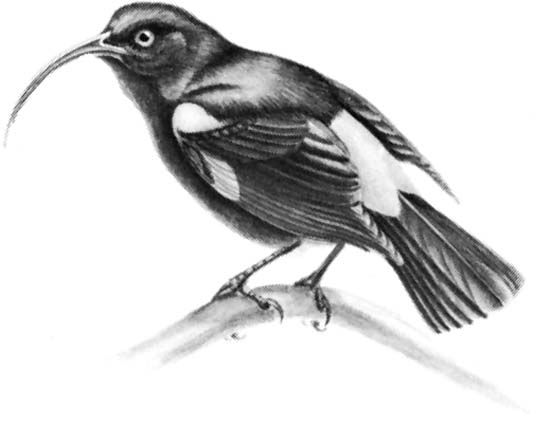
The mamo (Drepanis pacifica) was a Hawaiian honeycreeper, a type of songbird known for its black plumage with yellow accents and a long, curved bill adapted for feeding on nectar.12
Reaching about 20 centimeters (8 inches) in length, the species held cultural significance for the native Hawaiian nobility, who utilized its yellow feathers in traditional featherwork. While the birds were historically harvested for these feathers, they remained relatively abundant until the destruction of their mountain-forest habitat by Americans led to their extinction around 1898.12
It is important to note that the term “Mamo” is distinct from the “Mam,” which refers to an Indigenous people of southwestern Guatemala or their Mayan language.3
Why were Mamo feathers important to Hawaiian royalty?
Mamo feathers were highly prized by the Hawaiian nobility because of their vibrant yellow color, which was used to create exquisite and prestigious featherwork. These yellow feathers, found above and below the tail of the mamo, were considered a mark of status and were incorporated into choice garments and regalia that symbolized the power and rank of the ruling class.1
While the birds were harvested for these feathers, the species remained relatively abundant until the destruction of their mountain-forest habitat led to their extinction around 1898.2
What other Hawaiian birds are currently endangered or extinct?
The Hawaiian Islands have experienced significant loss of native bird life due to habitat destruction and the introduction of invasive species like rats, pigs, and goats.4567
Extinct Species
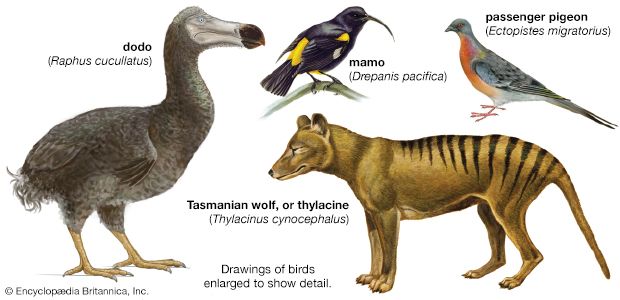
At least 8 of the original 23 species of Hawaiian honeycreepers are now extinct. Notable extinct honeycreepers include:4
Endangered and Rare Species
Most surviving honeycreepers are considered endangered. Examples include:4
- Iiwi (Vestiaria coccinea): Extinct on two islands and very rare on others.5
- Akiapolaau (Hemignathus munroi): An insectivore threatened by the loss of native koa forests.5
- Palila (Loxioides bailleui): Endangered due to its reliance on the mamane tree, which is degraded by introduced herbivores.5
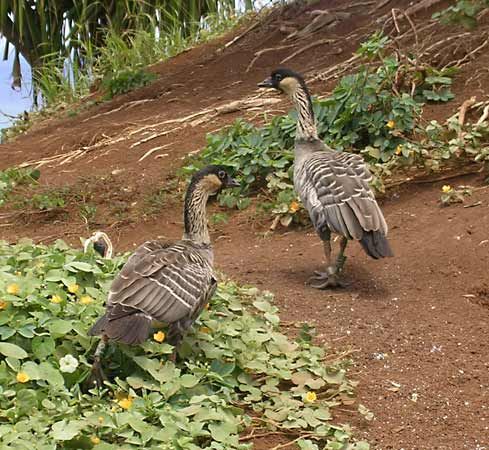
Other native birds, such as the nene (Hawaiian goose) and the Hawaiian stilt, also face conservation challenges. Protecting these species is critical, as about one-third of all U.S. threatened or endangered animal species are located in Hawaii.7
How did the loss of mountain forests affect Hawaiian wildlife?
The loss of mountain forests in Hawaii has had a devastating impact on native wildlife, primarily by removing the essential food sources and shelter required for survival. As these forests were cleared or degraded, native species—many of which are endemic and evolved in isolation—found themselves without the resources necessary to sustain their populations.84
The consequences of this habitat loss include:
- Extinction and Endangerment: The destruction of native forest ecosystems is a leading cause of the decline in biodiversity. For example, habitat loss, combined with the introduction of foreign species, has led to the extinction of at least 8 of the original 23 species of Hawaiian honeycreepers, with most survivors now considered endangered.98
- Increased Vulnerability: When forests are fragmented or degraded, native animals are forced into smaller, disconnected patches. This isolation makes them more susceptible to predators, limits their ability to find mates, and increases the difficulty of obtaining food and water.8
- Competition and Predation: The degradation of these environments often facilitates the spread of invasive species, such as mongooses, pigs, and goats, which outcompete native wildlife for resources or prey upon them directly.4810
Sources
- Mamo — Encyclopædia Britannica
- mamo — Merriam-Webster
- Mam — Merriam-Webster
- Hawaiian honeycreeper — Encyclopædia Britannica
- conservation - Secondary extinctions — Encyclopædia Britannica
- invasive species - A global problem — Encyclopædia Britannica
- conservation - Fire control — Encyclopædia Britannica
- Hawaii - Plant and animal life — Encyclopædia Britannica
- habitat loss — Encyclopædia Britannica
- Hawaii Volcanoes National Park — Encyclopædia Britannica
Published on · 3 min read