Nene
The name "nene" (pronounced nay-nay) is derived directly from the Hawaiian language. While the specific linguistic meaning of the word is not explicitly…
How did the nene bird get its name and what does it mean?
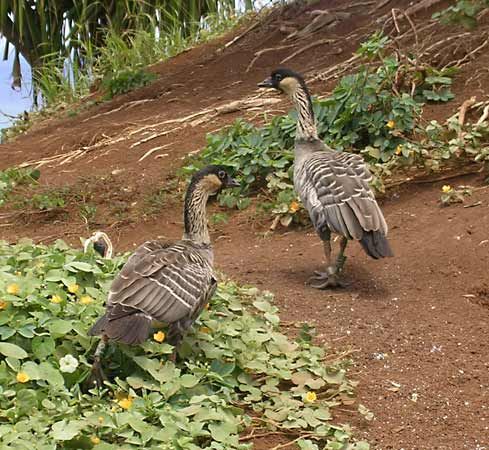
The name “nene” (pronounced nay-nay) is derived directly from the Hawaiian language. While the specific linguistic meaning of the word is not explicitly detailed in the provided records, the term serves as the common name for the Hawaiian goose (Branta sandvicensis), which is the official state bird of Hawaii.123
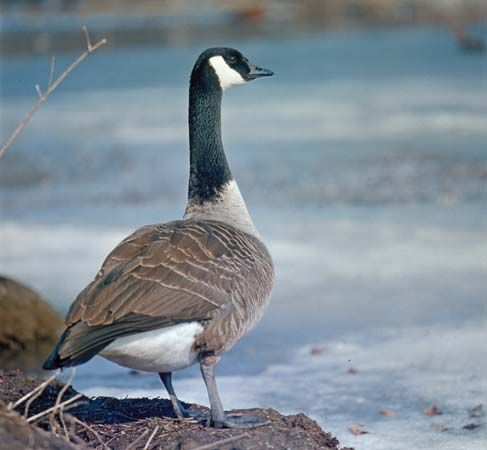
The nene is a unique, nonmigratory species that evolved from the Canada goose to adapt to the volcanic landscape of the Hawaiian Islands. Its physical characteristics, such as half-webbed feet and shortened wings, allow it to thrive in waterless, high-elevation lava slopes where it feeds on native vegetation. Once nearly extinct due to human hunting and introduced predators, the species has seen a recovery in recent decades, particularly on islands free of mongooses.31
What is the nene bird and where is it native to?
The nene (Branta sandvicensis), also known as the Hawaiian goose, is an endangered species of goose belonging to the family Anatidae. It serves as the official state bird of Hawaii.4
Characteristics and Habitat
The nene is a relative of the Canada goose that evolved specifically within the Hawaiian Islands. Unlike many other waterfowl, it is a nonmigratory and nonaquatic species. It has adapted to its environment with shortened wings and half-webbed feet, which allow it to navigate the rough, volcanic lava slopes where it feeds on native berries and grasses.4
Native Range
While the nene was once thought to be restricted to specific islands, subfossil evidence discovered by Smithsonian Institution scientists indicates that the species was historically found throughout the entire Hawaiian archipelago. Following significant population declines due to human hunting and introduced predators like dogs, pigs, and mongooses, the species has seen a successful recovery on islands such as Kauai, where it now thrives in mongoose-free environments.45
How did the nene bird population decline and what conservation efforts have been made?
The nene population faced a catastrophic decline due to a combination of human hunting and the introduction of non-native predators, including dogs, cats, pigs, and mongooses. By 1911, these pressures had reduced the species to a few small flocks, and despite a ban on hunting that same year, the population continued to dwindle to approximately 30 individuals by 1952.4
Conservation efforts initially focused on captive breeding programs in Hawaii and England. However, these early attempts to reintroduce the birds to the islands of Hawaii and Maui largely failed, as the presence of mongooses led to high predation of eggs and goslings. A significant breakthrough occurred in 1982 following Hurricane Iwa, which accidentally released captive nene onto Kauai. Because Kauai lacked mongooses, the birds established a thriving, self-sustaining population. This success, supported by broader environmental awareness and habitat protection initiatives across the state, has allowed the nene to recover significantly.46
How has the nene bird become culturally significant in Hawaiian history and folklore?
The provided search results do not contain information regarding the cultural significance or folklore associated with the nene bird in Hawaiian history. While the nene is recognized as the official state bird of Hawaii, the available documentation focuses primarily on its biological characteristics, evolutionary history, and conservation status.42
We could dive deeper into the general history of the Hawaiian Islands or explore other aspects of Hawaiian wildlife if you are interested.
Sources
- Hawaiian goose — Merriam-Webster
- Hawaii: Country Facts — Encyclopædia Britannica
- nene — Merriam-Webster
- Nene — Encyclopædia Britannica
- Anseriform - General features — Encyclopædia Britannica
- Hawaii - Plant and animal life — Encyclopædia Britannica
Published on · 2 min read