Marine Sediment
Marine organisms are primary contributors to the formation of biogenic ooze, a type of deep-sea sediment composed of at least 30 percent skeletal remains.…
How do marine organisms contribute to sediment formation?
Marine organisms are primary contributors to the formation of biogenic ooze, a type of deep-sea sediment composed of at least 30 percent skeletal remains. These organisms contribute to sediment through two main chemical compositions:12
- Calcareous: Microscopic organisms like foraminiferans and coccoliths secrete calcium carbonate shells. Upon death, these tests settle on the seafloor, forming carbonate oozes that cover about half of the world’s ocean floor.13
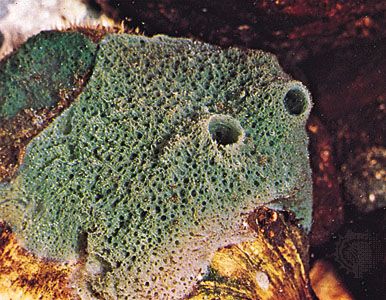
- Siliceous: Organisms such as diatoms, radiolarians, and siliceous sponges build skeletons from silica (opal). These form siliceous oozes, which are typically found in areas of high primary productivity, such as near the Equator and Antarctica.12
Additionally, larger organisms like reef-building corals contribute to sediment by creating rigid limestone structures; wave action and erosion of these reefs generate significant skeletal debris. To facilitate settling, zooplankton often bundle fine particles into fecal pellets, which sink much faster than individual microscopic shells.4356
How does the composition of marine sediments vary with ocean depth?
The composition of marine sediments varies significantly with ocean depth, primarily due to the influence of biological productivity, chemical dissolution, and proximity to land-based sources.41
Influence of Depth on Sediment Composition
- Continental Margins: Near continents, sediments are often dominated by terrigenous material—rock and soil particles transported by rivers, ice, and wind. These areas frequently feature turbidites, which are coarse-grained deposits resulting from underwater density currents.4
- The Calcite Compensation Depth (CCD): A critical factor in deep-ocean composition is the calcite compensation depth, typically located around 4,500 meters (about 14,800 feet). Above this depth, calcareous ooze (rich in calcium carbonate) can accumulate. Below this depth, the water becomes more corrosive, causing carbonate shells to dissolve rapidly, which prevents the formation of carbonate-rich sediments.19
- Deep-Sea Basins: In the deepest parts of the ocean, where carbonate is absent due to dissolution and land-derived sediments are scarce, the seafloor is often covered by pelagic sediments such as siliceous ooze or deep-sea clay. Siliceous oozes, composed of opal from organisms like diatoms, are generally found in regions of high surface productivity rather than being strictly depth-dependent.41
What tools and techniques do oceanographers use to collect marine sediment samples?
Oceanographers employ a variety of specialized equipment to collect and analyze marine sediment samples, categorized primarily by their mechanical design and purpose.11
Primary Sampling Tools
- Grabbing Devices: Often called “snappers,” these are used to collect superficial sediment layers. Examples include the clamshell snapper, which uses spring-actuated jaws to trap material, and the orange peel bucket sampler, designed for shallow-water collection. The underway bottom sampler (or “scoopfish”) allows for rapid sampling while a ship is in motion.11
- Dredges: These are sturdy, steel-framed devices dragged along the seafloor. They are particularly effective for collecting large rock samples, with heavy grills or hardware cloth used to retain material of varying sizes.11
- Coring Devices: These tools are essential for recovering long, vertical sequences of sediment that preserve the historical depositional record.1112
- Phleger corer: A lightweight device for shallow samples up to one meter deep.11
- Piston corer: Uses a piston to create suction, overcoming friction to retrieve cores up to 20 meters long.11
- Hydraulic piston corer: An advanced version used by research vessels like the JOIDES Resolution to obtain undisturbed cores up to 200 meters in length.11
What information can scientists gather from studying marine sediments?
Studying marine sediments provides scientists with a comprehensive archive of Earth’s history over the last 200 million years. By analyzing these deposits, researchers can reconstruct past environmental and geological conditions through several key methods:14
- Climate and Glacial History: The marine oxygen isotope record is a primary tool for understanding past climates. By measuring the ratio of oxygen-18 to oxygen-16 in the shells of microfossils, scientists can determine historical water temperatures and global ice volumes, allowing them to map cycles of glaciation and interglaciation.4
- Geological Processes: Sediments offer evidence for seafloor spreading, as the age and thickness of deposits increase with distance from mid-ocean ridges. They also record tectonic activity, such as the movement of plates and the opening or closing of seaways.101415
- Environmental Markers: Volcanic ash layers found within sediment cores serve as “instantaneous” markers that can be dated using radiometric techniques, helping to correlate marine records with terrestrial and ice-core data.16
- Ocean Dynamics: Analysis of sediment composition, including biogenic remains and mineral fragments, reveals shifts in ocean currents, productivity levels, and the chemical nature of bottom waters, such as fluctuations in the calcite compensation depth.1015
Sources
- biogenic ooze — Encyclopædia Britannica
- ooze — Encyclopædia Britannica
- ocean basin - Sediment types — Encyclopædia Britannica
- marine sediment — Encyclopædia Britannica
- Marine ecosystem - Links between the pelagic environments and the benthos — Encyclopædia Britannica
- coral reef - Corals and other reef-building organisms — Encyclopædia Britannica
- terrigenous — Merriam-Webster
- sedimentary rock - Origin of limestones — Encyclopædia Britannica
- ocean basin - Sedimentation patterns — Encyclopædia Britannica
- ocean basin - Deep-sea sediments — Encyclopædia Britannica
- undersea exploration - Exploration of the seafloor and the Earth’s crust — Encyclopædia Britannica
- core sampling — Encyclopædia Britannica
- corer — Merriam-Webster
- Pleistocene Epoch - Marine oxygen isotope record — Encyclopædia Britannica
- undersea exploration - Water sampling for chemical constituents — Encyclopædia Britannica
- hydrologic sciences - Biogeochemical cycles in the oceans — Encyclopædia Britannica
- Quaternary - Correlation of Quaternary deposits — Encyclopædia Britannica
- geology - Sedimentary petrology — Encyclopædia Britannica
Published on · 3 min read