Matterhorn
The Matterhorn is one of the most iconic mountains in the Alps, standing at an elevation of 14,692 feet (4,478 meters). It is located on the border between…
What is the Matterhorn and where is it located in Europe?
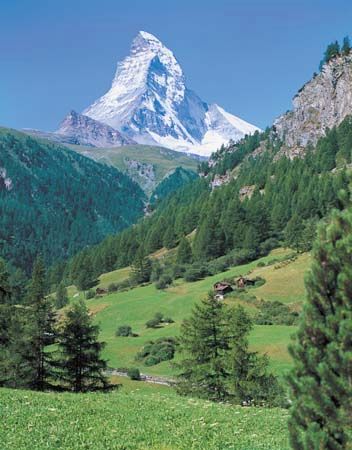
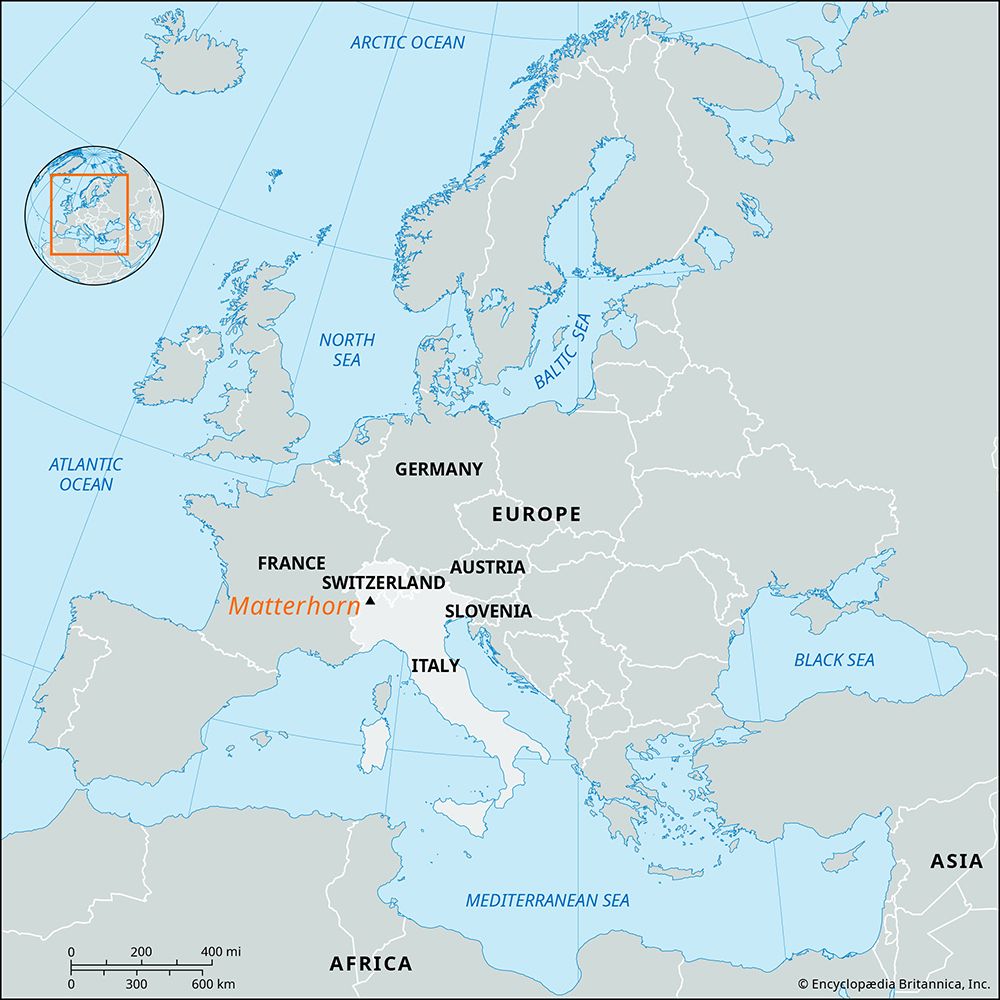
The Matterhorn is one of the most iconic mountains in the Alps, standing at an elevation of 14,692 feet (4,478 meters). It is located on the border between Switzerland and Italy, situated approximately 6 miles southwest of the Swiss village of Zermatt.12
While it appears as an isolated, horn-shaped peak from the Swiss side, the mountain is actually the terminus of a ridge. The name is derived from the German words Matte (meadow) and Horn (peak), translating roughly to “the peak in the meadows”. The mountain is also known as Mont Cervin in French. It gained significant historical attention in 1865 when it was first successfully climbed by Edward Whymper, a feat that was tragically marked by the deaths of four members of his party during the descent.12
How tall is the Matterhorn and what is its distinctive shape?
The Matterhorn stands at an elevation of 14,692 feet (4,478 meters).1
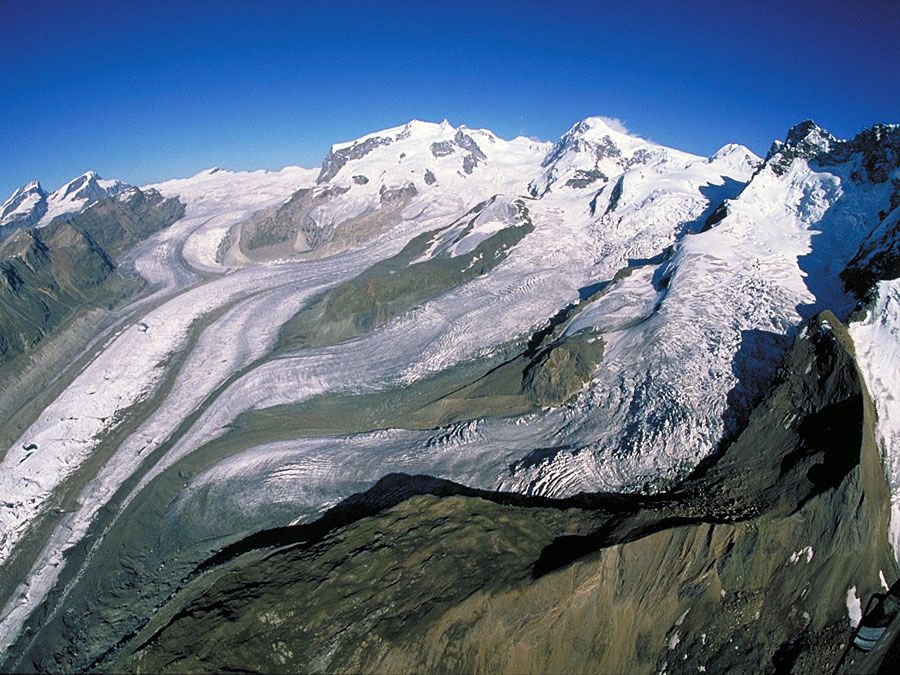
While it is widely recognized for its distinctive, isolated horn-shaped appearance when viewed from the Swiss side, this shape is an optical illusion created by its position; in reality, the mountain serves as the butt end of a ridge. Its iconic form was sculpted over time by Alpine glaciation, which carved the peak into its current profile through the erosive action of ice.13
When was the Matterhorn first successfully climbed and by whom?
The Matterhorn was first successfully climbed on July 14, 1865, by the British explorer Edward Whymper.14
Whymper reached the summit via the Swiss ridge, a route previously considered too perilous to attempt. Tragically, the achievement was marred by a fatal accident during the descent, when one member of the party slipped and pulled three others to their deaths. Just three days later, on July 17, 1865, a party of climbers from the Italian village of Valtournanche, led by guide Giovanni Antonio Carrel, successfully scaled the mountain from the Italian side.14
What other famous mountains are part of the Alps mountain range?
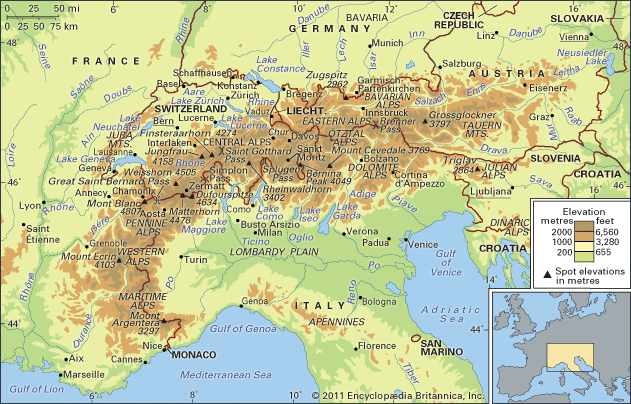
The Alps are home to numerous iconic peaks and mountain ranges. Beyond the Matterhorn, some of the most notable mountains and ranges include:
Prominent Peaks
- Mont Blanc: At 15,771 feet (4,807 meters), it is the highest peak in the Alps.56
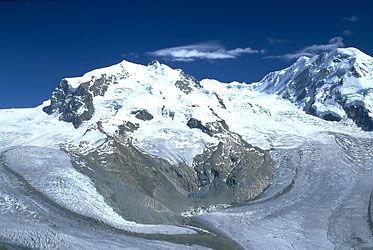
- Dufourspitze: A major peak in the Monte Rosa Massif, reaching over 14,000 feet.56
- Weisshorn: A crystalline peak rising to 14,780 feet.6
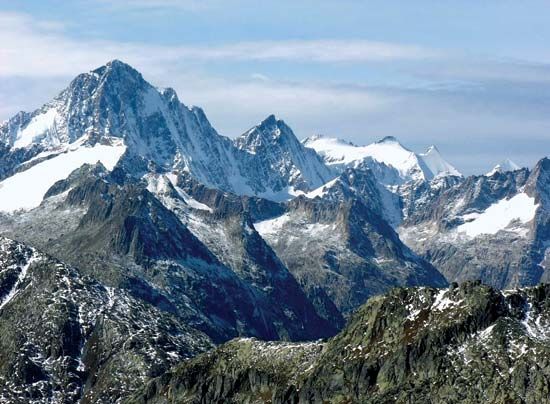
- Finsteraarhorn: The highest point of the Bernese Alps, standing at 14,022 feet.67
- Jungfrau: A famous peak within the Bernese Alps.7
- Grossglockner: The highest peak in Austria, reaching 12,460 feet.6
- Zugspitze: The highest point in Germany, located in the Bavarian Alps.6
- Triglav: The highest point of the Julian Alps and Slovenia.6
Notable Ranges
The Alps are divided into three main segments—Western, Central, and Eastern—which contain various distinct ranges, such as the Maritime Alps, the Dolomites, the Rhaetian Alps, and the Dinaric AlpsDinaric Alps](https://www.britannica.com/place/Dinaric-Alps).6
Sources
- Matterhorn — Encyclopædia Britannica
- Matterhorn — Merriam-Webster
- Alps - Geology — Encyclopædia Britannica
- Edward Whymper — Encyclopædia Britannica
- Exploring 7 of Earth’s Great Mountain Ranges - Alps — Encyclopædia Britannica
- Alps - Physiography — Encyclopædia Britannica
- Bernese Alps — Encyclopædia Britannica
- Albula Alps — Encyclopædia Britannica
Published on · 2 min read