Mullet
Mullet fish, belonging to the family Mugilidae, are characterized by several distinct physical traits that aid their survival in shallow, inshore salt water…
What are the distinctive physical characteristics of mullet fish?
Mullet fish, belonging to the family Mugilidae, are characterized by several distinct physical traits that aid their survival in shallow, inshore salt water and brackish environments.1
Their primary physical features include:
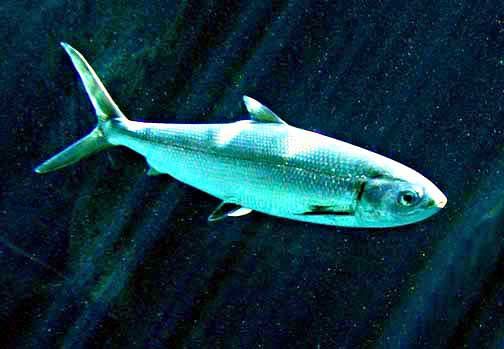
- Body Shape: They possess relatively stocky, cigar-shaped, or elongated bodies.12
- Size: These fish typically range from 30 to 90 cm (1 to 3 feet) in length.1
- Scales and Coloration: They are generally silvery in appearance and covered with large scales.1
- Fins: A defining characteristic is the presence of two distinct dorsal fins, with the first fin containing four stiff spines. They also feature forked tails.1
- Internal Anatomy: Many species have evolved strong, gizzardlike stomachs and long intestines, which are specialized adaptations for processing a largely vegetarian diet consisting of microscopic plants and small animals found in sand or mud.1
It is important to note that the term “mullet” is sometimes used to describe a specific hairstyle; however, in a biological context, it refers exclusively to these schooling fishes.2
Where are mullet fish typically found, and what are their preferred habitats?
Mullet fish are widely distributed across both tropical and temperate regions of the world. They are primarily found in salt water or brackish environments, where they typically frequent shallow, inshore areas.1
In these habitats, mullets are often observed foraging in sand or mud, where they feed on microscopic plants and small animals. While many species are coastal, some, such as certain Australian varieties, can be found in landlocked lakes. The common or striped mullet (Mugil cephalus) is particularly notable for its worldwide distribution and its ability to thrive in various coastal settings.14
How are mullet fish used in commercial fishing and cuisine?
Mullet fish are highly regarded as commercially valuable schooling fish. Due to their rapid growth rate, certain species, such as the common or striped mullet (Mugil cephalus), are actively cultivated in various regions to support market demand.1
In culinary traditions, mullet is a versatile food fish often prepared by frying. In the United States, it is sometimes colloquially referred to as “Biloxi bacon”. Beyond the consumption of the fish itself, the roe of the gray mullet is a prized delicacy. It is processed into bottarga—a product consisting of dried, salted, and pressed roe that holds significant importance in Mediterranean cuisine, where it is often sliced and served with ingredients like ripe tomatoes.56
The cultural significance of the fish is also celebrated in community events, such as the long-standing Mullet Festival on the North Carolina coast, which originated from local fish-fry potlucks held by fishermen.5
What are the different species of mullet fish, and how do they differ?
The family Mugilidae, commonly known as gray mullets, comprises fewer than 100 species of schooling fishes found in tropical and temperate regions. While they share a general appearance—silvery, cigar-shaped bodies, forked tails, and two distinct dorsal fins—they represent a diverse group of fish.17
Key species and distinctions include:
- Common or Striped Mullet (Mugil cephalus): This is the most well-known species, found worldwide along European, American, and Pacific coasts. It is highly valued in commercial fishing and aquaculture due to its rapid growth rate.13
- White Mullet (Mugil curema): A silvery species native to the Atlantic and Pacific coasts.8
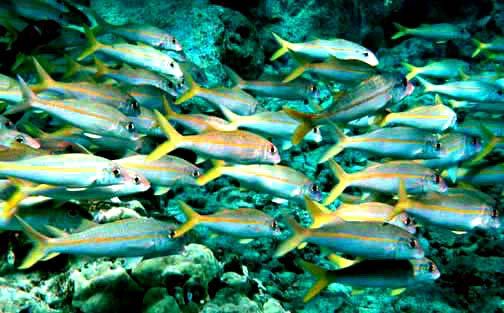
- Distinction from Red Mullet: It is important to note that the red surmullet, or red mullet, is not a true mullet. It belongs to the goatfish family and is entirely unrelated to the Mugilidae family.1
- Naming Confusion: The term “white mullet” can also refer to certain silvery suckers of the genus Moxostoma, which are part of the family Catostomidae rather than the Mugilidae family.8
Sources
- mullet — Encyclopædia Britannica
- mullet — Merriam-Webster
- Mugilidae — Merriam-Webster
- sea mullet — Merriam-Webster
- bottarga — Merriam-Webster
- 10 Words for Food with Unfortunate-Sounding Names | Mullet — Merriam-Webster
- striped mullet — Merriam-Webster
- white mullet — Merriam-Webster
Published on · 3 min read