Needlefish
Needlefish are long, slender, carnivorous fish belonging to the family Belonidae, which includes approximately 60 species found in temperate and tropical…
What is needlefish?
Needlefish are long, slender, carnivorous fish belonging to the family Belonidae, which includes approximately 60 species found in temperate and tropical waters worldwide. They are primarily marine, though some species inhabit freshwater environments.123
Distinguished by their silvery bodies with blue or green backs, needlefish are easily recognized by their elongated jaws equipped with sharp teeth. They are known for being adept jumpers and are considered edible. As members of the order Atheriniformes, they are surface-dwelling predators that often breed near the shore, attaching their eggs to floating objects using adhesive filaments. Notable examples within the family include the garfish (Belone belone) of Europe and the tropical houndfish (Tylosurus crocodilus).123
How do needlefish use their jumping ability to escape predators?
Needlefish do not use their jumping ability specifically to glide or escape predators in the same manner as flying fish; rather, their long, slender body shape is adapted for quick, darting movements at the water’s surface. While they are described as adept jumpers, this behavior is primarily associated with their ability to rapidly dart away from threats or toward prey in their surface-dwelling ecological niche. Unlike flying fishes, which use specialized fins to glide over long distances to evade danger, needlefish rely on their agility to maneuver quickly within the water column to avoid predators.1
What are some other fish that belong to the same order as needlefish?
Needlefish belong to the order Atheriniformes, a diverse group of fishes that includes several other families. Within the suborder Exocoetoidei, they are closely related to:
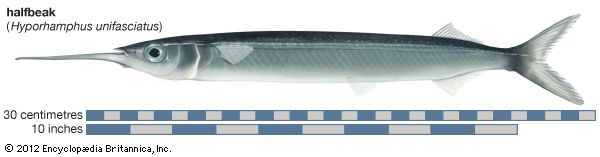
- Exocoetidae: This family includes halfbeaks and flying fishes, which are known for their extended lower jaws or specialized fins for gliding.1
- Scomberesocidae: Commonly known as sauries or skippers, these fish share a similar jaw structure to needlefish but have feebler teeth and small finlets behind their dorsal and anal fins.1
The order also includes the suborder Cyprinodontoidei, which features various groups such as:
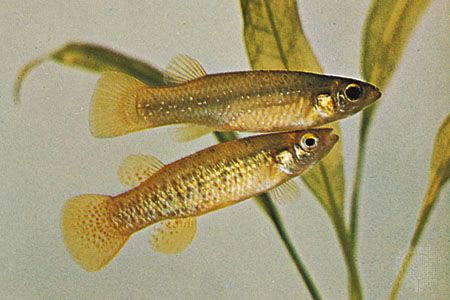
- Cyprinodontidae: Known as killifishes or egg-laying topminnows, many of which are popular in the aquarium trade.1
- Poeciliidae: A family of live-bearing fish that includes well-known species like guppies, mollies, and swordtails.1
Additionally, the suborder Atherinoidei includes the Atherinidae, or silversides, which are widely distributed in coastal and freshwater environments.1
How do needlefish reproduce and attach their eggs to floating objects?
Needlefish reproduce by laying eggs that are equipped with specialized adhesive filaments. These filaments allow the eggs to attach securely to floating objects, such as seaweed, debris, or other structures in the water, preventing them from drifting away in currents. This method of using adhesive structures is a common strategy among various shore and freshwater fishes to ensure their eggs remain in a stable environment during development.6
While the provided information confirms that many fishes utilize adhesive eggs to secure them to substrates or floating materials, specific details regarding the unique reproductive behaviors of needlefish are not contained in the current Britannica knowledge base.6
Sources
- needlefish — Encyclopædia Britannica
- needlefish — Merriam-Webster
- atheriniform - Natural history — Encyclopædia Britannica
- fish - Locomotion — Encyclopædia Britannica
- atheriniform - Annotated classification — Encyclopædia Britannica
- fish - Reproduction — Encyclopædia Britannica
Published on · 2 min read