Needlegrass
Needlegrass refers to various species of grasses, most notably those belonging to the genus Stipa within the Poaceae family. These plants are characterized…
What is Needlegrass?
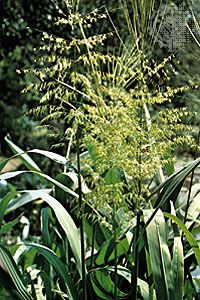
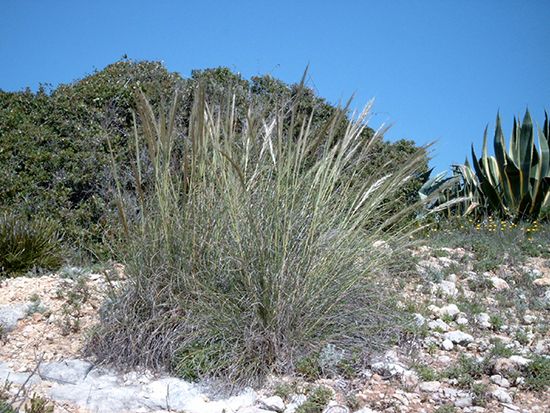
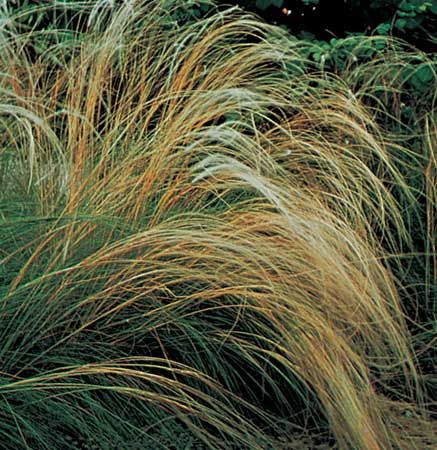
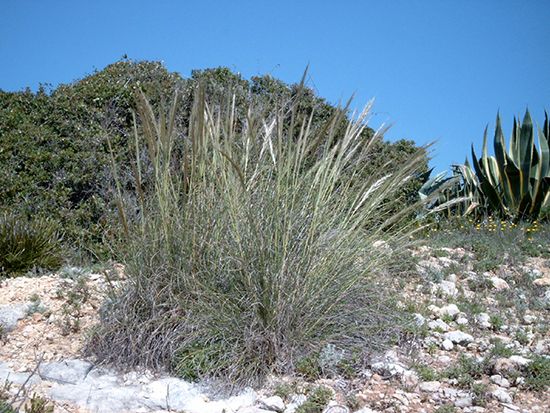
Needlegrass refers to various species of grasses, most notably those belonging to the genus Stipa within the Poaceae family. These plants are characterized by their sharply pointed grains and long, threadlike bristles known as awns.12
Key characteristics and uses include:
- Physical Structure: They grow as annuals or perennials, typically reaching heights between 0.3 and 1 meter. Many species form dense, tufted bunches called tussocks.1
- Agricultural Impact: While many needlegrasses serve as valuable forage in arid regions, the sharp grains of certain species can be hazardous, potentially puncturing the faces of grazing livestock.1
- Economic Utility: Some species, such as esparto (Stipa tenacissima), are utilized in the production of paper, ropes, and cords. Others are cultivated as garden ornamentals.1
- Classification: The term is also applied to grasses in the genus Aristida, which are sometimes referred to as triple-awned grass and are generally considered to provide poor forage.2
What is the difference between annual and perennial grasses?
The primary difference between annual and perennial grasses lies in their life cycle and growth patterns.
- Annual Grasses: These plants complete their entire life cycle—from germination to seed production and death—within a single growing season. Because they do not survive beyond one year, they must be replanted if you wish to maintain them in a garden or field.3
- Perennial Grasses: These plants live for more than two years, regrowing and reblooming year after year from established root systems. They often rely on subterranean reserves, such as rhizomes or perennating roots, to support rapid shoot growth at the start of each season.345
Key Comparisons:
Feature
Annual Grasses
Perennial Grasses
Lifespan
One growing season
Multiple years
Energy Allocation
Primarily directed toward seed production
Divided between root development and reproduction
Maintenance
Requires annual replanting
Regrows seasonally without replanting
Environmental Adaptation
Often opportunistic
Adapted to survive stressors like drought or fire
Perennial grasses are often favored in sustainable agriculture because their extensive root systems help limit soil erosion and improve soil health.4
How do plants like esparto grass contribute to human industry?
Esparto grass, which includes the species Stipa tenacissima and Lygeum spartum, has been a significant resource for human industry for centuries due to the strength and flexibility of its fibre.89
Traditional Applications
Historically, the tough, rushlike leaves of these grasses have been harvested to manufacture a variety of durable goods, including:
- Cordage: The production of ropes and cords.89
- Textiles and Crafts: The weaving of sandals, baskets, and mats.89
Papermaking Industry
Esparto became particularly notable in the paper industry following developments in Great Britain in 1856. It is valued for several technical properties:810
- Fiber Quality: It possesses a higher cellulose content than many other nonwood plants, along with greater uniformity in fiber size and shape.10
- Performance: Papers made from esparto are known for their dimensional stability, smoothness, opacity, and resilience, making them particularly well-suited for printing.10
- Processing: The stock drains freely on paper machines, allowing for efficient production.10
While its use in papermaking peaked in the mid-1950s and has since declined, esparto remains a classic example of utilizing nonwoody plant stems to supplement or replace wood pulp in regions with limited forest resources.10
What are some other common types of grasses found in grasslands?
Grasslands across the globe are home to a diverse array of grass species, many of which are adapted to specific environmental conditions such as moisture levels, temperature, and soil type.
Common Grassland Species
- Bluestem Grasses: These are iconic tallgrass species, such as big bluestem and little bluestem, which dominate the tallgrass prairies of North America.11
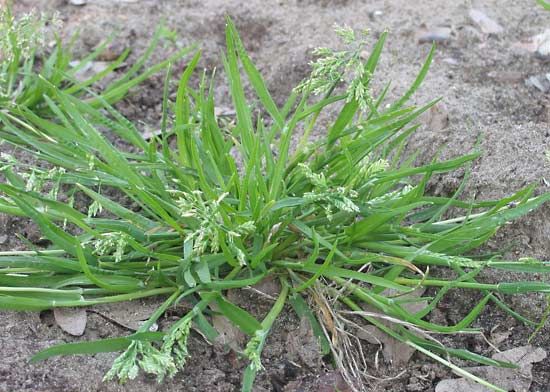
- Bluegrass: The genus Poa is widespread, with species like Kentucky bluegrass found in various prairie subtypes and annual bluegrass common in many temperate regions.1213
- Grama and Buffalo Grass: These are characteristic of drier regions, such as the shortgrass plains and mixed-grass prairies of North America, where species like blue grama and buffalo grass thrive.1311
- Needlegrass: Also known as porcupine grass, species of the genus Stipa are significant components of prairies and the Eurasian steppe.1311
- Tropical and Savanna Grasses: In warmer climates, common species include kangaroo grass, thatching grass, and elephant grass, as well as bahia grass.1411
- Spinifex: In the arid regions of Australia, prickly spinifex grasses like Triodia are prominent, often forming hummocks that trap sand.1411
These grasses often utilize different photosynthetic pathways, such as the C4 pathway, which allows them to thrive in hot, arid environments by conserving water more efficiently than C3 plants.15
Sources
- needlegrass — Encyclopædia Britannica
- needlegrass — Merriam-Webster
- Is That Plant 'Perennial' or 'Annual'? — Merriam-Webster
- Paspalum — Encyclopædia Britannica
- perennial ryegrass — Merriam-Webster
- Perennial agriculture — Encyclopædia Britannica
- Grassland - Population and community development and structure — Encyclopædia Britannica
- esparto — Encyclopædia Britannica
- esparto — Merriam-Webster
- papermaking - Natural fibres other than wood — Encyclopædia Britannica
- Bluegrass — Encyclopædia Britannica
- Prairie — Encyclopædia Britannica
- Savanna - Flora — Encyclopædia Britannica
- Grassland - Biota — Encyclopædia Britannica
- Plant - Specific variations in photosynthesis — Encyclopædia Britannica
Published on · 4 min read