Ötztal Alps
Since the mid-20th century, the development of mass tourism has fundamentally reshaped the Alpine region, including areas like the Ötztal Alps.
How has tourism impacted the environment and economy of the Ötztal Alps region?
Since the mid-20th century, the development of mass tourism has fundamentally reshaped the Alpine region, including areas like the Ötztal Alps.
Economic Impact
Tourism has become a vital economic driver, injecting significant capital into remote high-altitude villages where traditional agricultural and industrial employment has declined. By expanding the service sector, tourism provides essential income, though it remains a volatile industry sensitive to economic fluctuations and climate-dependent factors like snowfall.1
Environmental Impact
This economic growth has come at a high environmental cost. The infrastructure required to support tourism—such as roads, ski slopes, and tunnels—has led to significant landscape transformation and slope erosion. The influx of visitors has also contributed to:23
- Pollution: Increased water pollution, noise, and air pollution from motor vehicles and infrastructure.2
- Urbanization: Many high-altitude villages have lost their traditional character, evolving into lowland-style suburbs.2
- Degradation: The construction of transport links has facilitated a steady “onslaught” of visitors, further accelerating the degradation of the fragile Alpine environment.23
How do the Ötztal Alps compare to other mountain ranges in the European Alps system?
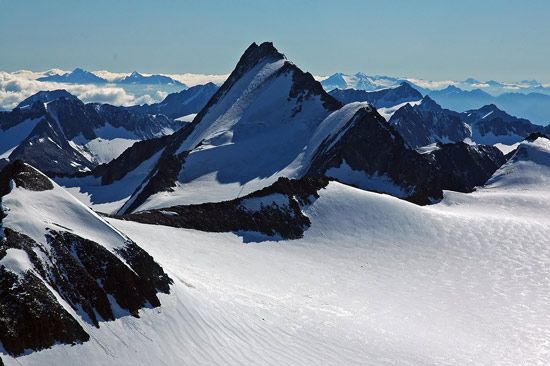
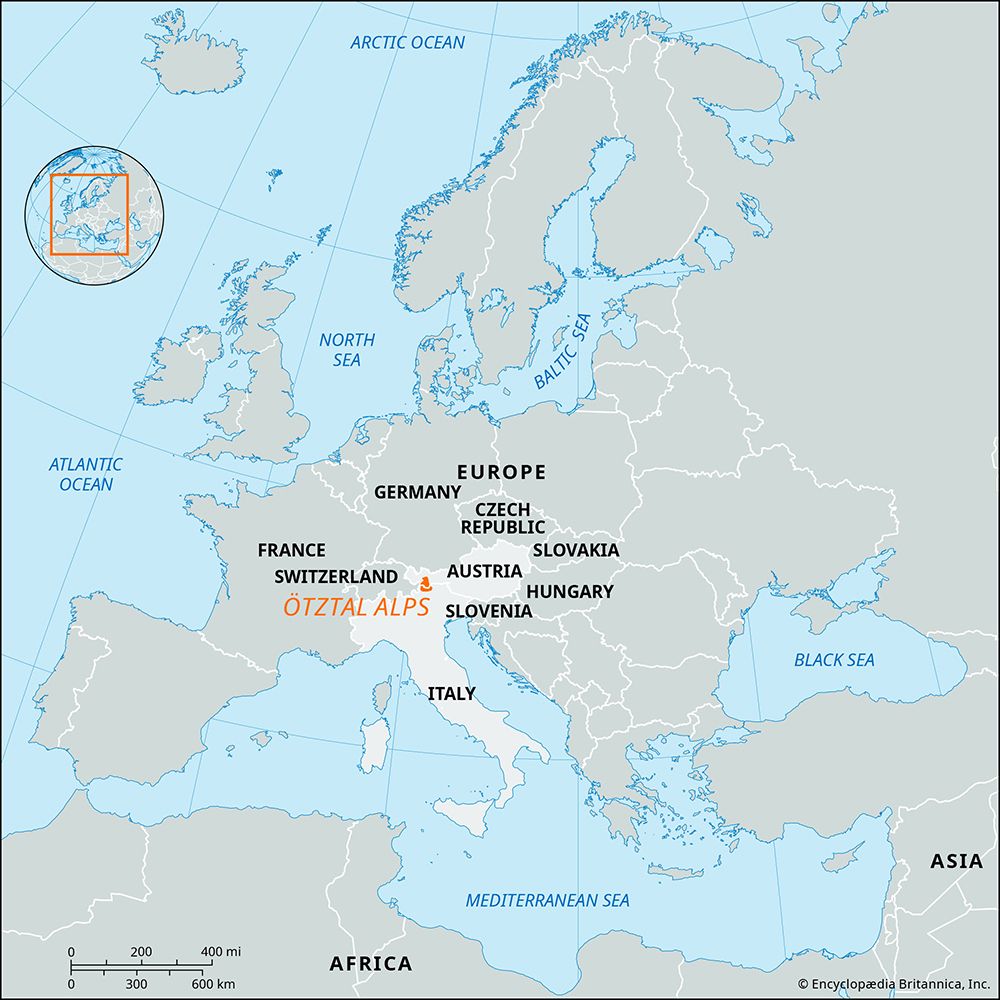
The Ötztal Alps, located in the eastern segment of the Central Alps, are distinguished by their high-altitude, glacier-covered terrain. While the broader Alpine system experiences diverse climatic influences—ranging from Atlantic moisture to Mediterranean warmth—the Ötztal range is specifically defined by its position between the Inn River valley to the north and the Adige River valley to the south.45
Compared to other ranges within the Alps, the Ötztal Alps hold a notable status as the home of the Wildspitze, which serves as the highest point in both the range and the Austrian Tirol. Furthermore, the region is internationally recognized for the 1991 discovery of the Iceman at the Hauslabjoch pass, providing a unique archaeological significance that distinguishes it from other Alpine sectors.4
While the entire Alpine system shares common features like vertical vegetation zones and the impact of global warming on plant migration, the Ötztal Alps are subject to the same environmental pressures as other ranges, including avalanche risks and the ecological consequences of intensive tourism development) risks and the ecological consequences of intensive tourism development.5
What are some of the highest peaks in the Ötztal Alps, and how tall are they?
The Ötztal Alps, located in the Central Alps, feature several prominent, glacier-covered peaks. It is important to clarify that while the Grossglockner is the highest peak in Austria, it is located in the Hohe Tauern range, not the Ötztal Alps.7
Within the Ötztal Alps, the highest point is the Wildspitze, which reaches an elevation of 12,382 feet (3,774 metres) and serves as the highest peak in the Austrian Tirol region. While the range contains numerous other summits, the provided data specifically highlights the Wildspitze as the primary peak of the Ötztal Alps.4
How has the discovery of Ötzi the Iceman in the Ötztal Alps contributed to our understanding of prehistoric life in the region?
The discovery of Ötzi, a 5,300-year-old mummy found in the Ötztal Alps, has provided unprecedented insight into Neolithic life. His remarkably preserved remains and possessions offer a detailed look at the health, diet, and technology of the era.
Health and Physical Condition
Analysis revealed that Ötzi suffered from arthritis, Lyme disease, and whipworm infestation, alongside various dental pathologies and healed bone fractures. His skin features markings interpreted as the earliest known tattoos or therapeutic scars, and his hair provides the earliest archaeological evidence of haircutting.
Diet and Technology
Examination of his intestines and carried items confirmed a diet including ibex, red deer, and cereal grains. His gear—which included a copper-bladed ax, a yew bow, and sophisticated fur and leather clothing—demonstrates the advanced craftsmanship and survival skills of Neolithic travelers.
Evidence of a violent death, indicated by an arrowhead in his shoulder, has reshaped our understanding of interpersonal conflict during this period.
We could dive deeper into the specific tools he carried or the environmental conditions that preserved him for millennia.
Sources
- Alps - Tourism — Encyclopædia Britannica
- Alps - Human impact on the Alpine environment — Encyclopædia Britannica
- Alps - Transportation — Encyclopædia Britannica
- Ötztal Alps — Encyclopædia Britannica
- Alps - Plant and animal life — Encyclopædia Britannica
- Alps - Climate of the Alps — Encyclopædia Britannica
- Grossglockner — Encyclopædia Britannica
- Ötzi — Encyclopædia Britannica
Published on · 3 min read