Yew
Yew trees (Taxus) have been utilized for centuries, though their history is marked by both utility and extreme toxicity. All parts of the tree, except for…
What are the traditional and modern uses of yew wood and other parts of the tree?
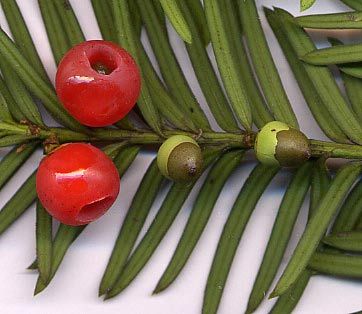
Yew trees (Taxus) have been utilized for centuries, though their history is marked by both utility and extreme toxicity. All parts of the tree, except for the fleshy red aril surrounding the seed, contain poisonous alkaloids.12
Traditional Uses
- Archery: Yew wood is hard, heavy, and fine-grained, making it the premier material for longbows, which were decisive weapons in medieval conflicts like the Hundred Years’ War.13
- Craftsmanship: Historically, the wood was popular for cabinetwork and various implements.1
- Medicinal Folklore: Ancient cultures recognized the tree’s potent biological effects. Native Americans used yew to treat fever and arthritis, while early Japanese practitioners used it to treat diabetes and induce abortion.4
- Toxicity: Historical accounts, including those by Pliny the Elder, warn of the tree’s lethality, noting that drinking from containers made of yew wood could be fatal.4
Modern Uses
- Medicine: The most significant modern application is the production of taxol, a potent anticancer drug. While originally harvested from the bark of the Pacific yew, production now utilizes a semisynthetic process derived from renewable needles.54
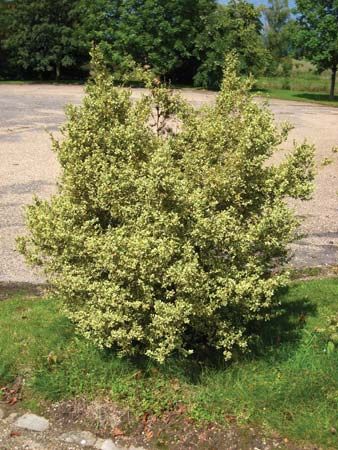
- Horticulture: Yews are widely used as ornamental evergreens. Because they tolerate trimming well, they are frequently shaped into hedges.12
What parts of the yew tree are considered toxic, and how do they affect humans and animals?
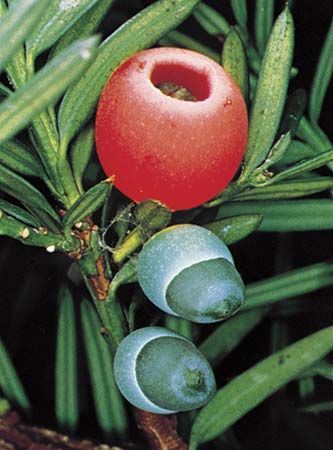
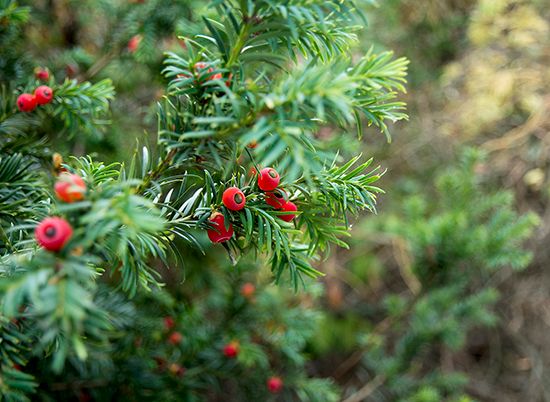
The yew tree (Taxus) is highly toxic, containing poisonous alkaloids throughout almost all of its structures. Specifically, the foliage and seeds are known to be poisonous, while the fleshy, red, cup-shaped aril that surrounds the seed is the only part of the tree considered safe to consume.13
These toxins pose a significant danger to both humans and various animals. Ingestion of the toxic parts can be fatal to livestock and other animals. While some birds, such as thrushes, are able to consume the aril and pass the toxic seed intact through their digestive systems, the ingestion of the seed itself by other creatures can lead to poisoning. Because of the potency of these alkaloids, it is essential to treat all parts of the yew—with the exception of the aril—as hazardous.13
What are some of the most common species of yew trees, and where are they typically found?
The genus Taxus, commonly known as the yew, consists of approximately eight species of ornamental evergreens distributed throughout the Northern Hemisphere. These trees and shrubs are members of the Taxaceae family and are known for their slow growth, longevity, and dark-green foliage.63
Some of the most common species include:
- English yew (Taxus baccata): Widely distributed throughout Europe and Asia as far east as the Himalayas, this species is a popular ornamental often trimmed into hedges. It is exceptionally long-lived; for example, the Fortingall Yew in Scotland is estimated to be between 2,000 and 5,000 years old.8
- Japanese yew (Taxus cuspidata): Native to Japan and China, this species is hardier and faster-growing than the English yew. It is widely cultivated in the Northern Hemisphere and is frequently crossed with the English yew to create hybrids such as Taxus × media.918
- Pacific yew (Taxus brevifolia): This is the only commercially important yew native to North America, found along the Pacific coast from Alaska to California. It is notable as a source of taxol, a compound used in cancer treatment.10116
- Himalayan yew (Taxus wallichiana): Often found in the Himalayan region, some botanists classify this as a distinct species, while others group it with the English yew.8
How does the yew tree’s slow growth rate contribute to its longevity?
The yew tree’s slow growth rate is a key factor in its remarkable longevity. By growing slowly, the tree avoids the metabolic stresses associated with rapid development, allowing it to maintain a low-maintenance body plan that is highly resilient over centuries.112
This slow growth is part of a broader strategy for survival. Because yews are not rushing to reach maturity or maximize height, they can allocate their energy more efficiently, focusing on structural integrity and long-term survival rather than rapid expansion. This approach is common among many of the world’s oldest trees, which often thrive in environments where harsh conditions or limited resources necessitate a slower, more deliberate pace of life.312
Furthermore, the yew’s simple, modular body plan—composed largely of dead woody tissue—means that it requires very little metabolic activity to maintain its structure. By minimizing the need for constant, energy-intensive growth, the yew can endure for millennia, provided it avoids external threats like disease, pests, or human interference.12
Sources
- yew — Encyclopædia Britannica
- pharmaceutical industry - Taxol and the Pacific yew — Encyclopædia Britannica
- English yew — Encyclopædia Britannica
- yew — Merriam-Webster
- longbow — Encyclopædia Britannica
- Pacific yew — Encyclopædia Britannica
- stinking yew — Encyclopædia Britannica
- Japanese yew — Encyclopædia Britannica
- Japanese yew — Merriam-Webster
- Pacific yew — Merriam-Webster
- Taxaceae — Encyclopædia Britannica
- Tree - Tree lines — Encyclopædia Britannica
- How Can Some Trees Survive for Thousands of Years? — Encyclopædia Britannica
- Tree - Tree height growth — Encyclopædia Britannica
Published on · 4 min read