Ox
The ox (Bos taurus) is a domesticated bovine mammal. Its scientific classification is as follows:
What is the scientific classification of the ox (Bos taurus)?
The ox (Bos taurus) is a domesticated bovine mammal. Its scientific classification is as follows:
- Order: Artiodactyla (even-toed hoofed mammals)1
- Family: Bovidae (hollow-horned ruminants)12
- Subfamily: Bovinae1
- Tribe: Bovini1
- Genus: Bos13
- Species: Bos taurus425
It is important to note that while the term “ox” is often used to refer specifically to an adult castrated male used as a draft animal, it is scientifically classified under the same species as domestic cattle, Bos taurus. The use of animals for labor and food raises significant ethical questions regarding intensive animal farming and the welfare of livestock, which remain subjects of ongoing global debate.425
How has the ox been domesticated and used by humans throughout history?
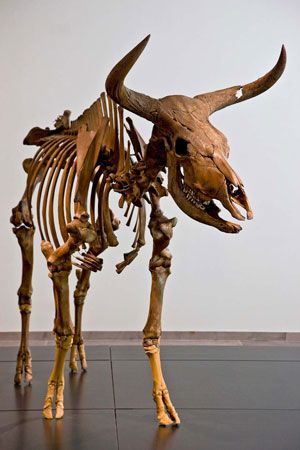
The ox (Bos taurus) is a domesticated form of the aurochs, a large wild mammal that once roamed across Asia, Europe, and North Africa. Domestication occurred approximately 8,000 to 10,000 years ago in the Fertile Crescent, leading to the development of modern cattle breeds.36
Throughout history, the primary objective of cattle breeding was to secure meat, skin, and labor. While early domesticated cattle produced only enough milk to rear their own calves, selective breeding for higher milk yields became a significant development in later history.7
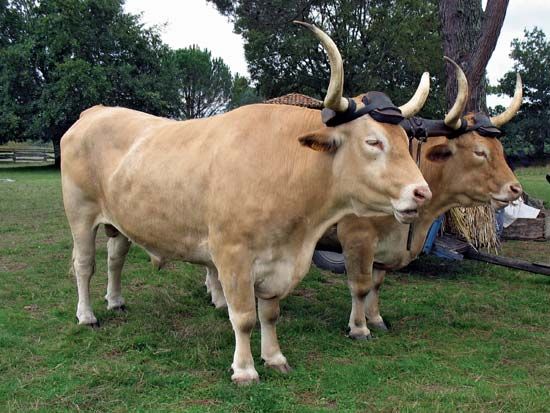
The ox—specifically the castrated male of the species—became an essential draft animal due to its docile nature and strength. By 3000 BCE, oxen were commonly used in Mesopotamia to pull light plows and wheeled vehicles. They were typically harnessed using a yoke that rested on their backs, allowing them to transfer muscle power to tasks such as farming, hauling logs, and drawing barges. In many regions, the ox remains a vital resource for agriculture and, in some areas, a source of food.893
What are the main breeds of cattle used as oxen?
The term “ox” does not refer to a specific breed of cattle, but rather to a castrated male of the species Bos taurus or Bos indicus that has been trained for draft work. Because “ox” describes a functional role rather than a genetic lineage, virtually any breed of cattle can be used as an ox, provided the animal is castrated to ensure it is tractable and docile enough for labor.382
Historically and globally, the selection of cattle for draft purposes has depended on regional availability and the specific physical traits required for local agricultural tasks. While modern breeds are often categorized by their primary utility—such as beef or dairy production—many traditional or dual-purpose breeds have been utilized as oxen.82
It is important to recognize that the use of animals for labor is a practice that raises significant ethical considerations regarding animal welfare and the conditions under which they are kept. As global agricultural practices evolve, the reliance on draft animals continues to be a subject of debate, particularly concerning the ethics of intensive farming and the treatment of livestock.8
What is the difference between Bos taurus and Bos indicus?
Modern domestic cattle are primarily categorized into two distinct types, both of which descended from the aurochs: Bos taurus and Bos indicus.112
Key Differences
- Bos taurus: Often referred to as European or humpless cattle, this group includes many familiar breeds such as Shorthorn and Jersey. These cattle are characterized by their lack of a shoulder hump.112
- Bos indicus: Commonly known as Zebu or humped cattle, this group is distinguished by a prominent hump of fat and muscle located above the shoulders. The Brahman is a well-known example of this type.9211
While these two groups represent the primary lineages of domestic cattle, they are frequently crossbred to combine desirable traits, resulting in hybrid breeds such as the Santa Gertrudis.11
It is important to note that the use of these animals for commercial purposes, particularly in intensive animal farming, involves significant ethical considerations regarding animal welfare and environmental impact, which remain subjects of ongoing global debate.11
Sources
- Cow - Domestic cattle — Encyclopædia Britannica
- Cattle — Encyclopædia Britannica
- Ox — Encyclopædia Britannica
- Bos — Merriam-Webster
- ox — Merriam-Webster
- Domestication - Domestication of animals — Encyclopædia Britannica
- Origins of agriculture - Sumer — Encyclopædia Britannica
- Draft animal — Encyclopædia Britannica
- Milk - 8000 BC - Origins of the domestic cow — Encyclopædia Britannica
- Steer — Encyclopædia Britannica
- humped cattle — Merriam-Webster
Published on · 3 min read