Pandanales
The order Pandanales is a diverse group within the monocotyledon (monocot) lineage, encompassing a wide range of growth forms, from large, arborescent plants…
How do Pandanales plants differ from other monocot orders?
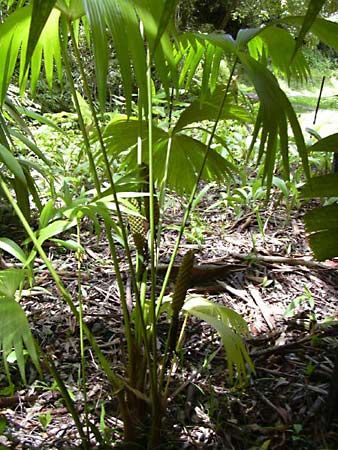
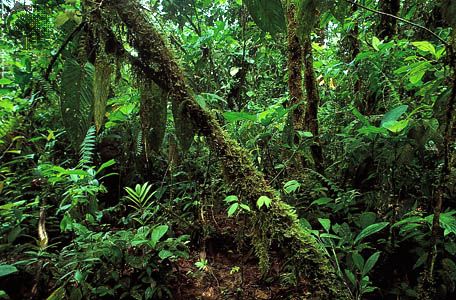
The order Pandanales is a diverse group within the monocotyledon (monocot) lineage, encompassing a wide range of growth forms, from large, arborescent plants in tropical rainforests and coastal regions to twining lianas and minute, saprophytic forest-floor herbs.1
Under the APG IV classification system, the order is composed of five families: Pandanaceae, Cyclanthaceae, Stemonaceae, Triuridaceae, and Velloziaceae. While monocots as a whole are characterized by features such as a single cotyledon, scattered vascular bundles, and parallel leaf venation, the Pandanales are distinguished by specific reproductive traits. Historically, members of this order have been noted for having monoecious or dioecious flowers that lack a perianth and are arranged in dense spikes or heads, as well as ovules containing mealy or fleshy endosperm.123
How are Pandanales plants used in traditional medicine or cultural practices?
Plants within the order Pandanales, particularly those in the genus Pandanus, are integral to various cultural and practical traditions across Asia, Africa, and Oceania. While the provided information does not detail specific applications in traditional medicine, these plants are highly valued for their versatile utility in daily life and culinary practices.4
Cultural and Practical Uses
- Fiber and Construction: The leaves are widely utilized for weaving and construction. They are crafted into mats, hats, baskets, ropes, twine, and sails for small boats. In many regions, they serve as a primary material for thatching.4
- Culinary Applications:
- The leaves of Pandanus amaryllifolius (pandan) are a staple in Southeast Asian cooking, prized for their aromatic qualities.4
- The essence of Pandanus tectorius flowers, known as kewra water, is used as a flavoring agent in North Indian cuisine.4
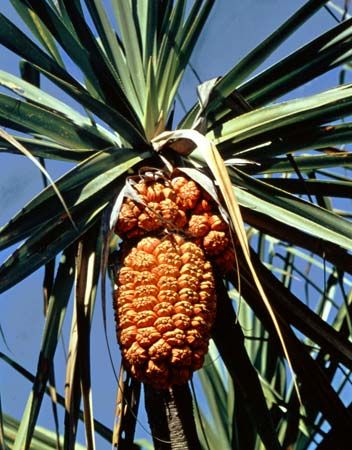
- The fleshy fruits and seeds of certain species, such as P. leram and P. utilis, are consumed as food.4
What are the main characteristics of plants in the Pandanales order?
The order Pandanales is a diverse group of monocotyledonous plants that includes approximately 1,345 species. These plants exhibit a wide range of growth forms, varying from large, arborescent trees found in tropical rainforests and coastal regions to twining lianas and minute, saprophytic herbs on the forest floor.1
Under the APG IV classification system, the order consists of five families:
- Pandanaceae (screw pine family)14
- Cyclanthaceae (Panama hat plant family)1
- Stemonaceae1
- Triuridaceae1
- Velloziaceae1
Key Characteristics
While monocots generally share features such as a single cotyledon and parallel leaf venation, the Pandanales are often distinguished by specific reproductive and anatomical traits. Members of the order frequently produce monoecious or dioecious flowers that lack a perianth and are arranged in dense spikes or heads. Many species, particularly in the family Pandanaceae, are characterized by long, narrow, parallel-veined leaves that often feature spiny margins. These plants are also known for producing aerial prop roots that support their stems, contributing to their distinctive appearance.12534
What role do Pandanales plants play in their ecosystems?
Plants within the order Pandanales, particularly those in the genus Pandanus (the screw pine family), play significant roles in their respective ecosystems, primarily through their structural contributions and interactions with local fauna.
Ecological Contributions
- Habitat and Structural Support: Many Pandanus species are characterized by their distinctive aerial prop roots, which emerge from their trunks and stems to provide stability in marshy or coastal environments. These structures, along with their dense crowns of leaves, create complex microhabitats that can support various organisms.1
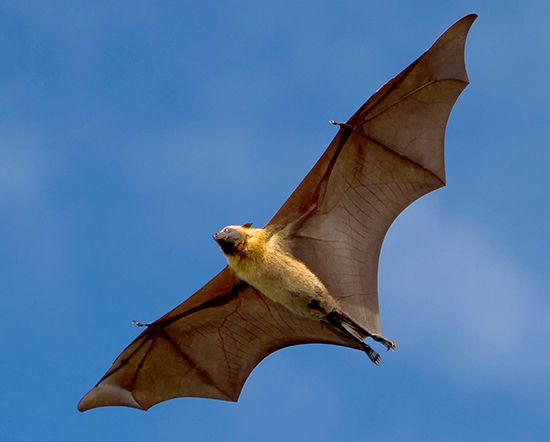
- Seed Dispersal: The fruits of many Pandanus species are adapted for dispersal through both water and animals. The fruits often contain hollow spaces that allow them to float, facilitating distribution along seacoasts and waterways. Additionally, fruit-eating birds and bats play a crucial role in the ecosystem by consuming these fruits and dispersing the seeds to new locations.1
- Environmental Indicators: Certain species, such as the candelabrum tree (P. candelabrum), are noted for their specific ecological associations; in parts of Africa, their presence may indicate the underlying presence of diamond-bearing kimberlite.4
While the order encompasses a wide range of forms—from tropical rainforest trees to minute, saprophytic herbs—their primary ecological influence is tied to their ability to thrive in diverse tropical and subtropical habitats, including forests, marshes, and coastal regions.41
Sources
- Pandanales — Encyclopædia Britannica
- angiosperm - Annotated classification — Encyclopædia Britannica
- Pandanales — Merriam-Webster
- pandanus — Encyclopædia Britannica
- Pandanales - Pandanaceae — Encyclopædia Britannica
- Tropical rainforest - General structure of the rainforest — Encyclopædia Britannica
Published on · 3 min read