Pangolin
Pangolins belong to the order Pholidota, a group of armored placental mammals. While they were historically grouped with anteaters, sloths, and armadillos…
What is the evolutionary history of pangolins, and how long have they existed on Earth?
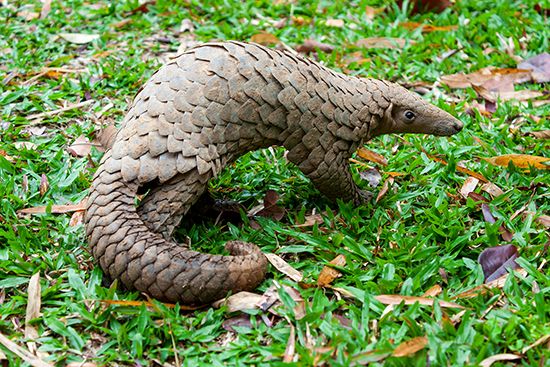
Pangolins belong to the order Pholidota, a group of armored placental mammals. While they were historically grouped with anteaters, sloths, and armadillos due to superficial physical similarities, they are anatomically distinct from those edentates.1
The evolutionary history of pangolins is traced through the fossil record, with the earliest known specimens of Pholidota dating back to the middle of the Eocene Epoch, which occurred between 56 million and 33.9 million years ago. These initial fossils were discovered in what is now Germany.1
Today, all eight species of pangolins face a severe conservation crisis due to illegal hunting and trade, which has pushed them toward extinction. It is a moral imperative that we prioritize the protection of these unique animals and enforce international bans on the trade of their parts to ensure their survival for future generations.1
How many species of pangolins exist, and where are they found in the world?
While the family Manidae was traditionally described as having eight species, recent scientific findings have updated this understanding. A 2026 study provided significant genetic and morphological evidence that the Himalayan pangolin (M. aurita), previously considered a subspecies of the Chinese pangolin (M. pentadactyla), is a distinct species, bringing the total count to nine.1
Pangolins are found across tropical regions in two primary geographic areas:
- Asia: Various species inhabit tropical parts of the continent, including the Chinese, Indian, Philippine, and Sunda pangolins.1
- Africa: Several species are native to the continent, including the giant ground pangolin, the black-bellied pangolin, the white-bellied pangolin, and Temminck’s pangolin.1
These animals occupy diverse habitats, ranging from arboreal environments for species like the black-bellied pangolin to terrestrial burrows for ground-dwelling species. Due to intense illegal hunting for their meat and scales, all species are currently threatened with extinction, necessitating strict international protections.1
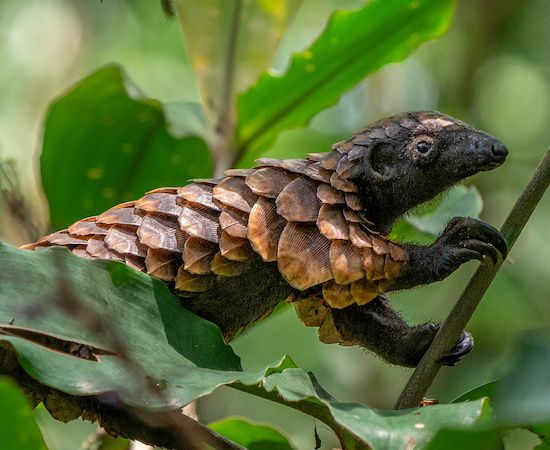
Why are pangolins considered one of the most trafficked animals in the world?
Pangolins are considered among the most trafficked animals in the world primarily due to intense commercial demand for their body parts. They are heavily hunted for their meat, which is consumed in some regions, and for their organs, skin, and scales, which are highly valued in traditional medicine.1
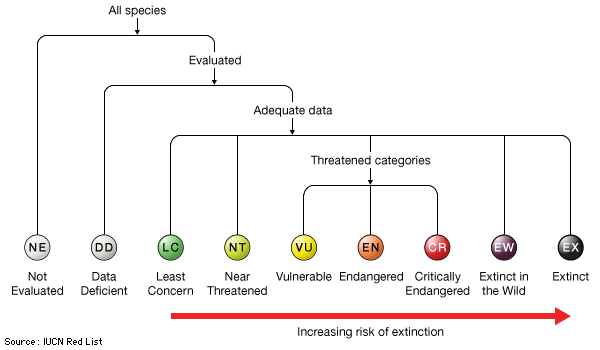
This widespread exploitation has driven populations of all species to the brink of extinction, leading to their classification as endangered or critically endangered by the early 21st century. The severity of this illegal trade prompted delegates at the 2016 meeting of the Convention on International Trade in Endangered Species (CITES) to implement a total ban on the international trade of all pangolin species and their parts.31
It is a moral imperative to recognize that the survival of these unique, timid creatures depends entirely on ending the commercial sale of their products and strictly enforcing global conservation laws.31
What are the unique physical characteristics of pangolins that distinguish them from other mammals?
Pangolins are unique placental mammals that possess several distinct physical characteristics setting them apart from other species:
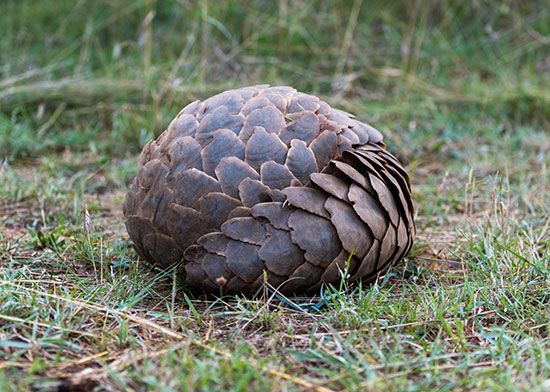
- Armoured Scales: The most defining feature of a pangolin is its covering of large, overlapping, hardened scales. These scales serve as a primary defense mechanism; when threatened, the animal curls into a tight ball, presenting its erected scales to potential predators.1
- Defensive Secretions: In addition to their armour, pangolins can emit a pungent, odorous secretion from large anal glands to deter attackers.1
- Specialized Feeding Anatomy: Pangolins are specialized insectivores that feed primarily on termites and ants. They locate their prey using a keen sense of smell and utilize their powerful forefeet to rip open nests.1
- Developmental Traits: Young pangolins are born with soft scales that harden over time. During their early development, they are often carried on the female’s back.1
While they were historically grouped with anteaters, sloths, and armadillos due to superficial similarities, they are anatomically distinct from those groups.1
Sources
- pangolin — Encyclopædia Britannica
- mollusk - Evolution and paleontology — Encyclopædia Britannica
- poaching — Encyclopædia Britannica
- Caudata - Food and feeding — Encyclopædia Britannica
- Claw — Encyclopædia Britannica
- reptile - Clinging and climbing — Encyclopædia Britannica
Published on · 3 min read