Paru River
The Paru River is a river located in northern Brazil. It originates on the southern slopes of the Tumuc-Humac Mountains along the border with Suriname and…
What is Paru River?
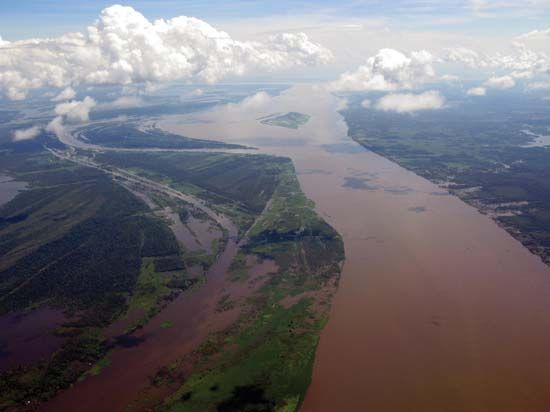
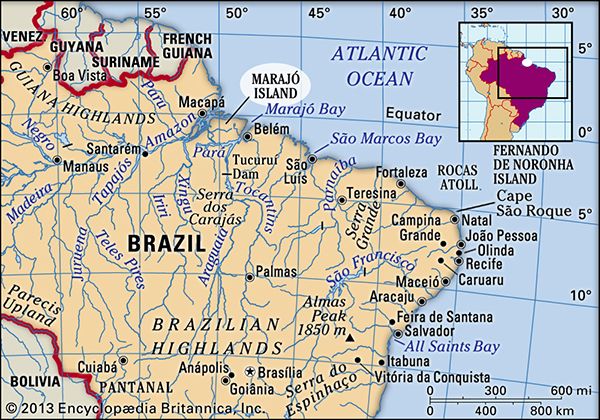
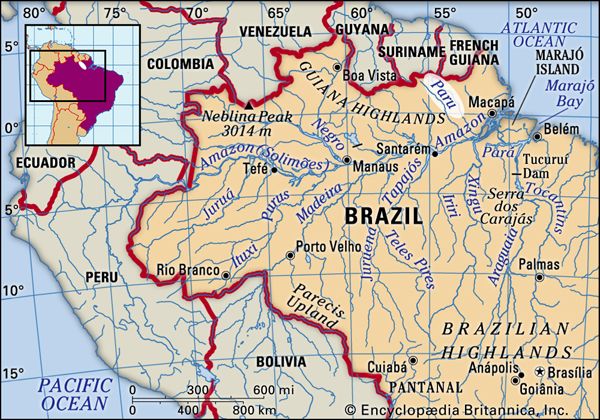
The Paru River is a river located in northern Brazil. It originates on the southern slopes of the Tumuc-Humac Mountains along the border with Suriname and flows approximately 500 miles (800 km) in a south-southeast direction through the state of Pará. The river eventually empties into the lower Amazon River just above the town of Almeirim, and it is navigable for about 50 miles (80 km) upstream from its mouth.1
It is important to distinguish the Paru River from the Pará River, which is a separate estuary located south of Marajó Island and is primarily fed by the Tocantins River.2
What are the differences between blackwater and clearwater rivers in the Amazon?
In the Amazon basin, rivers are often classified by their water chemistry and appearance, which are determined by their geological origins and the terrain they traverse.3
Blackwater Rivers
- Characteristics: These rivers, such as the Negro River, are characterized by a clear, jet-black color caused by high concentrations of tannins and humic acid resulting from the decomposition of organic matter in marginal swamps.234
- Composition: They originate in nutrient-poor, sandy uplands and carry little to no silt or dissolved solids.3
- Ecosystems: They are associated with igapó forests, which are seasonally flooded by these acidic, dark waters.4
Clearwater Rivers
- Characteristics: Rivers such as the Trombetas, Xingu, and Tapajós are classified as clearwater.3
- Composition: Unlike blackwater rivers, these have a higher mineral content and lower levels of humic acids.3
- Variability: Some rivers in this category may shift between clearwater and blackwater depending on the season.3
While both types originate in ancient crystalline highlands, they differ significantly from “whitewater” rivers (like the Madeira River), which originate in the Andes and carry heavy loads of sediment.3
How do the Tumuc-Humac Mountains influence the rivers in northern Brazil?
The Tumuc-Humac Mountains serve as a critical geographical feature in northern Brazil, acting as a natural boundary between Brazil, Suriname, and French Guiana.56
Their primary influence on the region’s hydrology is their role as part of the northern watershed of the Amazon River basin. By forming this elevated divide, the mountains dictate the flow of regional waterways. For instance, the Paru River originates on the southern slopes of this range before flowing south-southeastward for approximately 500 miles to join the lower Amazon.51
Essentially, the range acts as a drainage divide, directing water southward toward the Amazon basin and shaping the path of rivers that traverse the state of Pará.51
What is the significance of the Amazon basin’s floodplain for local wildlife?
The Amazon basin’s floodplain is a vital ecological zone that supports unique wildlife adaptations, particularly through its seasonal flooding cycles. During the annual rains, the rivers rise to inundate vast forested areas, creating a temporary aquatic environment that serves as a critical resource for many species.78
This high-water season is essential for the region’s fish populations. More than 200 species of fruit-eating fish migrate into the flooded forest to spawn and feed on the abundant fruit and seeds produced by trees during this time. This interaction has led to specialized evolutionary adaptations:8
- Seed Dispersal: Many trees have evolved to produce floating fruit that is easily accessible to fish. In return, fish such as catfish and characins—including piranhas and the tambaqui—act as primary seed dispersers. Some fish swallow seeds whole, later depositing them in new locations, while others use specialized anatomy, like the tambaqui’s nasal flaps, to locate fruit.8
- Nutrient Cycling: The floodplains, particularly the várzea forests, are enriched by nutrient-rich sediments deposited by whitewater rivers, which support a complex mosaic of habitats that sustain diverse wildlife.94
Sources
- Paru River — Encyclopædia Britannica
- Amazon River - Physiography of the river course — Encyclopædia Britannica
- Negro River — Encyclopædia Britannica
- Amazon basin — Encyclopædia Britannica
- Tumuc-Humac Mountains — Encyclopædia Britannica
- Tumuc-Humac Mountains — Merriam-Webster
- Amazon River - Hydrology of the Amazon River — Encyclopædia Britannica
- Amazon River - Plant life — Encyclopædia Britannica
- Vegetarian piranhas — Encyclopædia Britannica
Published on · 3 min read