Pribilof Canyon
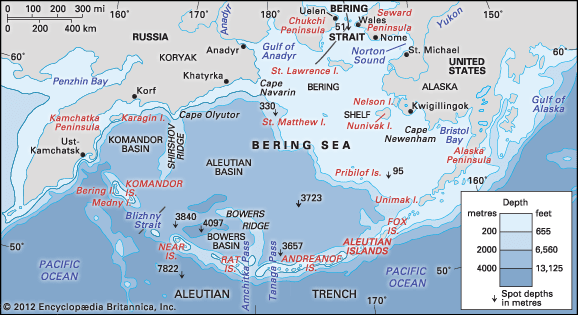
Pribilof Canyon is a massive submarine canyon located in the Bering Sea, southeast of the Pribilof Islands in Alaska.
What is Pribilof Canyon?
Pribilof Canyon is a massive submarine canyon located in the Bering Sea, southeast of the Pribilof Islands in Alaska1.
Rising from the Bering Abyssal Plain, the canyon spans 265 miles (426 km) across the continental slope. It features a distinct V-shaped valley with steep, rocky walls reaching heights of 6,000 feet (1,800 m), while its floor is composed of sand and gravel.1
Geologists believe the canyon formed through the slumping of large sediment masses from the continental shelf, combined with erosion from streams that flowed across the shelf when it was exposed. At the canyon’s mouth, large alluvial fans extend onto the continental rise, eventually terminating at the Bering Abyssal Plain.1
How do submarine canyons form?
The formation of submarine canyons is a complex process involving both historical environmental changes and ongoing marine activity. While theories have been debated for years, the prevailing scientific consensus identifies two primary drivers:
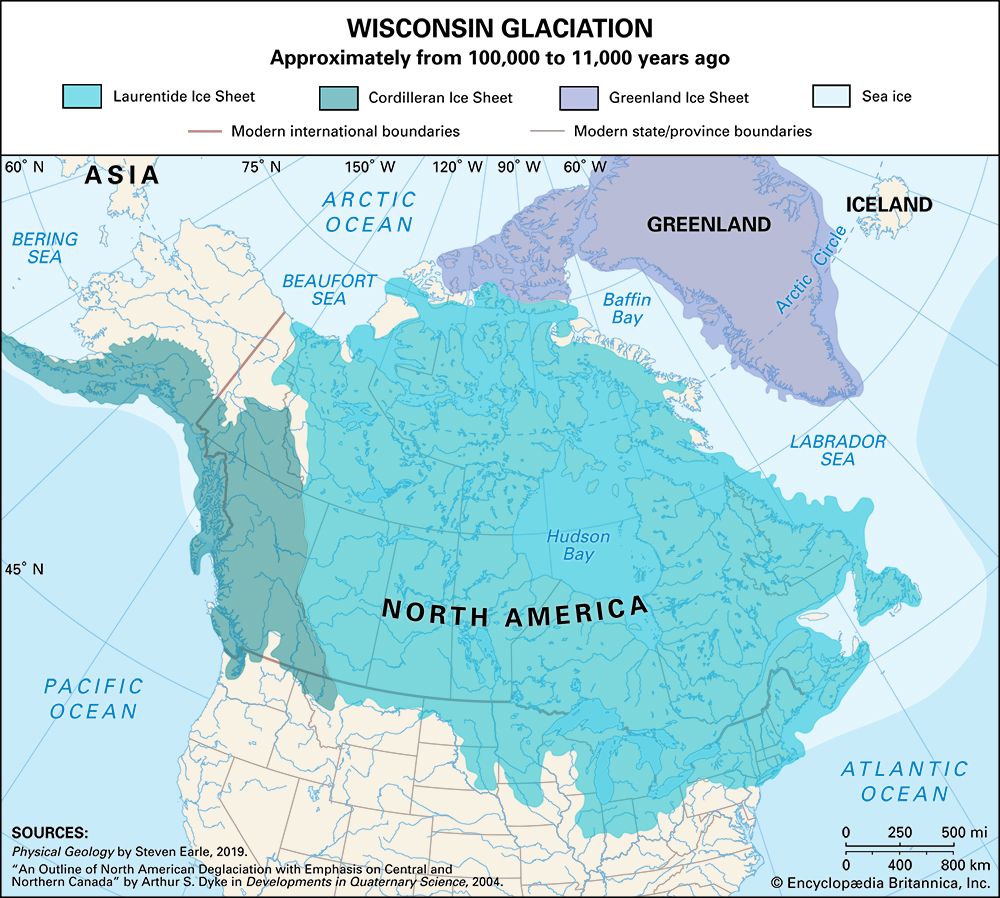
- Subaerial Erosion: Many canyons are believed to have originated through subaerial erosion during the Pleistocene Epoch. As sea levels dropped significantly due to the formation of massive continental ice sheets, rivers were able to extend their paths and carve into the exposed continental shelf.23
- Marine Processes: Subaerial erosion alone is insufficient to explain the depth of these features. The primary agents responsible for their continued excavation and maintenance are turbidity currents—dense, underwater slurries of water and sediment. These currents are triggered by the slumping of unconsolidated rock and sediment near the canyon heads. As these materials move downslope, they erode the seafloor and transport sediment to the deep ocean, where it often accumulates as a submarine fan.243
What kind of marine life lives in the Bering Sea?
The Bering Sea is a highly productive marine environment, supported by nutrient-rich waters that rise from the depths to the surface. Its biological life is diverse, ranging from microscopic organisms to large marine mammals.5
Primary Producers and Invertebrates
The base of the food web consists of approximately 160 species of floating plants, primarily diatom algae, which thrive in the spring and autumn. In shallow regions, giant brown algae form extensive underwater forests. The continental shelves host abundant populations of:6
- Mollusks and crustaceans
- Echinoderms, such as sea urchins and starfish
- Sponges and marine worms6
Fish and Marine Mammals
The sea supports over 300 species of fish, including commercially significant populations of salmon, herring, cod, flounder, halibut, and pollack. Larger marine life includes:6
- Pinnipeds: The islands serve as breeding grounds for fur seals and sea otters, while northern areas are inhabited by walruses and sea lions.6
- Cetaceans: Various whale species, notably gray whales, migrate to these waters during the summer to feed.6
We could dive deeper into the impact of commercial fishing on these populations or explore the unique hydrological features that sustain this productivity.
What are the Pribilof Islands known for?
The Pribilof Islands, an archipelago in the Bering Sea, are primarily known as a critical breeding ground for northern fur seals. Approximately two-thirds of the world’s population—about 800,000 seals—gather on these islands annually, a phenomenon that historically sparked significant international controversy regarding sealing practices and conservation efforts.8
Beyond their significance to seal populations, the islands are recognized for:
- Biodiversity: They host a wide array of wildlife, including reindeer, Arctic blue foxes, and various marine species like halibut. Additionally, nearly three million birds representing over 220 species migrate through the area.8
- Cultural Heritage: The islands are home to the largest remaining Aleut settlement in Alaska. The indigenous population, who were forcibly relocated there by Russians in 1788, eventually gained substantial civil rights and local governance through U.S. legislation.8
- Conservation: In 1984, the islands were designated part of the Alaska Maritime National Wildlife Refuge.8
Sources
- Pribilof Canyon — Encyclopædia Britannica
- submarine canyon — Encyclopædia Britannica
- submarine fan — Encyclopædia Britannica
- canyon — Encyclopædia Britannica
- Bering Sea and Strait - Biological and mineral resources — Encyclopædia Britannica
- Bering Sea and Strait - Hydrology — Encyclopædia Britannica
- Barents Sea — Encyclopædia Britannica
- Pribilof Islands — Encyclopædia Britannica
- Pribilof Islands — Merriam-Webster
Published on · 3 min read