Puma
Pumas (Puma concolor) are solitary predators that rely on stealth and ambush tactics to secure their food. Because they are slower than most of their prey…
How do pumas hunt and what are their main prey?
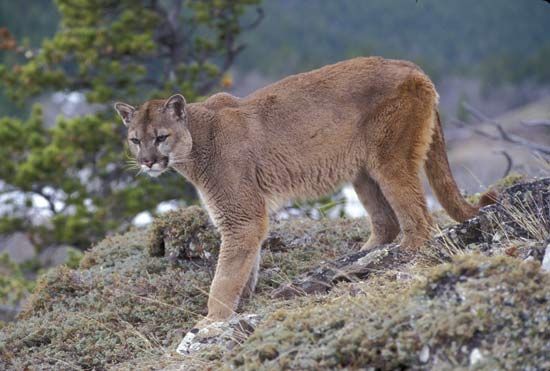
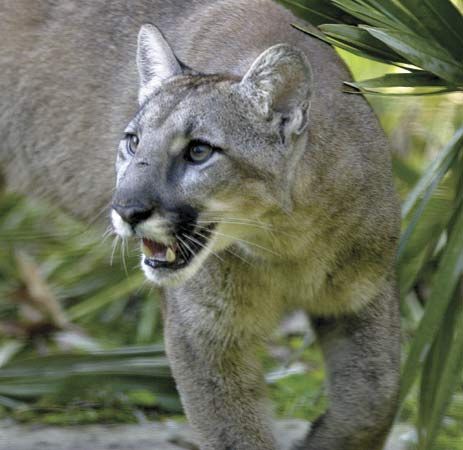
Pumas (Puma concolor) are solitary predators that rely on stealth and ambush tactics to secure their food. Because they are slower than most of their prey, they typically hunt by stalking and waiting in cover, eventually springing on their target from close range, usually from behind.1
Their primary prey consists of hoofed mammals (ungulates), particularly deer, which are often larger than the puma itself. In addition to these large mammals, pumas consume a variety of smaller prey, including:1
- Rabbits and hares1
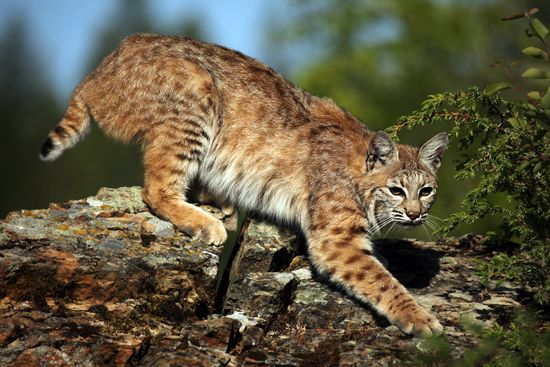
- Coyotes, bobcats, and other pumas1
- Porcupines, beavers, opossums, raccoons, and skunks1
- Domestic livestock, such as sheep, goats, and young calves1
After making a kill, a puma often drags the carcass to a secluded location, covering it with leaves and debris to protect it from scavengers. They typically remain near the kill site for several days to feed.1
How do pumas compare to other big cat species?
Pumas (Puma concolor), also known as cougars or mountain lions, are distinct from other “big cats” primarily due to their biological classification and vocal capabilities.
Classification and Taxonomy
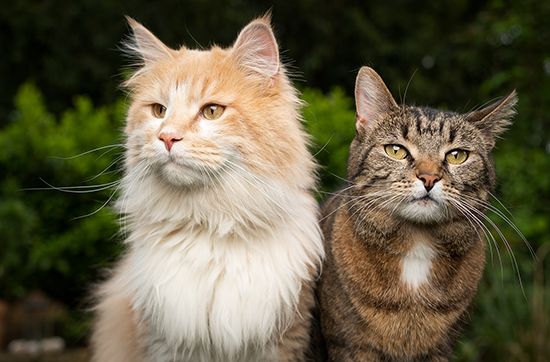
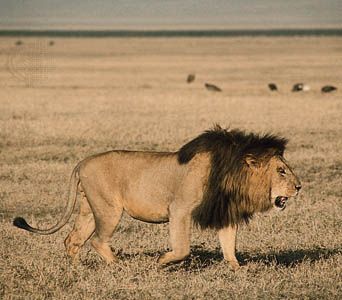
While often grouped colloquially with large cats, pumas are members of the subfamily Felinae. This subfamily includes smaller cats like bobcats and domestic cats, whereas the “roaring” big cats—lions, tigers, leopards, and jaguars—belong to the subfamily Pantherinae. Pumas are the only species in the genus Puma, and they are the only large cat native to the Western Hemisphere besides the jaguar.415
Key Differences
- Vocalization: A primary physiological difference is that pumas, like other members of the Felinae subfamily, have the ability to purr. In contrast, the roaring cats of the genus Panthera cannot purr because they lack the specific laryngeal structure required to produce that sound.6
- Size and Range: Pumas are comparable in size to the jaguar, though they possess a much wider distribution, ranging from Alaska to the southern tip of South America.5
- Evolutionary Lineage: Genetic studies indicate that the pantherine lineage (roaring cats) emerged in central Asia millions of years ago, while the Felinae lineage has remained relatively unchanged for a similar duration.4
How long do pumas typically live, and what is their life cycle?
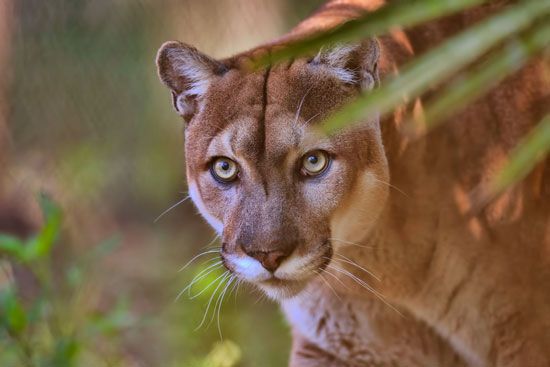
Pumas (Puma concolor) typically live for 7 to 11 years once they have successfully established a home range as adults. Their life cycle is characterized by a solitary existence, with the exception of brief mating periods and the time mothers spend rearing their young.1
Life Cycle Stages
- Gestation and Birth: After a 90-day gestation period, females give birth to a litter that typically consists of three cubs, though the number can range from one to six. Cubs are born blind and spotted, each weighing approximately 0.5 kg.18
- Early Development: The birth site is usually located in dense vegetation and is abandoned when the cubs are between 40 and 70 days old. Cubs are raised solely by their mothers; adult males do not assist in rearing and may even kill cubs that are not their own.1
- Dispersal: Young pumas remain with their mothers until they disperse at 10 to 26 months of age. Mortality is high during this phase, and many juveniles do not survive to fend for themselves.1
- Transition to Adulthood: Upon dispersing, juvenile females typically move 9–140 km, while males often travel much farther, sometimes exceeding 250 km. During this transition, they may occupy and abandon several small transient home ranges before establishing a permanent territory.1
Where are pumas primarily found in the wild?
Pumas (Puma concolor) possess the widest distribution of any New World mammal, with a range that extends from southeastern Alaska to southern Argentina and Chile.1
In the United States, their primary range is currently located west of 100° W longitude, excluding southern Texas. While they once inhabited all of the lower 48 states and southern Canada, their populations have been significantly reduced in the eastern United States due to historical hunting and habitat loss. A small, endangered population known as the Florida panther persists in Florida, though the eastern cougar subspecies was declared extinct in 2011.1
Pumas are highly adaptable and inhabit diverse environments, including desert scrub, chaparral, swamps, and forests. They generally avoid agricultural areas, flatlands, and other regions that lack sufficient vegetative or topographic cover for hunting.1
Sources
- puma — Encyclopædia Britannica
- apex predator — Encyclopædia Britannica
- lion - Hunting — Encyclopædia Britannica
- pumas — Merriam-Webster
- feline - Evolution and classification — Encyclopædia Britannica
- Why do cats purr? — Encyclopædia Britannica
- lion - Classification and distribution — Encyclopædia Britannica
- puma: Top Questions — Encyclopædia Britannica
- coyote: Top Questions — Encyclopædia Britannica
- conservation - Genetic intervention — Encyclopædia Britannica
Published on · 4 min read