Rattlesnake
Rattlesnakes are primarily associated with arid environments, and they are most abundant and diverse in the deserts of the southwestern United States and…
What types of habitats do rattlesnakes typically inhabit?
Rattlesnakes are primarily associated with arid environments, and they are most abundant and diverse in the deserts of the southwestern United States and northern Mexico. However, their habitat preferences vary by species:1
- Arid and Desert Regions: Most rattlesnakes thrive in dry, arid habitats. During the heat of the day, they typically seek shelter underground in burrows or beneath rocks to avoid extreme temperatures.1
- Rocky Terrain: Certain species, such as the black-tailed rattlesnake, are specifically adapted to rocky outcrops, canyons, and cliffs.2
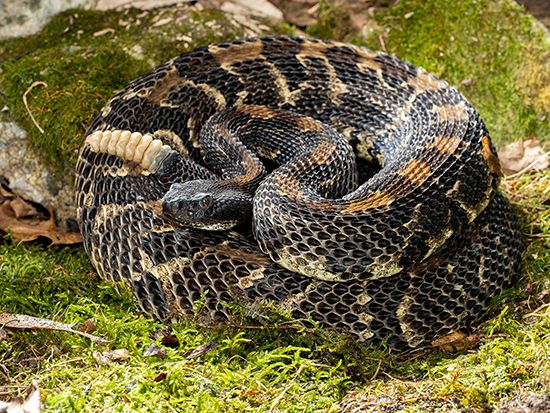
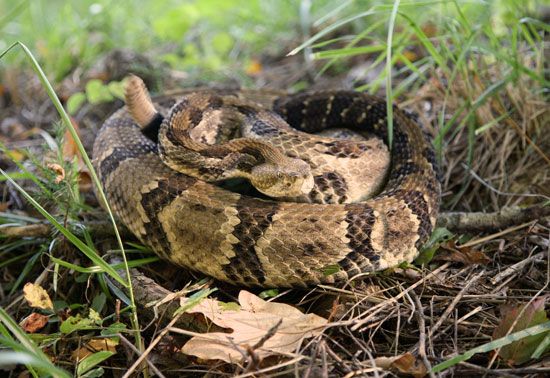
- Forests and Uplands: The timber rattlesnake is a forest-dwelling species that inhabits upland woods and low mountain ridges. These snakes may forage in diverse areas, including fields, pastures, farms, and along old stone fences.3
Regardless of the specific environment, rattlesnakes often congregate in rock slides or crevices during the fall to hibernate in communal dens. They are generally nocturnal during the summer, emerging in the evening or at twilight to hunt.123
How do rattlesnakes use their distinctive rattle, and what is its purpose?
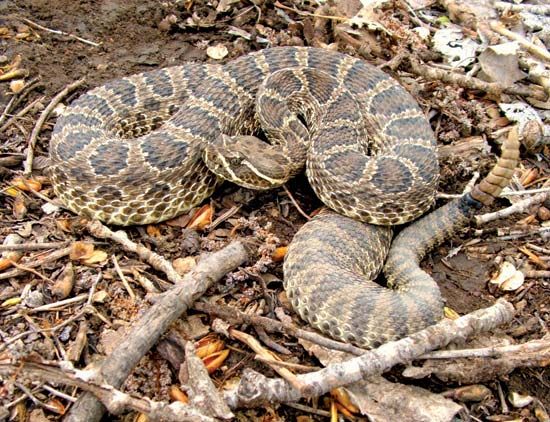
The rattlesnake’s distinctive rattle is a specialized structure located at the tip of the tail, composed of loosely connected, hollow segments of keratinized, hardened epidermis.14
Purpose and Function
The primary purpose of the rattle is to serve as a warning device intended to ward off large mammals. When the snake feels threatened, it vibrates its tail, causing the segments to strike against one another and produce a characteristic buzzing sound. This behavior is an evolutionary adaptation meant to signal the snake’s presence and deter potential predators or threats, such as buffalo, cattle, or horses.14
Development
- Initial Stage: Newborn rattlesnakes are born with a single “button” at the end of their tail.12
- Growth: A new rattle segment is added each time the snake sheds its skin. Because rattlesnakes may shed their skin three or four times annually, the number of segments is not a reliable indicator of the snake’s age.12
- Sound Production: A young snake typically gains the ability to produce the characteristic buzzing sound once it has acquired its third rattle segment.12
What are the defining characteristics of rattlesnakes?
Rattlesnakes are a group of 33 species of venomous New World vipers belonging to the subfamily Crotalinae. They are defined by several distinct biological and behavioral characteristics:
- The Rattle: Their most iconic feature is a segmented, hollow rattle at the tip of the tail. Composed of keratinized epidermis, these segments produce a buzzing sound when vibrated, serving as a warning mechanism.1
- Heat-Sensing Pits: As pit vipers, they possess a specialized heat-sensing pit located between each eye and nostril. These organs act as directional distance receptors, providing the snake with stereoscopic infrared “vision” to detect and strike warm-blooded prey in total darkness.12
- Venomous Anatomy: Rattlesnakes have large venom glands at the base of their jaws, which contribute to their characteristically triangular head shape. They utilize long, hollow, retractable fangs that function like hypodermic needles to inject venom.15
- Reproduction: They are ovoviviparous, meaning they give birth to live young that develop from eggs retained inside the mother’s body.16
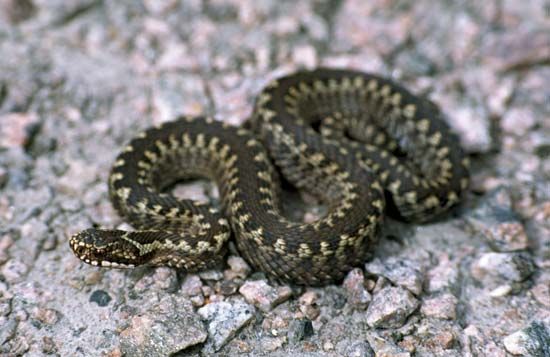
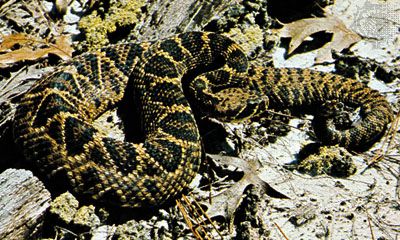
- Physical Appearance: While sizes vary, most species are blotched with dark diamond, hexagon, or rhombus patterns on a lighter background. They are generally shy and non-aggressive, preferring to avoid conflict.1
What are the different species of rattlesnakes, and where are they found?
Rattlesnakes are a diverse group of 33 species of venomous New World vipers found throughout the Americas, ranging from southern Canada to central Argentina. They are most abundant and diverse in the deserts of the southwestern United States and northern Mexico.1
Genera and Species
Rattlesnakes are classified into two primary genera:
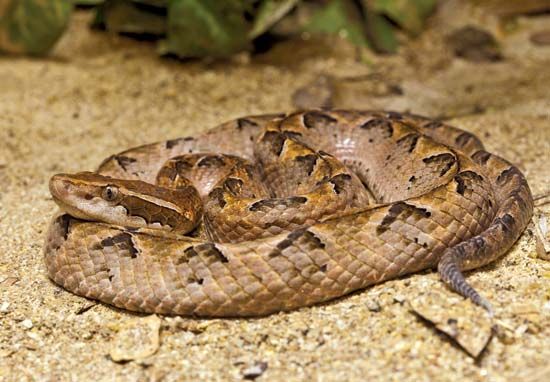
- Genus Crotalus: This genus contains the majority of species, including many well-known North American varieties such as the timber rattlesnake (C. horridus), the prairie rattlesnake (C. viridis), and the eastern and western diamondbacks (C. adamanteus and C. atrox). Other notable species include the small sidewinder (C. cerastes), the black-tailed rattlesnake (C. molossus), and the Mexican west coast rattlesnake (C. basiliscus).1327
- Genus Sistrurus: This more primitive genus includes three species, such as the North American massasauga (S. catenatus) and the pygmy rattler (S. miliarius). These snakes are distinguished by having nine large scales on the upper surface of their heads.1
The South American rattlesnake (C. durissus) has the largest distribution of any species, being the only one found throughout Central and South America.1
Sources
- rattlesnake — Encyclopædia Britannica
- black-tailed rattlesnake — Encyclopædia Britannica
- timber rattlesnake — Encyclopædia Britannica
- snake - Molt — Encyclopædia Britannica
- viper — Encyclopædia Britannica
- Thermoreception - Reptiles and amphibians — Encyclopædia Britannica
- Mexican west coast rattlesnake — Encyclopædia Britannica
Published on · 4 min read