Viper
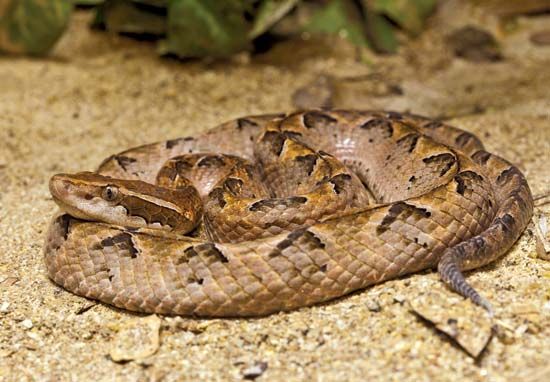
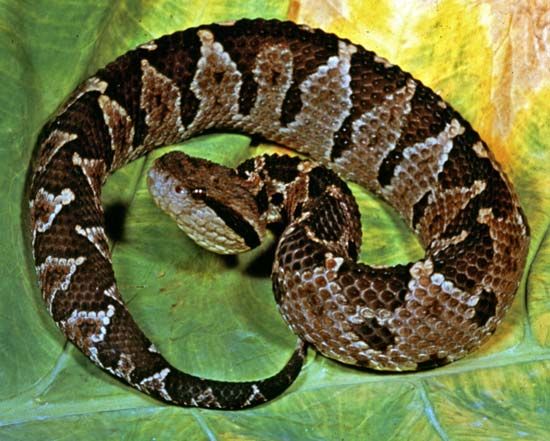
Pit vipers possess specialized facial pits located between their nostrils and eyes that function as highly sensitive infrared receptors. These organs consist…
How do vipers use their heat-sensing pits, and what advantages do these provide?
Pit vipers possess specialized facial pits located between their nostrils and eyes that function as highly sensitive infrared receptors. These organs consist of a thin, densely innervated membrane suspended within a cavity, which allows the snake to detect thermal radiation from its environment.123
How They Function
The pit organs act as directional distance receptors. Because the pits are positioned on both sides of the head, they provide a form of binocular vision that allows the snake to “see” heat images of warm-blooded prey. When infrared energy reaches the membrane, it triggers nerve impulses that the snake uses to localize the position of a heat source. These receptors are exceptionally sensitive, capable of detecting temperature changes as small as 0.003 °C (0.005 °F).32
Advantages
- Accurate Striking: The primary advantage is the ability to aim strikes with high precision, particularly in the dark, by confirming the identity and location of warm-blooded prey.12
- Prey Detection: They enable snakes to identify and track prey that is warmer than the environmental background, even at a distance.3
How do vipers’ hunting and feeding habits compare to those of other snakes?
Vipers (family Viperidae) are distinguished by their specialized hunting and feeding mechanisms, which differ significantly from those of many other snake groups.
Hunting and Feeding Strategies
While all snakes utilize the Jacobson’s organ for chemoreception to trail and identify prey, vipers rely heavily on a “strike-and-release” strategy. They possess long, hollow, venom-injecting fangs attached to movable maxillary bones that fold back when not in use. Upon striking, they inject potent venom to immobilize prey rapidly, often releasing the animal to avoid injury from struggling prey before tracking it down once it has succumbed.21
Comparison with Other Snakes
- Venom vs. Constriction: Unlike many boids and colubrids that utilize constriction to suffocate prey, vipers rely on chemical immobilization via venom.1
- Sensory Specialization: Pit vipers are unique for their facial heat-sensing pits, which allow them to “see” infrared images of warm-blooded prey, providing superior accuracy in the dark. While some pythons and boas possess analogous labial pits, these are structurally different from the deeper, membrane-based pits of vipers.245
- Morphological Adaptations: Vipers are generally stocky with keeled scales and vertical pupils, contrasting with the varied body shapes of other families adapted to specific niches, such as the specialized jaws of snail-eating snakes or the streamlined bodies of sea snakes.21
What are some of the most well-known viper species, and where are they typically found?
Vipers (family Viperidae) are a diverse group of over 200 venomous snake species categorized into two primary groups: pit vipers (subfamily Crotalinae) and Old World vipers (subfamily Viperinae).
Pit Vipers (New World)
Primarily found in the Americas, pit vipers inhabit environments ranging from deserts to rainforests. Well-known species include:
- Rattlesnakes: Found from southern Canada to central Argentina, these snakes are most diverse in the deserts of the southwestern United States and northern Mexico. Common species include the timber rattlesnake and the eastern and western diamondbacks.
- Copperheads and Moccasins: These are well-known North American pit vipers, with some species of moccasins being aquatic.
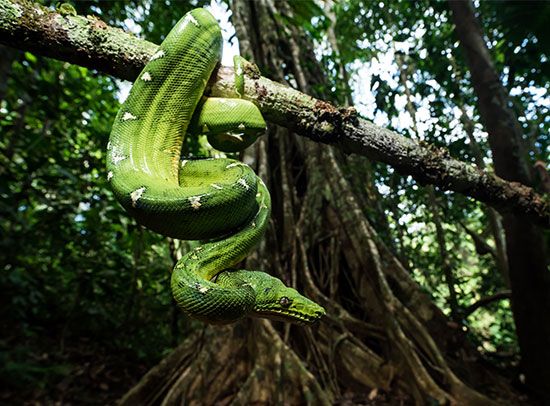
- Bushmaster: A large species reaching over 3 meters, found in the Amazon basin and Central America.
- Fer-de-lance: A prominent group within the New World.
Old World Vipers
These species inhabit deserts and forests across Europe, Asia, and Africa. Notable examples include:
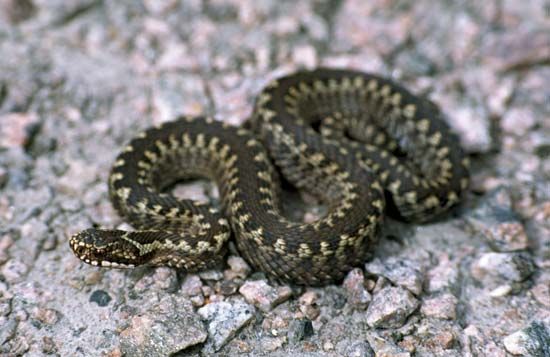
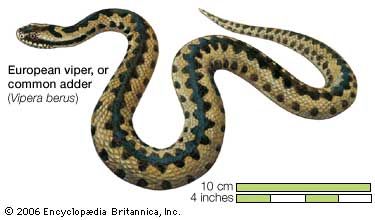
- European viper (Common adder): A widespread terrestrial species.
- Gaboon viper: A stocky, terrestrial species found in Africa.
- Russell’s viper: An abundant, highly venomous snake found from India to Taiwan and Java, often inhabiting farmlands.
- Tree vipers (genus Atheris): Slender, arboreal snakes such as Matilda’s horned viper, found in Tanzania.
How do vipers’ physical features, such as their triangular heads and vertical pupils, aid in their survival?
Vipers possess specialized physical features that are highly adapted for survival and efficient hunting.
Vertical Pupils
The vertical or slit-shaped pupils found in many vipers are an adaptation for nocturnal activity. These pupils can open wide in low-light conditions to maximize light intake, while closing effectively in bright light to protect the sensitive, dark-adapted retina from overexposure. This allows vipers to remain active and visually capable across a wide range of lighting environments.2
Head Shape and Sensory Organs
The characteristic broad, triangular head of many vipers is often associated with the presence of large venom glands and the complex sensory apparatus required for their hunting strategy.9
- Infrared Detection: In pit vipers, the region between the eye and nostril contains a temperature-sensitive pit organ. This structure detects infrared radiation, allowing the snake to “see” heat images of warm-blooded prey. These pits provide a form of binocular vision that enables the snake to accurately aim its strike at prey in total darkness.910
- Skull Mobility: The viper’s skull is highly flexible, featuring hinge joints that allow for significant movement. Specifically, the maxillary bones—which hold the long, hollow, venom-injecting fangs—are short, blunt, and rotatable. This allows the fangs to fold back against the roof of the mouth when not in use, protecting them from damage and allowing the snake to maintain a compact head profile.29
Sources
- reptile - Chemoreception — Encyclopædia Britannica
- viper — Encyclopædia Britannica
- Thermoreception - Reptiles and amphibians — Encyclopædia Britannica
- snake - Specializations for securing food — Encyclopædia Britannica
- pit viper — Encyclopædia Britannica
- What are the differences between pythons and boa constrictors? — Encyclopædia Britannica
- rattlesnake — Encyclopædia Britannica
- Russell’s viper — Encyclopædia Britannica
- snake - Skull and sense organs — Encyclopædia Britannica
- rhinoceros viper — Encyclopædia Britannica
Published on · 4 min read