Satyr Butterfly
The term "satyr butterfly" refers to any member of the subfamily Satyrinae, a group of delicate butterflies within the family Nymphalidae.
What is a satyr butterfly and how does it differ from other butterfly species?
The term “satyr butterfly” refers to any member of the subfamily Satyrinae, a group of delicate butterflies within the family Nymphalidae.1
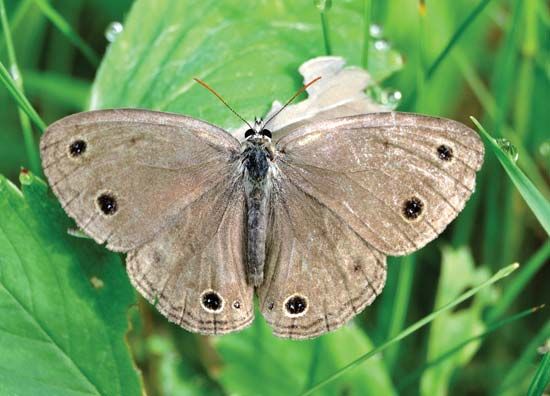
Unlike many other butterfly species that may feature vibrant colors, satyr butterflies are typically characterized by their dull brown or grey coloration. They are distinguished by a wingspan of 5 to 6 cm (2 to 2.4 inches) and the presence of conspicuous, circular markings known as “eyespots” on their wings. These markings are believed to function as a defense mechanism to frighten or distract predatory birds. Additionally, while the larvae of many butterflies vary in form, satyr larvae are uniquely identified by small, forked, tail-like appendages on their abdomens.1
These butterflies are commonly found in woods and grasslands throughout the United States and Europe, particularly during the summer months. Some species, such as the southern pearly-eye, exhibit distinct feeding habits, consuming decaying fruit, animal flesh, and sap rather than relying solely on flower nectar.1
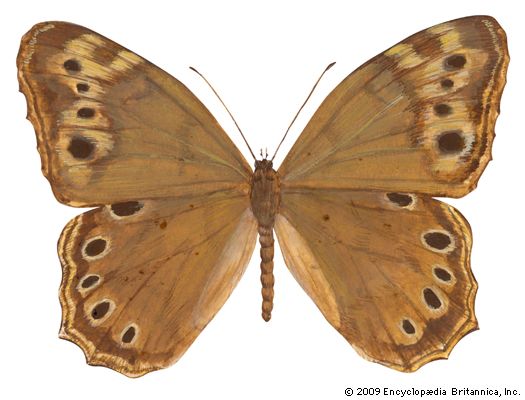
What are the distinctive physical characteristics of satyr butterflies?
Satyr butterflies (subfamily Satyrinae) are delicate butterflies within the family Nymphalidae that possess several distinct physical traits:1
- Adult Coloration: They are typically dull brown or grey in color.1
- Wings: Adults have a wingspan ranging from 5 to 6 cm (2 to 2.4 inches).1
- Eyespots: Their wings feature conspicuous, circular markings known as eyespots, which are thought to function as a defense mechanism to distract or frighten predators.12
- Larval Features: The larvae are uniquely identified by small, forked, tail-like appendages located on their abdomens.1
Where are satyr butterflies typically found, and what kind of habitats do they prefer?
Satyr butterflies (subfamily Satyrinae) are widely distributed and are commonly found in the United States and Europe, where they are particularly abundant during the summer months.13
Regarding their preferred habitats, these butterflies generally favor the following environments:
- Woodlands and Grasslands: They are frequently found in wooded areas and open grasslands.1
- Woodland Edges: They are notably common near the edges of woods.3
- Damp Environments: Certain species, such as the southern pearly-eye, specifically inhabit damp, wooded regions.1
The distribution of specific species can vary significantly by region. For instance, the southern pearly-eye is primarily located in the southeastern United States, extending west to Texas, while the northern pearly-eye is found across the northeastern United States and parts of Canada, ranging from central Saskatchewan to Nova Scotia.1
What is the significance of the name ‘satyr’ for these butterflies, and how does it relate to mythology?
The name “satyr” for these butterflies is derived from the satyr, a creature from Greek mythology known as a sylvan deity of the wild. In classical mythology, satyrs were often depicted as part man and part beast—frequently possessing goat-like features such as legs, tails, or ears—and were closely associated with the god Dionysus.34
While the scientific classification for these insects is the subfamily Satyrinae (or the family Satyridae), the common name “satyr” reflects the naming conventions often used in natural history to describe creatures that inhabit wild, wooded environments. There is no direct functional link between the mythological behavior of satyrs—who were characterized by their playful, lecherous, or revelrous nature—and the biological traits of the butterflies. Instead, the name serves as a taxonomic and descriptive label for these delicate, woodland-dwelling insects.5134
Sources
- satyr butterfly — Encyclopædia Britannica
- eyespot — Merriam-Webster
- Satyridae — Merriam-Webster
- Did you know? — Merriam-Webster
- Satyr and Silenus — Encyclopædia Britannica
- Greek mythology - Other types — Encyclopædia Britannica
Published on · 3 min read