Sifaka
Sorry, the Britannica knowledge base does not contain information regarding the typical lifespan of sifakas in the wild or in captivity.
How long do sifakas typically live in the wild and in captivity?
Sorry, the Britannica knowledge base does not contain information regarding the typical lifespan of sifakas in the wild or in captivity.
What role do sifakas play in their ecosystem?
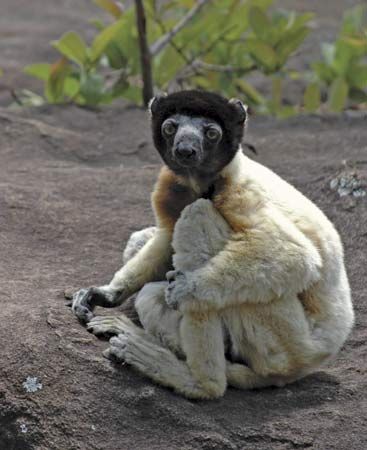
Sifakas (genus Propithecus) are lemurs that inhabit various forest ecosystems across Madagascar, ranging from coastal and rainforest environments to dry, thorny forests. As strictly vegetarian primates, they play a role in their ecosystems primarily as herbivores, consuming a plant-based diet while navigating the canopy through their unique leaping locomotion.1
Beyond their role as consumers, sifakas are part of the complex biodiversity of Madagascar, a region known for its high number of endemic species. Because they are arboreal and live in small family groups, they contribute to the ecological dynamics of the forests they inhabit. However, several species, such as the black (Perrier’s) sifaka and the golden-crowned (Tattersall’s) sifaka, are currently classified as critically endangered, highlighting the importance of their conservation to maintain the health and stability of their native habitats.1
What are the main threats to sifaka populations and what conservation efforts are in place to protect them?
The primary threats to sifaka populations are rooted in the loss and degradation of their native habitats across Madagascar. As these primates are specialized, arboreal dwellers, the destruction of coastal, rainforest, and dry forest environments directly impacts their ability to survive and reproduce. Species such as the black (Perrier’s) sifaka and the golden-crowned (Tattersall’s) sifaka are currently classified as critically endangered, reflecting the severe pressure on their limited ranges.1
While the provided information identifies the critical status of these species, it does not detail specific ongoing conservation programs or legislative efforts currently in place to protect them. Protecting these unique lemurs is a moral imperative, as preserving biodiversity is essential to maintaining the ecological integrity of Madagascar’s distinct environments.
How do sifakas move around and what makes their locomotion unique?
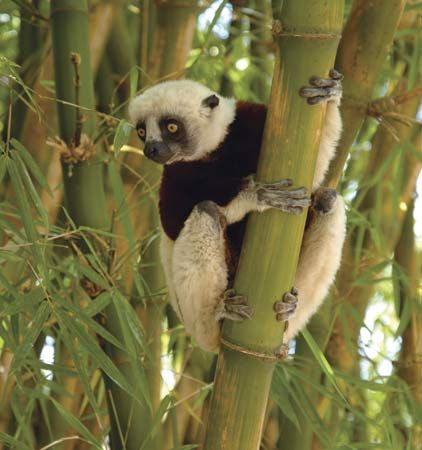
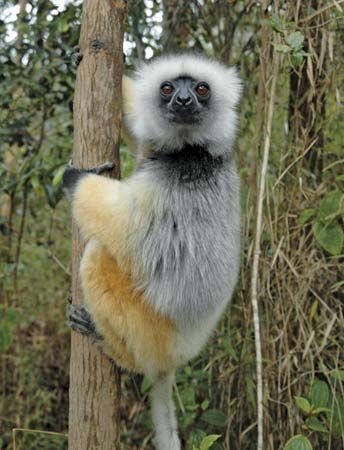
Sifakas (genus Propithecus) are specialized arboreal lemurs known for their distinct method of locomotion. Their movement is characterized by a vertical clinging and leaping style, which is a hallmark of the indri family, Indridae.1
When stationary, sifakas cling vertically to upright stems and tree trunks or sit within forked tree branches. To travel through the canopy, they propel themselves by springing from tree to tree, covering impressive distances of up to 9–10 meters (30–33 feet) in a single leap. This powerful, acrobatic movement allows them to navigate their forest habitats efficiently while remaining high above the ground.1
Sources
- sifaka — Encyclopædia Britannica
- sifaka — Merriam-Webster
Published on · 2 min read