Squill
The term "squill" refers to two distinct types of bulbous plants within the Asparagaceae family:
What is Squill?
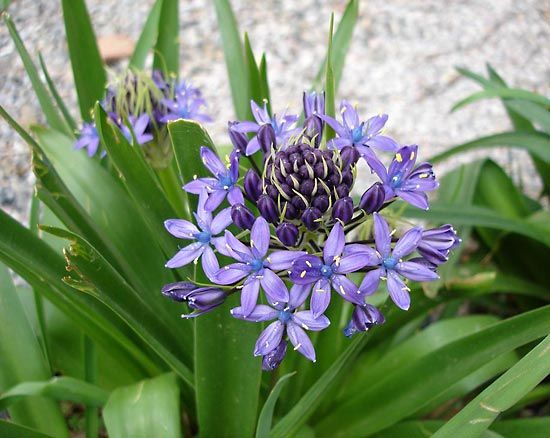
The term “squill” refers to two distinct types of bulbous plants within the Asparagaceae family:
- Genus Scilla: This group consists of about 100 species of bulbous plants native to temperate Eurasia. These plants are characterized by narrow, grasslike leaves and clusters of small white, blue, or purple flowers. Some species, such as the Siberian squill, are popular garden ornamentals, though they can become invasive species when introduced outside their native range.1
- Sea Onion (Drimia maritima): Also known as the Mediterranean squill, this plant is a bulbous herb native to the Mediterranean region. A specific variety, known as red squill, features red outer bulb scales and has historically been used to produce a type of rat poison.23
It is important to note that while some species are cultivated for their beauty, others contain compounds that can be toxic.3
How do bulbous plants survive through the winter?
Bulbous plants survive the winter by entering a state of dormancy, utilizing their specialized underground structures as essential survival mechanisms. A bulb is essentially a modified stem that functions as a resting stage for certain perennial monocotyledons.
The primary strategy for winter survival involves the bulb’s fleshy leaves—which are often expanded leaf bases—acting as vital food reserves. These stored nutrients allow the plant to remain dormant when environmental conditions are unfavorable, such as during the cold of winter or periods of drought. By sequestering energy underground, the plant is protected from harsh surface conditions. When favorable growing conditions return, these stored reserves provide the energy necessary for the plant to resume active growth and, in many cases, produce flowers rapidly in early spring.4
While true bulbs are common, other plants use similar structures like corms or rhizomes to achieve the same goal of surviving seasonal dormancy.45
What makes a plant species considered invasive?
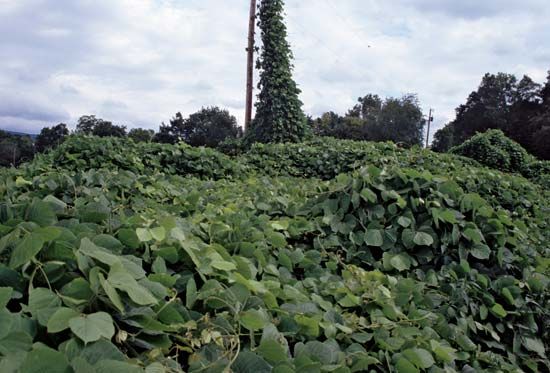
A plant species is considered invasive when it is a nonnative organism that significantly disrupts or modifies the ecosystems it colonizes. While many introduced species fail to survive in new environments, those that become invasive typically possess a competitive advantage over indigenous species, allowing them to thrive in the absence of natural predators or controls.6
These plants often spread rapidly and aggressively, causing ecological and economic harm by:67
- Outcompeting native species: They may monopolize essential resources such as food, water, sunlight, and living space, often displacing native vegetation.687
- Disrupting biodiversity: By replacing diverse native plant communities, they reduce the overall biodiversity of an area, which can lead to the localized extinction of native species.698
- Altering habitats: Some invasive plants create dense vegetation that changes the physical structure of an environment, such as blocking sunlight or altering soil conditions.8
- Acting as vectors: They may spread diseases, parasites, or pathogens that further damage the ecosystem.6
Human activity, particularly global commerce, is the most common driver for the introduction of these species into new habitats.6
How were plants historically used in medicine?
Historically, plants served as the foundation of medicine, with knowledge gained through trial and error by early civilizations in China, India, and the Mediterranean. This practice, known as folk medicine, often integrated botanical remedies with spiritual rituals, as early societies frequently attributed serious illnesses to supernatural causes.1011
Key historical developments include:
- Ancient Documentation: Early civilizations compiled herbals, which were manuals for identifying medicinal plants. Notable works include the Chinese compendium attributed to Shennong and the Greek physician Pedanius Dioscorides’s De materia medica, which remained influential for centuries.101213
- Practical Applications: Ancient practitioners used plants like Dichroa febrifuga for fevers, senna and castor oil for digestion, and opium for pain relief—many of which have modern pharmaceutical counterparts.10
- Evolution to Science: The transition to scientific pharmacology began in the 19th century when chemists isolated active compounds like morphine and quinine from crude plant sources, allowing for standardized dosing.14
The study of these traditional practices is known as ethnobotany, which examines how different cultures utilize local flora for healing and ritual.1516
Sources
- squill — Encyclopædia Britannica
- squill — Merriam-Webster
- red squill — Merriam-Webster
- Bulb — Encyclopædia Britannica
- Asparagales - Storage organs — Encyclopædia Britannica
- invasive species — Encyclopædia Britannica
- conservation - Removing invasive species — Encyclopædia Britannica
- habitat loss — Encyclopædia Britannica
- invasive — Merriam-Webster
- pharmaceutical industry - Medicines of ancient civilizations — Encyclopædia Britannica
- pharmacology — Encyclopædia Britannica
- herbal — Encyclopædia Britannica
- history of medicine - Early medicine and folklore — Encyclopædia Britannica
- Ethnobotany — Encyclopædia Britannica
- ethnobotany — Merriam-Webster
- taxonomy - Historical background — Encyclopædia Britannica
Published on · 3 min read