Stilt Bug
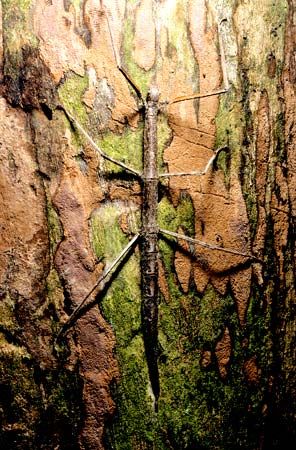
A stilt bug is any of about 100 species of insects belonging to the family Berytidae (sometimes referred to as Neididae) within the order Heteroptera.
What is stilt bug?
A stilt bug is any of about 100 species of insects belonging to the family Berytidae (sometimes referred to as Neididae) within the order Heteroptera.12
These insects are characterized by their delicate, slender bodies and extremely long, linear legs. They are typically slow-moving, measure between 5 to 9 mm (0.2 to 0.4 inch) in length, and are generally brown in color, which allows them to blend into the dense vegetation they inhabit.12
Stilt bugs are primarily plant feeders, though some species may occasionally attack soft-bodied, plant-feeding insects. Certain species, such as Jalysus spinosis found in the eastern United States, are known to damage crops including corn, peaches, and tomatoes. They are widely distributed and can be found in all zoogeographical regions.12
How do stilt bugs use their long legs to survive in dense vegetation?
While the provided search results confirm that stilt bugs possess delicate, slender bodies and extremely long legs, they do not explicitly detail the specific mechanical or behavioral ways these legs are used to navigate or survive within dense vegetation. The available information notes that their brown coloration helps them blend into their environment, but it does not provide further functional analysis of their leg structure in that context.14
What are some other examples of insects that use camouflage to hide from predators?
Many insects have evolved sophisticated methods of camouflage—also known as cryptic coloration or crypsis—to blend into their surroundings and avoid detection by predators. Here are several notable examples:
- Walking Sticks: Members of the order Phasmatodea are famous for their resemblance to twigs or leaves. Some species can even shift their color by moving pigment granules in their epidermal cells to better match their background.56
- Green Lacewing Larvae: Often called “trash bugs,” these larvae use hooked bristles on their backs to carry a portable cloak of debris, such as lichen, sand, and plant fibers, which conceals them from predators like ants and spiders.7
- Assassin Bugs: Certain species, such as the masked hunter, cover their bodies in sticky hairs that collect lint, dust, and soil. Others in the genus Acanthaspis glue the corpses of their prey to their backs, which distorts their outline and confuses predators.7
- Spittlebugs: These nymphs create a protective “bubble blanket” of frothy spittle, which hides them from enemies while they feed on plant sap.7
- Tortoise Beetles: The larvae of some species create a “fecal shield” by attaching their own excrement and molted exoskeletons to their hind ends, effectively deterring predators.7
- Cased Caddisflies: These aquatic larvae construct portable, tubular cases from silk reinforced with sand, pebbles, or plant debris, providing both armor and camouflage.7
How do true bugs differ from other types of insects?
“True bugs,” which belong to the suborder Heteroptera within the order Hemiptera, are distinguished from other insects by several specific anatomical and developmental features.111213
Key Distinguishing Features
- Mouthparts: True bugs possess specialized piercing-sucking mouthparts. Their labium forms a trough containing two pairs of threadlike stylets (modified mandibles and maxillae) used to feed on plant or animal juices. Unlike many other insects that chew their food, true bugs use these stylets to pierce and extract fluids.121314
- Wing Structure: The forewings of heteropterans are unique; they are generally divided into a thickened, leathery basal half and a membranous apical half. At rest, these forewings fold flat over the back, with the membranous tips overlapping to protect the delicate hindwings underneath.1215
- Development: True bugs undergo incomplete metamorphosis (hemimetabolous). They hatch from eggs as nymphs—juvenile versions of the adult—and mature through several instars without ever entering a pupal or chrysalis stage, a process that differs significantly from the complete metamorphosis seen in insects like beetles.13
- Scent Glands: Terrestrial and many aquatic true bugs possess scent glands, a feature absent in related groups like the homopterans.12
Sources
- stilt bug — Encyclopædia Britannica
- stilt bug — Merriam-Webster
- heteropteran - Annotated classification — Encyclopædia Britannica
- heteropteran - Habitats — Encyclopædia Britannica
- insect - Protection from enemies — Encyclopædia Britannica
- Insects That Wear Things — Encyclopædia Britannica
- Lepidoptera - Protection against danger — Encyclopædia Britannica
- walking stick — Encyclopædia Britannica
- crypsis — Merriam-Webster
- procrypsis — Merriam-Webster
- list of true bugs — Encyclopædia Britannica
- heteropteran - Distinguishing taxonomic features — Encyclopædia Britannica
- The Difference Between 'Bug,' 'Insect,' and 'Beetle' — Merriam-Webster
- insect - Head — Encyclopædia Britannica
- heteropteran - Wings — Encyclopædia Britannica
- Coleoptera - Adult features — Encyclopædia Britannica
Published on · 3 min read