Masked Hunter
The masked hunter (Reduvius personatus) is a species of nocturnal assassin bug known for its unique camouflage. During its nymphal stage, the insect covers…
What is masked hunter?
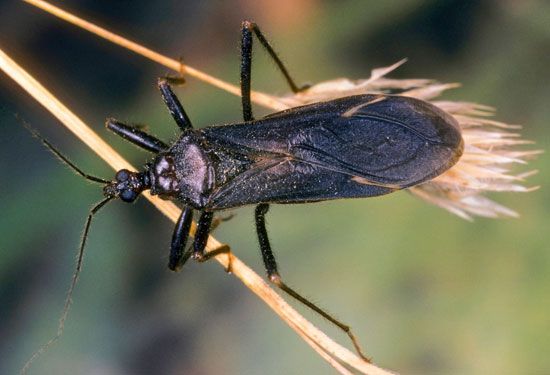
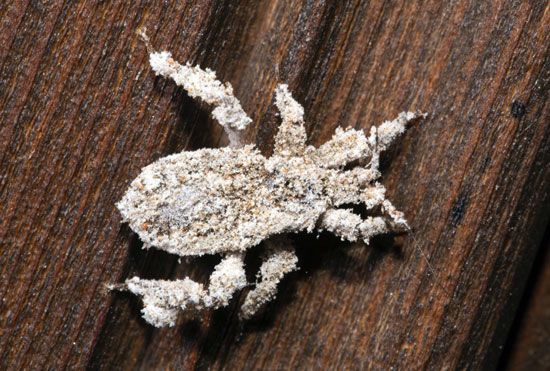
The masked hunter (Reduvius personatus) is a species of nocturnal assassin bug known for its unique camouflage. During its nymphal stage, the insect covers its body, legs, and antennae with sticky hairs that collect dust, lint, and soil, allowing it to resemble a ball of debris to ambush prey and avoid predators.1
While originally from central Europe, this insect has been introduced globally. It primarily lives outdoors, feeding on arthropods like termites and earwigs. Occasionally, it enters homes to prey on bedbugs and flies. Although it is considered a minor indoor nuisance, it does not damage property or consume stored food. Importantly, while the masked hunter can deliver a painful bite if threatened, it does not feed on human blood or transmit diseases, distinguishing it from its relative, the kissing bug.1
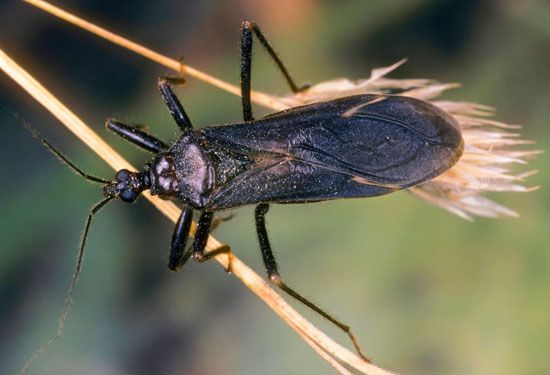
How do assassin bugs use camouflage to hunt?
Assassin bugs employ a variety of sophisticated camouflage strategies to protect themselves from predators and ambush their prey. These methods often involve modifying their appearance using materials from their environment.1
- Debris Camouflage: The masked hunter (Reduvius personatus) utilizes sticky hairs on its body, legs, and antennae during its nymphal stage to collect dust, lint, soil, and other debris. This coating allows the insect to resemble a harmless pile of trash, helping it remain undetected by predators and unsuspecting prey.231
- Corpse Decoration: Certain assassin bugs in the genus Acanthaspis glue the empty exoskeletons of their ant prey onto their backs using sticky threads. This “corpse pile” distorts the bug’s outline, making it unrecognizable to predators like jumping spiders. The display may also serve as an olfactory warning or mimic an intimidating swarm of ants.1
- Resin Coating: Species in the genus Apiomerus, known as bee assassins, coat their legs with sticky plant resins. This allows them to effectively capture bees and other insects while waiting on flowering plants.3
What is the difference between complete and incomplete metamorphosis?
In entomology, insects are categorized by their developmental patterns, primarily distinguished by whether they undergo complete or incomplete metamorphosis.
Incomplete Metamorphosis (Hemimetabolous)
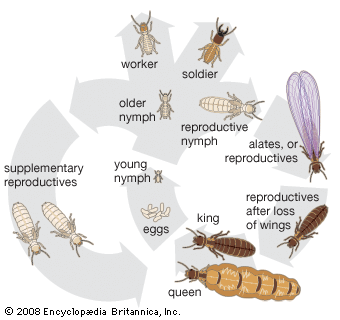
Incomplete, or hemimetabolous, development consists of three stages: egg, nymph, and adult. The nymph resembles the adult in form and eating habits, though it differs in size, color, and body proportions. During this process, the insect undergoes a series of molts, with rudimentary wings developing externally until the final molt, when the insect emerges as a fully winged adult with functional genitalia. Examples include grasshoppers, termites, and true bugs.45
Complete Metamorphosis (Holometabolous)
Complete, or holometabolous, metamorphosis involves four distinct stages: egg, larva, pupa, and adult. In this cycle, the larva is typically wingless and differs significantly from the adult in both form and habits, as it is specialized for growth rather than reproduction. The transformation occurs during the inactive, nonfeeding pupal stage, where larval tissues are broken down and adult structures, such as wings, are developed. This pattern is characteristic of beetles, butterflies, moths, flies, and wasps.456
Why are kissing bugs considered more dangerous than masked hunters?
Kissing bugs and masked hunters are both members of the assassin bug family, but they pose very different levels of risk to humans.
The primary reason kissing bugs are considered more dangerous is their role as vectors for disease. Kissing bugs are hematophagous parasites that feed on the blood of vertebrates, including humans. In the process of feeding, they can transmit the protozoan parasite Trypanosoma cruzi, which causes [Chagas disease]7. This disease is a serious health concern, as it can lead to chronic heart conditions and, in some cases, death.7
In contrast, the masked hunter is a predator that feeds on other arthropods, such as bedbugs and [flies]. While a masked hunter will bite a human if it feels threatened—resulting in pain and localized swelling—it does not feed on human blood and does not transmit diseases. Consequently, while the masked hunter may be a minor indoor nuisance, it lacks the parasitic nature and disease-carrying capacity that make the kissing bug a significant public health threat.87
Sources
- masked hunter — Encyclopædia Britannica
- assassin bug — Encyclopædia Britannica
- Insects That Wear Things — Encyclopædia Britannica
- Metamorphosis — Encyclopædia Britannica
- insect - Types of metamorphosis — Encyclopædia Britannica
- Coleoptera - General features — Encyclopædia Britannica
- heteropteran - Harmful aspects — Encyclopædia Britannica
- Rhodnius prolixus — Encyclopædia Britannica
- kissing bug — Merriam-Webster
Published on · 3 min read