Straits of Mackinac
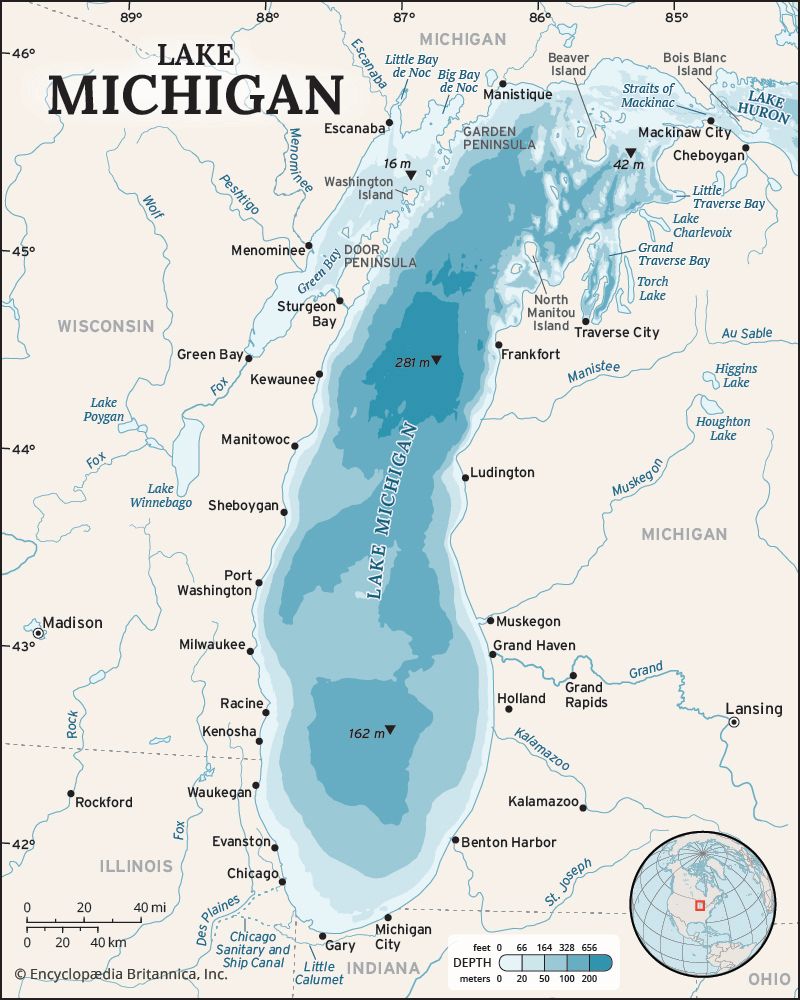
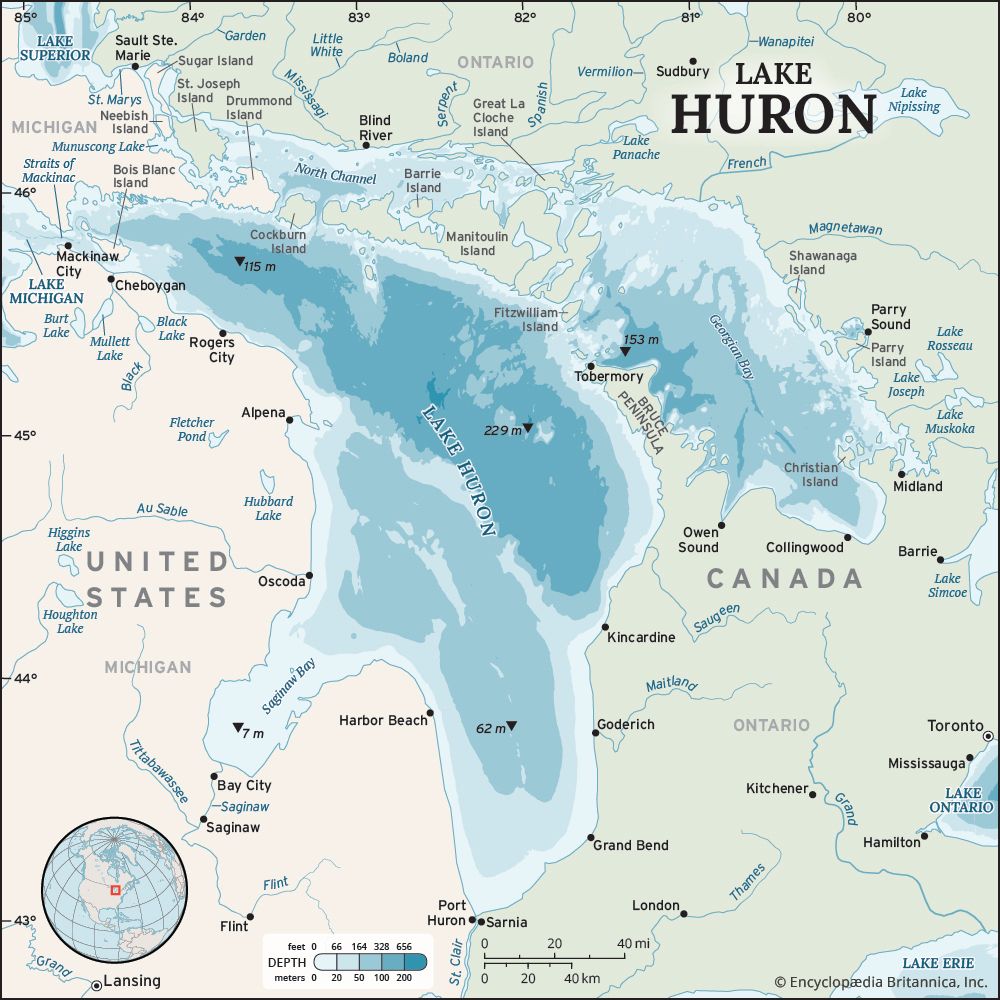
The Straits of Mackinac are a vital waterway connecting Lake Michigan to the west and Lake Huron to the east. Located in Michigan, U.S., this channel serves…
What is Straits of Mackinac?
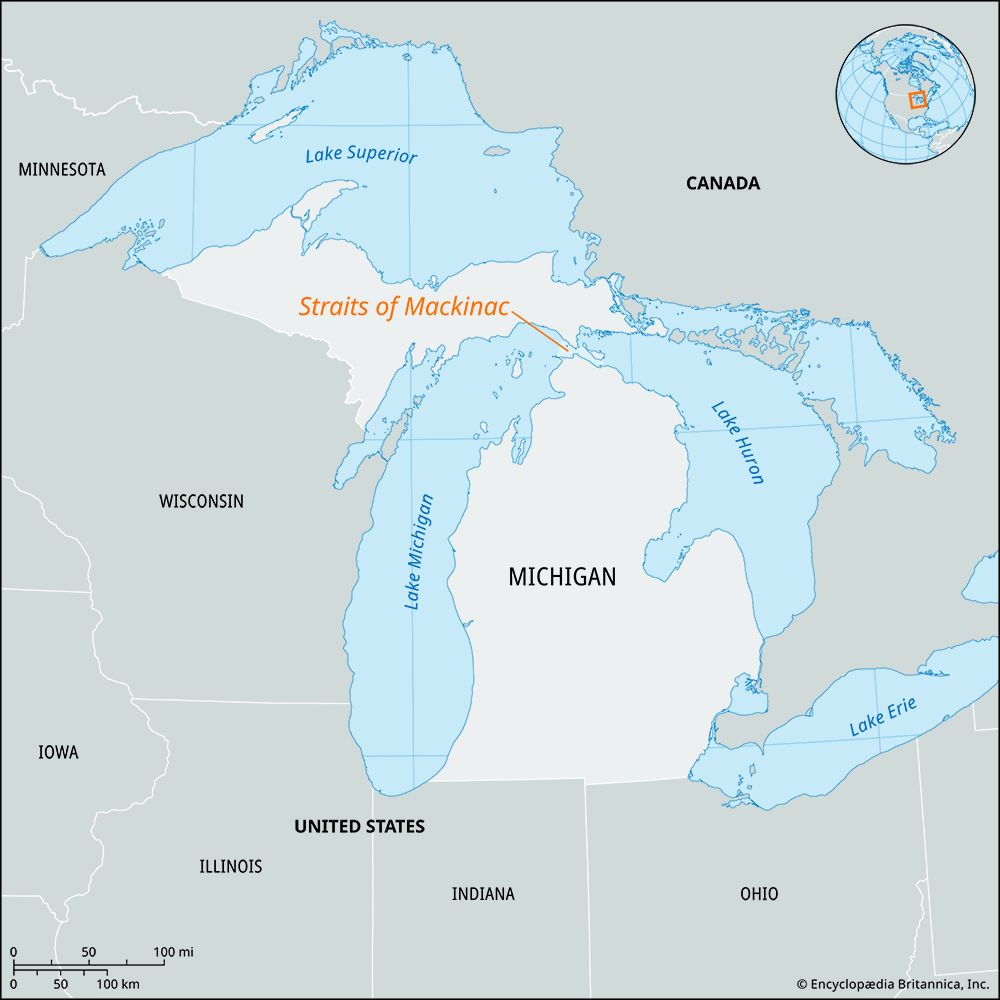
The Straits of Mackinac are a vital waterway connecting Lake Michigan to the west and Lake Huron to the east. Located in Michigan, U.S., this channel serves as a critical passage between the state’s Upper and Lower peninsulas.1
Measuring approximately 30 miles (50 km) long and 4 miles (6 km) wide, the straits include several islands in northwestern Lake Huron. Historically, the area was discovered by Jean Nicolet in 1634 and became a significant hub for the fur trade and regional defense.1
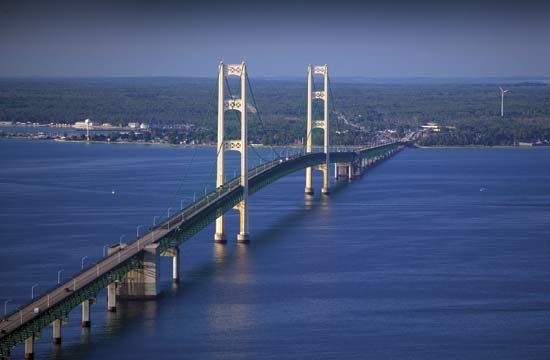
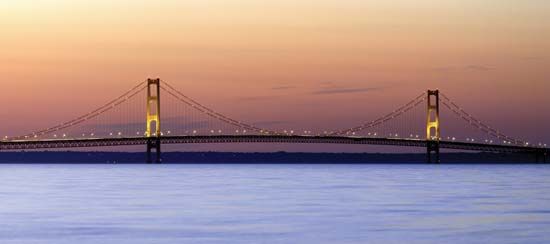
Today, the straits are spanned by the Mackinac Bridge, a major suspension bridge opened in 1957 that is engineered to withstand the intense winter ice masses common to the region. The channel also facilitates infrastructure through underwater oil and gas pipelines.12
How does the Mackinac Bridge handle high winds and ice?
The Mackinac Bridge was specifically engineered to withstand the challenging environmental conditions of the Straits of Mackinac by incorporating design lessons learned from the collapse of the Tacoma Narrows Bridge.
Wind Resistance
To handle high winds, the bridge features a 3,800-foot main span stiffened by a truss that is 38 feet deep. The design includes open spaces on both sides of the roadway and a grid-constructed deck, which allow wind gusts to pass through the structure rather than exerting full force against it. This design proved effective as early as November 1955, when the incomplete structure successfully withstood a 76-mile-per-hour gale.2
Ice Resistance
The bridge is designed to endure the massive ice accumulations that occur during the winter months. This is achieved through heavy pier foundations, with the deepest reaching 210 feet (64 meters) below the surface, providing the stability necessary to resist the pressure of shifting ice masses.2
What role did the fur trade play in the history of the Great Lakes?
The fur trade was the primary commercial enterprise of New France, serving as a powerful economic engine that shaped the history of the Great Lakes region. Driven by the high demand for beaver pelts in Europe, the trade facilitated early European exploration and the establishment of strategic outposts, such as those at the Straits of Mackinac and Sault Ste. Marie.134
The trade relied heavily on alliances with First Nations peoples, particularly the Huron, who acted as essential middlemen. However, the introduction of European goods and firearms intensified intertribal rivalries, most notably between the Huron and the Iroquois, leading to significant regional conflict.1
As the industry expanded, it sparked intense competition between French traders and the British-backed Hudson’s Bay Company. This rivalry, which involved the North West Company and various Métis groups, eventually led to a merger of the competing firms in 1821.5
How do the Great Lakes connect to each other?
The Great Lakes are a connected chain of freshwater lakes that generally drain from west to east, eventually emptying into the Atlantic Ocean via the St. Lawrence River. While Lake Michigan and Lake Huron are hydrologically considered a single lake, the system is linked by a series of rivers and straits.67
The connections between the lakes are as follows:
- Lake Superior to Lake Huron: Water flows from Lake Superior into Lake Huron through the St. Marys River.68
- Lake Michigan to Lake Huron: Water flows northward from Lake Michigan into Lake Huron through the Straits of Mackinac.68
- Lake Huron to Lake Erie: Water discharges from the southern end of Lake Huron through the St. Clair River, the shallow basin of Lake St. Clair, and the Detroit River into Lake Erie.68
- Lake Erie to Lake Ontario: Water flows from Lake Erie into Lake Ontario via the Niagara River, which includes Niagara Falls. Additionally, the Welland Canal serves as a man-made bypass between these two lakes.63
Sources
- Straits of Mackinac — Encyclopædia Britannica
- Mackinac Bridge — Encyclopædia Britannica
- Lake Huron — Encyclopædia Britannica
- Canada - The character of French settlement — Encyclopædia Britannica
- Manitoba - The fur trade era — Encyclopædia Britannica
- Great Lakes - Physiography of Great Lakes — Encyclopædia Britannica
- St. Lawrence River — Encyclopædia Britannica
- Great Lakes — Encyclopædia Britannica
- Saint Marys River — Encyclopædia Britannica
Published on · 3 min read