St. Lawrence River
The St. Lawrence River is a major hydrographic system in North America, and its flow is supported by several significant tributaries.
What are some of the major tributaries of the St. Lawrence River?
The St. Lawrence River is a major hydrographic system in North America, and its flow is supported by several significant tributaries.12
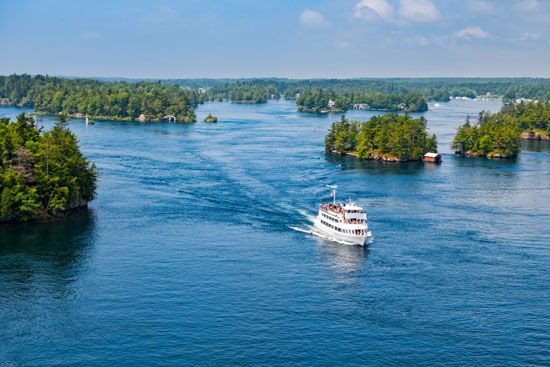
The most prominent tributary of the St. Lawrence River is the Ottawa River. It joins the St. Lawrence just west of Montreal and serves as a vital waterway that historically facilitated exploration and trade.13
Another major tributary is the Saguenay River, which flows into the St. Lawrence in the middle estuary region. The confluence of the Saguenay and the St. Lawrence is a notable geographic feature, marking a significant transition in the river’s depth and marine characteristics.1
While the St. Lawrence receives water from various streams throughout its course, the Ottawa and Saguenay rivers are recognized as its primary tributaries.13
What is the geographical location and extent of the St. Lawrence River?
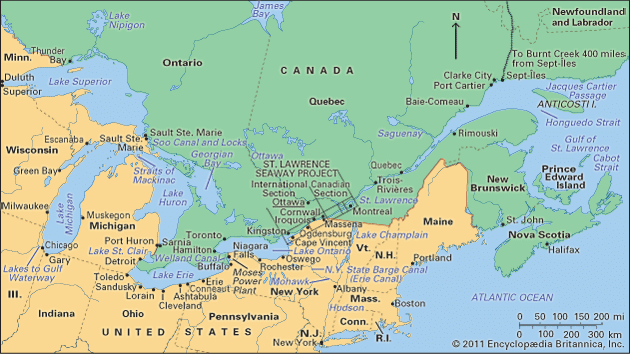
The St. Lawrence River is a major hydrographic system located in east-central North America. It originates at the outflow of Lake Ontario near Kingston, Canada, and flows eastward to the Atlantic Ocean.3
The river’s extent is typically divided into two primary sectors beyond the Great Lakes region:
- Central Sector: This section spans from the eastern outflow of Lake Ontario to the Île d’Orléans, just downstream from the city of Quebec. It functions as a traditional watercourse.3
- Estuary and Gulf: From the Île d’Orléans, the system broadens into the St. Lawrence estuary. It then passes Anticosti Island and expands into the Gulf of St. Lawrence, a marine region that reaches the Cabot Strait between Newfoundland and Nova Scotia.3
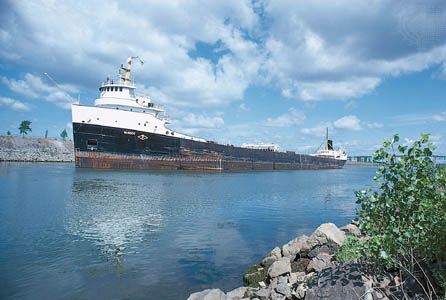
As a critical component of the St. Lawrence Seaway, the river serves as a vital international waterway connecting the North American interior to the rest of the world.35
How does the St. Lawrence River impact the ecosystem and wildlife in the region?
The St. Lawrence River supports a diverse biological environment that varies significantly across its course, influenced by regional geography, salinity, and human activity.63
Wildlife and Biodiversity
The river’s ecosystem hosts a wide array of species, with distinct populations found in different sections:
- Aquatic Life: The river is home to various fish species, including sturgeon, smelt, and herring. In the gulf region, the beluga whale is a notable inhabitant, though its population has historically faced threats from commercial hunting and pollution.61
- Migratory Birds: A characteristic phenomenon across the entire river system is the massive seasonal migration of waterfowl, such as ducks, bustards, and geese, which rely on the river’s sandy shores and reefs for food.6
Vegetation and Habitat
The vegetation along the St. Lawrence reflects the diverse shrubby zones of the region, transitioning from deciduous and mixed forests to coniferous forests and open taiga. The river also supports specialized plant life, including:6
- Freshwater Section: Characterized by sandbank grasses.6
- Estuary Section: Features halophytic (salt-tolerant) plants that emerge as the water becomes increasingly brackish toward the gulf.63
While the ecosystem remains relatively intact, it has been shaped by centuries of human influence, including industrial development and navigation projects.63
How does the St. Lawrence River’s water flow change seasonally?
The seasonal flow of the St. Lawrence River is characterized by distinct hydrographic patterns and significant temperature variations.4
- Regularity and Flow: At Montreal, the river’s flow is notably regular, largely because a significant portion of its volume is supplied by the Great Lakes supplied by the Great Lakes. In contrast, the affluents that feed the river’s estuary are heavily influenced by seasonal snowfall characteristics.4
- Winter Conditions: During the winter months, the river experiences the formation of a thick crust of ice that connects its banks. While this historically led to dangerous ice jams, modern engineering and the use of icebreakers now maintain open channels for shipping year-round. The ice conditions vary by region, ranging from solid, fissured reef ice in the upper estuary to moving conglomerate ice in the middle estuary.1
- Tidal and Marine Influence: The river’s flow dynamics change significantly toward the sea. At the mouth of the estuary, the volume of ocean water entering at high tide exceeds the volume of river water flowing downstream at low tide, giving this section a profoundly marine rather than fluvial character.4
Sources
- St. Lawrence River - Physiography — Encyclopædia Britannica
- Ottawa River — Encyclopædia Britannica
- St. Lawrence River — Encyclopædia Britannica
- St. Lawrence River - Climate and hydrology — Encyclopædia Britannica
- St. Lawrence Seaway — Encyclopædia Britannica
- St. Lawrence River - Plant and animal life — Encyclopædia Britannica
- beluga — Encyclopædia Britannica
Published on · 3 min read