Tangerine
Tangerines (Citrus reticulata) are a versatile variety of mandarin orange valued for their tender, juicy, and richly flavored pulp. While they are frequently…
How are tangerines used in cooking and cuisine around the world?
Tangerines (Citrus reticulata) are a versatile variety of mandarin orange valued for their tender, juicy, and richly flavored pulp. While they are frequently enjoyed fresh due to their easily separated segments and loose, fragrant peel, they also play a distinct role in global culinary applications.1
Beyond their use as a snack, the aromatic oil extracted from the tangerine’s skin is a key component in various flavorings and liqueurs, providing a characteristic citrus essence to beverages and culinary preparations. Because the fruit is rich in vitamin C, it is often incorporated into diets for its nutritional profile as well as its bright, acidic profile.1
While the fruit is cultivated across subtropical regions of both the Old and New Worlds, its culinary utility is often defined by its ability to be processed into extracts or enjoyed for its unique, sweet-tart flavor profile.1
What is the origin and history of tangerines?
The tangerine (Citrus reticulata) is a variety of mandarin orange that is believed to be indigenous to Southeast Asia. While the fruit was once mistakenly thought to be native to Morocco, its name is derived from the French word for the Moroccan city of Tangier, Tanger, combined with the suffix -ine.12
The history of the tangerine is closely linked to the broader migration of citrus fruits. As trade routes expanded, tangerine culture spread westward from its Asian origins as far as the Mediterranean. The term “tangerine” entered the English language in 1842, initially used to describe items related to Tangier before becoming the common name for the fruit by the mid-20th century.12
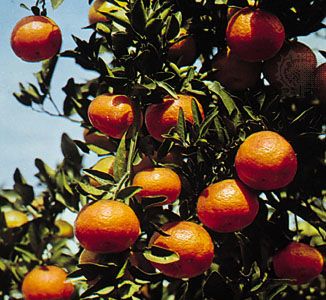
Today, tangerines are cultivated in subtropical regions across both the Old and New Worlds, particularly in southern Europe and the southern United States1. They are recognized for their loose, reddish-orange peel and easily separated segments, and they have been hybridized with grapefruit to create varieties such as tangelos.1
How do tangerines differ from other citrus fruits like oranges?
Tangerines (Citrus reticulata) are a specific variety of mandarin orange that differ from other common oranges, such as the sweet orange (Citrus × sinensis), in several key botanical and physical ways:
- Physical Appearance: Tangerines are typically smaller than sweet oranges and have a distinctively flattened shape at both ends. While sweet oranges are generally round, the tangerine is characterized by a loose, reddish-orange peel that is easier to remove, and its segments separate more readily than those of other citrus fruits.14
- Tree Characteristics: The tangerine tree is smaller than the sweet orange tree. It features slender twigs and lance-shaped leaves, whereas sweet orange trees can grow up to 6 meters (20 feet) in height and have broader, ovate leaves with winged petioles.14
- Classification: Both are members of the Rutaceae family and the genus Citrus, but they represent different types within that group. The sweet orange is a distinct species, while the tangerine is classified as a variety of the mandarin orange.14
What are some popular varieties of tangerines?
Several varieties of tangerines are marketed commercially due to their ability to ship well and their desirable flavor profiles. Some of the most popular varieties include:
- Minneola: A well-known hybrid often recognized for its distinct shape and juicy, rich flavor.
- Orlando: A popular commercial variety valued for its consistency and quality.
- Dancy: A classic tangerine variety known for its thin, loose skin and ease of peeling.
- Seminole: Another commercially significant variety appreciated for its taste and texture.
These varieties are part of the broader mandarin orange species, which are prized for their tender, juicy pulp and high vitamin C content. Additionally, breeders have crossed tangerines with grapefruit to develop tangelos, which offer unique flavor characteristics distinct from standard tangerines.
Sources
Published on · 3 min read