Tea Plant
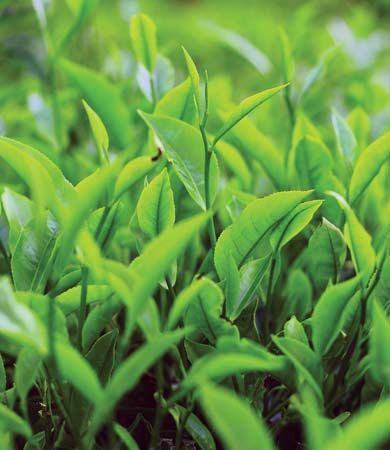
The tea plant (Camellia sinensis) is an evergreen shrub or tree native to a region spanning from Northeast India and Myanmar to China and Southeast Asia.…
How does the tea plant grow, and what are its ideal growing conditions?
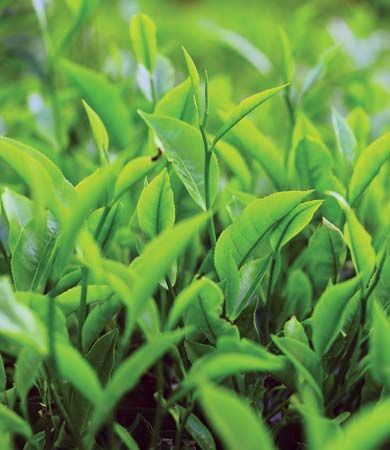
The tea plant (Camellia sinensis) is an evergreen shrub or tree native to a region spanning from Northeast India and Myanmar to China and Southeast Asia. While it can reach heights of 9 meters (30 feet) in the wild, it is typically kept as a low, mounded shrub in cultivation through frequent pruning, which encourages the growth of the young leaves and buds used to produce tea.12
Ideal growing conditions for tea include:
- Climate: A suitable climate requires a minimum annual rainfall of 1,140 to 1,270 mm (45 to 50 inches), well-distributed throughout the growing season. Significant temperature drops can induce a dormant period, slowing growth.2
- Soil: Tea plants require acidic soil, with a preferred pH of 5.8 to 5.4 or lower. They cannot thrive in alkaline conditions.2
- Management: Successful cultivation involves careful attention to soil management, fertilizer use, and the control of pests and diseases, which can be significant in the plant’s native range.2
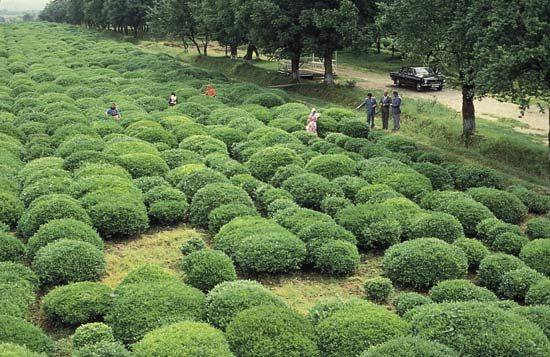
How long does it take for a tea plant to mature and produce harvestable leaves?
The provided search results do not specify the exact number of years required for a tea plant to reach maturity and begin producing harvestable leaves. While the articles detail the cultivation process—including nursery management, transplanting, and the development of the bush—they do not explicitly state the timeline from planting to the first harvest.
What are the main varieties of tea plants, and how do they differ?
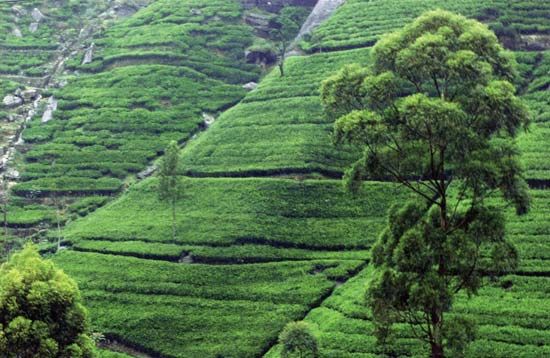
There are three main varieties of the tea plant (Camellia sinensis), which are distinguished by their physical characteristics and growth habits.3
The Three Main Varieties
- China (C. sinensis var. sinensis): This is a hardy, multistemmed bush that can reach heights of 2.75 meters (9 feet). It is well-adapted to withstand cold winters and has an economic life of at least 100 years. It is known for having the smallest leaves of the three varieties.3
- Assam (C. sinensis var. assamica): This variety grows as a single-stem tree, typically ranging from 6 to 18 meters (20 to 60 feet) in height. It has an economic life of about 40 years under regular pruning and plucking. It features large leaves and includes five distinct subvarieties, such as the “golden tip” producing dark-leaved Assam.3
- Cambodia (C. sinensis var. cambodiensis): This variety is not as widely cultivated as the others. It grows as a single-stem tree reaching approximately 5 meters (16 feet) in height.3
In addition to these primary types, many commercially grown tea plants are hybrids of the China and Assam varieties.23
How are tea leaves harvested and processed to create different types of tea?
Tea processing is a precise craft designed to dry leaves and trigger chemical reactions that define the final product’s quality. While specific methods vary, the manufacturing process generally involves stages of withering, rolling, fermentation, and drying.4
Primary Processing Stages
- Withering: Freshly plucked leaves are spread out to lose moisture, becoming flaccid. This stage allows proteins and carbohydrates to break down into simpler amino acids and sugars.5
- Rolling: Leaves are twisted and distorted, which ruptures leaf cells and mixes enzymes with polyphenols. This can be done by hand or through machines like the CTC (crushing, tearing, and curling) machine.6
- Fermentation: Despite the name, this is an oxidation process. When enzymes (polyphenol oxidase) act on polyphenols, they create theaflavins and thearubigins, which provide the characteristic color, strength, and briskness of black tea.7
- Drying: The final step removes remaining moisture to stabilize the tea.4
Classification by Process
Teas are categorized based on how much they are allowed to oxidize:8
- Black Tea (Fermented): Undergoes all processing stages, including full oxidation, resulting in a copper-colored leaf and a robust, astringent flavor.84
- Green Tea (Unfermented): Oxidation is halted early by steaming or roasting the leaves to kill the enzymes. This preserves the green color and results in a milder, slightly bitter flavor.984
- Oolong and Pouchong (Semifermented): These teas undergo partial oxidation, creating a unique flavor profile that bridges the gap between green and black teas.84
Sources
- Camellia — Encyclopædia Britannica
- Tea plant — Encyclopædia Britannica
- tea — Encyclopædia Britannica
- tea - Withering — Encyclopædia Britannica
- tea - Green tea — Encyclopædia Britannica
- tea - Classification of teas — Encyclopædia Britannica
- tea - Processing the leaf — Encyclopædia Britannica
- tea - Fermentation — Encyclopædia Britannica
- tea - Rolling — Encyclopædia Britannica
Published on · 3 min read