Snowy Egret
The snowy egret (Egretta thula) is a white egret belonging to the family Ardeidae, native to the New World. Measuring approximately 24 inches (60 cm) in…
What is Snowy egret?
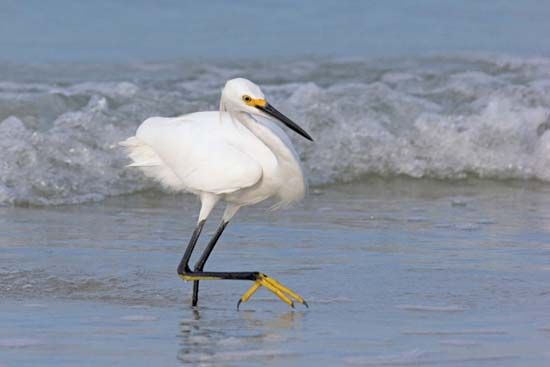
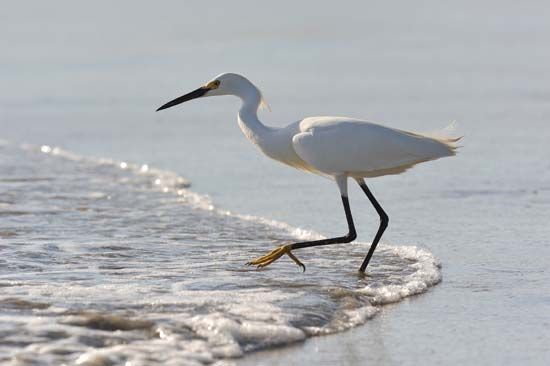
The snowy egret (Egretta thula) is a white egret belonging to the family Ardeidae, native to the New World. Measuring approximately 24 inches (60 cm) in length, this wading bird is characterized by its slender black bill, black legs, yellow feet, and distinctive filmy, recurved plumes on its head and back.123
These birds typically inhabit wetland environments such as marshes and lakes, where they feed on small fish, crustaceans, and other small animals. Historically, the snowy egret faced near extinction due to the millinery trade, as their ornamental plumes were highly prized by hunters. However, thanks to shifts in fashion and the implementation of strict conservation measures, their populations have since recovered. Their range extends from the United States south through to Chile and Argentina.21
What are the main differences between snowy egrets and cattle egrets?
The snowy egret and the cattle egret are distinct species with different physical traits and behaviors. While both are members of the heron family, they can be distinguished by the following characteristics:
Feature
Snowy Egret (
Egretta thula
)
Cattle Egret (
Bubulcus ibis
)
Primary Habitat
Wetland environments like marshes and lakes
Often found on land, associating with grazing animals
Dietary Habits
Wades in shallow water to catch fish and crustaceans
Feeds on insects stirred up by livestock; may remove ticks from hides
Physical Build
Slender; about 60 cm (24 inches) long
Compact; about 50 cm long
Bill & Legs
Black bill and black legs with yellow feet
Yellowish bill and legs
Plumage
Filmy, recurved nuptial plumes on head and back
Short, fluffy nuptial plumes; develops buff-colored feathers during breeding
The snowy egret is native to the New World, whereas the cattle egret is an Old World species that has since expanded its range to the Americas and Australia.14
How did the plume trade impact bird conservation in the 19th century?
In the 19th century, the fashion industry’s demand for ornamental feathers—particularly for decorating women’s hats—led to the widespread and indiscriminate slaughter of various bird species, including gulls, terns, and herons. This commercial exploitation, often involving the raiding of breeding colonies, pushed several species to the brink of extinction and likely contributed to the loss of the great auk in the 1840s.56
The devastation caused by the plume trade served as a critical catalyst for the modern conservation movement. As public awareness grew regarding the cruelty and ecological damage of these practices, concerned citizens mobilized to demand change. The formation of early Audubon societies was instrumental in shaping public opinion and advocating for legal protections. These efforts eventually led to the implementation of strict government regulations that curtailed the trade and established the foundation for contemporary wildlife protection agencies.65
What specific hunting techniques do wading birds use to catch prey?
Wading birds and other water-associated species employ a variety of specialized hunting techniques tailored to their environments and prey:
- Probing: Many shorebirds, such as sandpipers and snipe, use long, slender, and flexible bills to probe underground. These birds possess a mobile bill tip equipped with tactile sense organs, allowing them to detect and grasp worms or larvae beneath the surface.7
- Cooperative Herding: Some species, such as pelicans, work in groups to form living nets. By arranging themselves in a crescent or circle and splashing toward the shore, they panic fish, making them easier to capture in their distensible throat pouches. Similarly, cormorants may advance in a line to herd schooling fish.8
- Ambush and Pursuit: Anhingas utilize an ambush strategy, remaining submerged to stab passing fish, whereas cormorants actively pursue free-swimming or bottom-dwelling prey underwater.8
- Surface and Aerial Feeding: Skimmers use a unique, knifelike lower mandible to slice through the water surface while flying. Other birds, like frigate birds, may snatch prey from the surface or engage in piracy, forcing other birds to disgorge their food.8
Sources
- Snowy egret — Encyclopædia Britannica
- snowy egret — Merriam-Webster
- Egret — Encyclopædia Britannica
- cattle egret — Merriam-Webster
- featherwork — Encyclopædia Britannica
- Charadriiform - Importance to humans — Encyclopædia Britannica
- Charadriiform - Adaptations for feeding — Encyclopædia Britannica
- Pelecaniform - Feeding ecology — Encyclopædia Britannica
Published on · 3 min read