Tetra
Tetras are small, lively, and hardy freshwater fishes belonging to the characin family, Characidae. They are native to South America and Africa and are…
What are the main characteristics of tetra fish?
Tetras are small, lively, and hardy freshwater fishes belonging to the characin family, Characidae. They are native to South America and Africa and are popular choices for home aquariums due to their attractive coloration and unaggressive nature.1
Key characteristics of tetras include:
- Reproduction: They are egg layers that typically breed by scattering their eggs among aquatic plants.1
- Size and Shape: While they vary by species, they are generally small, often ranging from 4 to 9 cm in length. Their body shapes can range from slender to deep-bodied and flattened.1
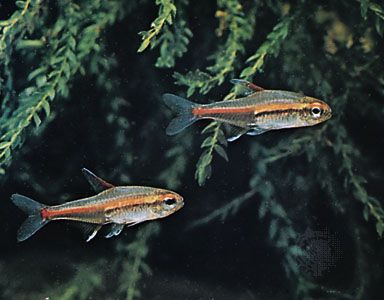
- Appearance: Many species are known for their vibrant markings, such as the neon-like stripes of the neon tetra or the shining red stripes of the glowlight tetra.1
It is important to note that the term “tetra” refers to these freshwater characins and should not be confused with “tetraodontiform,” which describes a completely different order of primarily tropical marine fishes, such as puffers and triggerfishes.12
Where are tetra fish typically found in the wild?
In the wild, tetra fish are native to the tropical regions of South America and Africa.1
While the term “tetra” is a popular name for various species within the family Characidae, these fishes are widely distributed across fresh to brackish waters in these continents. Specifically, different groups of characins—which include tetras—are found throughout South and Central America, as well as in Africa.13
How many species of tetra fish exist, and what are some popular varieties for aquariums?
The term “tetra” is a popular name used for numerous species within the characin family, Characidae, rather than a single scientific classification. Because the name is not scientifically defined, there is no specific count of how many species exist; the fishes commonly sold as tetras are distributed across several different genera, such as Hemigrammus, Hyphessobrycon, and Mimagoniates.1
Several popular varieties are frequently kept in home aquariums due to their hardy and unaggressive nature:
- Neon tetra (Paracheirodon innesi): A slender, highly popular fish reaching 4 cm, characterized by a glowing blue-green stripe and red hind parts.1
- Cardinal tetra (Cheirodon axelrodi): Similar to the neon tetra but distinguished by more extensive red coloration on its body.1
- Glowlight tetra (Hemigrammus erythrozonus): A hardy species growing to 4.5 cm, featuring a distinctive shining red stripe along its sides.1
- Black tetra (Gymnocorymbus ternetzi): Also known as the blackamoor or petticoat fish, this deep-bodied fish features black markings that fade to gray as it matures.1
- Silver tetra (Ctenobrycon spilurus): A larger, flattened, silvery fish that can grow up to 9 cm.1
- Buenos Aires tetra (Hemigrammus caudovittatus): Known for its reddish fins and a dark stripe that widens into a diamond-shaped spot near the tail.1
What is the difference between freshwater and marine fish habitats?
The primary difference between freshwater and marine fish habitats lies in their salinity levels, which fundamentally dictates how fish manage their internal water and salt balance through a process called osmoregulation.7
Physiological Differences
- Marine Habitats: Seawater has a high salt concentration. Because this environment draws water out of their bodies through osmosis, many marine fish must drink large quantities of seawater to stay hydrated, using their kidneys to excrete excess salt while retaining water.7
- Freshwater Habitats: Freshwater environments have a much lower salt concentration than the fish’s own body. Consequently, water is naturally absorbed into the fish’s body. These fish drink very little water and rely on their kidneys to excrete large amounts of excess water to maintain balance.7
Habitat Characteristics
- Marine Ecosystems: These cover two-thirds of Earth’s surface and are characterized by vast, interconnected oceanic environments, including deep-sea trenches and coastal zones.89
- Freshwater Ecosystems: These include diverse environments like rivers, streams, and lakes. They are often categorized as either lotic (flowing) or lentic (standing) based on water residence time and flow rates.10
Some species, such as salmon, are uniquely adapted to migrate between these environments, adjusting their physiology as they move through brackish water.711
Sources
- tetra — Encyclopædia Britannica
- tetraodontiform — Encyclopædia Britannica
- ostariophysan - Annotated classification — Encyclopædia Britannica
- tetra — Merriam-Webster
- tetraodontiform - General features — Encyclopædia Britannica
- tropical fish — Encyclopædia Britannica
- Do fish drink water? — Encyclopædia Britannica
- fish - Distribution and abundance — Encyclopædia Britannica
- Marine ecosystem — Encyclopædia Britannica
- Inland water ecosystem - Running water — Encyclopædia Britannica
- Marine ecosystem - Geography, oceanography, and topography — Encyclopædia Britannica
- Inland water ecosystem - Population and community development and structure — Encyclopædia Britannica
Published on · 3 min read