Tetractinella
Tetractinella is a genus of extinct brachiopods, commonly known as lamp shells, which are found as fossils in Triassic marine rocks dating from 251 to 200…
What is Tetractinella?
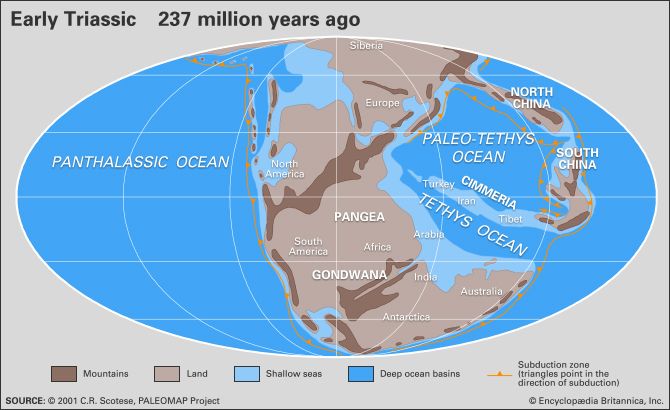
Tetractinella is a genus of extinct brachiopods, commonly known as lamp shells, which are found as fossils in Triassic marine rocks dating from 251 to 200 million years ago. These organisms are characterized by a compressed shell featuring prominent ribs and weblike margins extending from the apex.1
It is important to distinguish this genus from the term “tetractinellid,” which refers to a type of sponge belonging to the subclass Tetractinellida.2
A notable aspect of the species Tetractinella trigonella is its role as an example of homeomorphy, where it evolved to resemble the unrelated Cheirothyris fleuriausa despite being separated by millions of years and vast geographic distances.1
What are brachiopods and how do they differ from mollusks?
Brachiopods, commonly known as lamp shells, are a phylum of bottom-dwelling marine invertebrates characterized by two valves, or shells, that cover the dorsal and ventral sides of the animal. While they superficially resemble mollusks, they are not related to them.34
The primary differences between brachiopods and mollusks include:
- Symmetry: Brachiopod valves are bilaterally symmetrical, meaning the right and left sides of an individual valve are mirror images of each other. In contrast, mollusks (such as bivalves) typically have valves that are mirror images of each other across the hinge line.3
- Anatomy: Brachiopods possess a unique feeding structure called a lophophore, which is a ciliated loop used to direct food-bearing currents to the mouth.5
- Biological Classification: Brachiopods are distinct from mollusks in their evolutionary lineage and internal organization, including their open circulatory system featuring a small heart situated over the gut.4
What is the significance of homeomorphy in evolutionary biology?
In evolutionary biology, the term homeomorphy refers to the phenomenon where two or more organisms from different evolutionary lineages evolve to possess a similar physical appearance or structure, despite not being closely related. This concept is closely linked to convergent evolution, where independent lineages develop similar traits as adaptations to comparable environmental challenges or functional requirements.910
The significance of homeomorphy lies in its potential to complicate the work of taxonomists and evolutionary biologists. Because these organisms look alike, they can be easily mistaken for close relatives. Distinguishing between features that are truly homologous—meaning they are inherited from a common ancestor—and those that are merely analogous or homeomorphic is essential for accurately reconstructing phylogenetic relationships10.10
When homeomorphy occurs, it highlights the power of natural selection to drive different species toward similar solutions for survival. However, it also serves as a cautionary reminder that superficial resemblance is not always a reliable indicator of evolutionary history. To avoid misclassification, scientists must look beyond external appearances and examine a broad range of characters, including internal anatomy and, when possible, genetic data.10
How do scientists use fossils to determine the age of rock layers?
Scientists determine the relative age of rock layers using fossils primarily through the principle of faunal succession, which observes that fossilized organisms appear and disappear in a specific, predictable order throughout the rock record. By identifying the unique assemblages of fossils within a layer, geologists can correlate separated rock outcrops and establish their relative positions in time.131415
A key tool in this process is the index fossil (or guide fossil). To be effective, an index fossil should be:
- Distinctive: Easily recognizable to prevent misidentification.1613
- Abundant: Sufficiently common to be discovered easily.1613
- Widespread: Found across large geographic areas.1613
- Short-lived: Representing a narrow, specific span of geologic time.1613
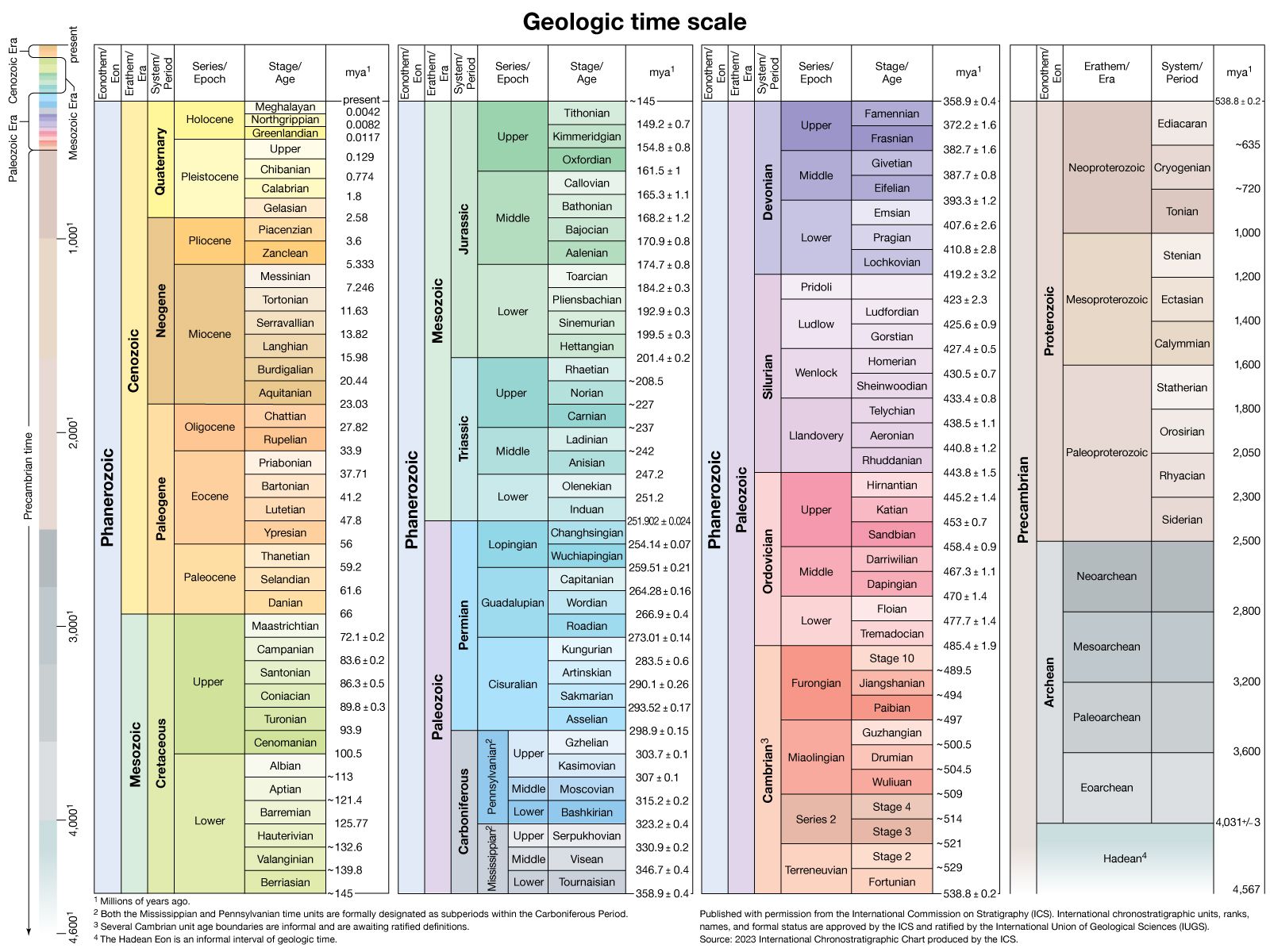
While fossils provide the framework for relative dating, they are often calibrated using radiometric dating (or absolute dating). This method measures the decay of radioactive isotopes in minerals to provide a numerical age for the rock. Together, these methods allow scientists to reconstruct Earth’s history, though fossils remain the primary means for defining the boundaries of the geologic time scale.14171516
Sources
- Tetractinella — Encyclopædia Britannica
- tetractinellid — Merriam-Webster
- lamp shells — Encyclopædia Britannica
- branchiopod - Distinguishing taxonomic features — Encyclopædia Britannica
- lamp shells - Form and function — Encyclopædia Britannica
- Circulatory system - Brachiopoda — Encyclopædia Britannica
- crustacean - Evolution and paleontology — Encyclopædia Britannica
- Neospirifer — Encyclopædia Britannica
- Did you know? — Merriam-Webster
- evolution - Convergent and parallel evolution — Encyclopædia Britannica
- homeomorphy — Merriam-Webster
- taxonomy - Evaluating taxonomic characters — Encyclopædia Britannica
- index fossil — Encyclopædia Britannica
- dating - Principles and techniques — Encyclopædia Britannica
- geologic time — Encyclopædia Britannica
- dating - Distinctions between relative-age and absolute-age measurements — Encyclopædia Britannica
- Tertiary Period - Correlation of Tertiary strata — Encyclopædia Britannica
- geochronology — Encyclopædia Britannica
Published on · 3 min read